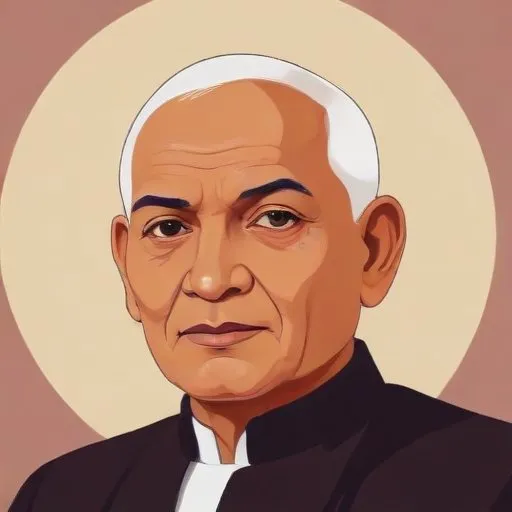
Madan Mohan Malaviya: The Visionary behind India's Largest Residential University
A Legacy of Education and Nationalism
Madan Mohan Malaviya was a renowned Indian scholar, educational reformer, and politician who left an indelible mark on the country's struggle for independence and its education system. He is best known for founding the Banaras Hindu University (BHU), the largest residential university in Asia, which has been a hub of academic excellence and nationalist fervor since its establishment in 1916.
The Early Years
Born on December 25, 1861, in Prayagraj, India, Malaviya hailed from a Gaur Brahmin family. His grandfather, Premdhar Prasad, was the son of Vishnu Prasad, and the family's roots traced back to Malwa, Ujjain, in present-day Madhya Pradesh. Malaviya's love for the region inspired him to adopt the surname Malaviya instead of Chaturvedi.
A Beacon of Education
Malaviya's contributions to education are unparalleled. He co-founded the BHU, which has grown to become one of the largest universities in the world, with over 40,000 students from across the globe. He served as the vice-chancellor of the university from 1919 to 1938, shaping its vision and mission. His tireless efforts to promote modern education among Indians helped bridge the gap between traditional and modern learning.
A Champion of Nationalism
Malaviya was an active participant in the Indian independence movement. He was elected as the president of the Indian National Congress twice and founded the Akhil Bharat Hindu Mahasabha, a prominent nationalist organization. His leadership and vision inspired a generation of Indians to fight for independence from British rule.
Literary and Journalism Pursuits
Malaviya was a prolific writer and journalist. He founded
The Leader, a highly influential English newspaper, in 1919, and later became the chairman of
Hindustan Times from 1924 to 1946. He launched the Hindi edition,
Hindustan Dainik, in 1936, making him a pioneer in Indian journalism.
Philanthropy and Social Contributions
Malaviya was a founding member of The Bharat Scouts and Guides, a youth organization aimed at promoting civic engagement and community service. He was also involved in various charitable initiatives, leaving a lasting impact on Indian society.
Awards and Honors
Malaviya was posthumously awarded the Bharat Ratna, India's highest civilian honor, on December 24, 2014, a day before his 153rd birthday.
Legacy and Impact
Malaviya's legacy extends beyond his contributions to education and nationalism. He has inspired generations of Indians to strive for excellence and work towards the betterment of society. His vision for a modern, independent India continues to shape the country's development and progress.
Key Milestones
- 1861: Born on December 25 in Prayagraj, India
- 1916: Founded Banaras Hindu University (BHU)
- 1919: Founded The Leader newspaper
- 1924: Became chairman of Hindustan Times
- 1936: Launched Hindustan Dainik, the Hindi edition of Hindustan Times
- 1946: Passed away on November 12
- 2014: Posthumously awarded the Bharat Ratna on December 24
Malaviya's life and legacy are a testament to his unwavering dedication to education, nationalism, and social upliftment. He continues to inspire Indians to strive for excellence and work towards a better future.
FAQ
What was Madan Mohan Malaviyas occupation?
Madan Mohan Malaviya was an Indian educator, lawyer, and politician, known for his contributions to Indian independence and education.
What was Madan Mohan Malaviyas role in Indian politics?
Madan Mohan Malaviya served as the President of the Indian National Congress, a key organization in Indias struggle for independence from British rule.
Did Madan Mohan Malaviya found any educational institutions?
Yes, Madan Mohan Malaviya founded the Banaras Hindu University, one of Indias largest and most prestigious universities.
What were Madan Mohan Malaviyas views on education?
Madan Mohan Malaviya believed in the importance of education for Indias development, advocating for a blend of traditional and modern knowledge.
What was Madan Mohan Malaviyas legacy?
Madan Mohan Malaviyas contributions to education and politics have made him a revered figure in Indian history, inspiring future generations of leaders and educators.