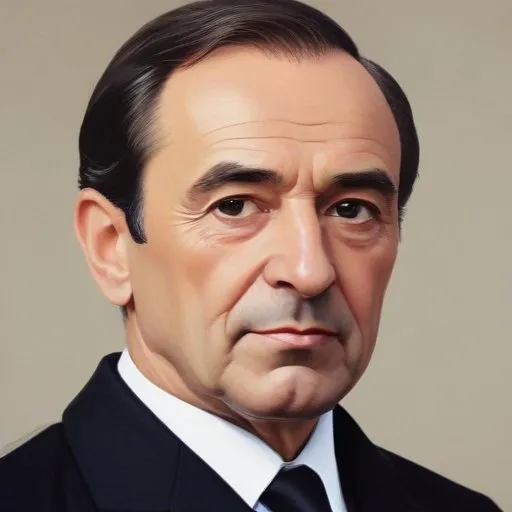
Manuel Fraga Iribarne: The Architect of Modern Spanish Democracy
A Legacy of Political Reform and Transition
Manuel Fraga Iribarne is best known as one of the chief architects of Spain's transition from dictatorship to democracy in the 1970s. As a politician, lawyer, and academic, Fraga played a pivotal role in shaping the country's political landscape, earning him a revered place in Spanish history.
Early Life and Formative Years
Born on November 23, 1922, in Villalba, Galicia, Spain, Fraga grew up in a family of modest means. His early life was marked by academic excellence, earning him a scholarship to study law at the University of Santiago de Compostela. Later, he received a Ph.D. in law from the University of Madrid.
Political Ascendancy and Ministerial Roles
Fraga's political career began in the 1950s, during the Franco regime. He served as Minister of Information and Tourism from 1962 to 1969, where he implemented liberalizing reforms, paving the way for Spain's future democratization.
Fraga's Role in Spain's Transition to Democracy
In 1975, following Franco's death, Fraga became the Minister of the Interior, playing a crucial role in Spain's transition to democracy. He worked closely with King Juan Carlos I and other reform-minded politicians to dismantle the authoritarian regime and establish a democratic system. This period was marked by the legalization of political parties, the drafting of a new constitution, and the country's first free elections in 1977.
Leader of Alianza Popular and Later Years
In 1976, Fraga founded the conservative party, Alianza Popular (AP), which later merged with other parties to form the Partido Popular (PP). He served as the President of the AP and later the PP, leading the party to victory in the 1982 general elections.
Career Highlights and Major Works
- Minister of Information and Tourism (1962-1969)
- Minister of the Interior (1975-1976)
- Founder of Alianza Popular (AP) and later Partido Popular (PP)
- President of the AP (1976-1987) and PP (1987-1990)
Influence on Modern Spanish Society
Fraga's legacy extends far beyond his political achievements. He played a significant role in shaping modern Spanish society, promoting cultural and economic liberalization, and fostering a sense of national unity.
Controversies and Public Perception
Despite his significant contributions, Fraga's political career was not without controversy. Critics accused him of being too closely associated with the Franco regime and of not doing enough to address the country's fascist past. However, his commitment to democracy and his role in Spain's transition earned him widespread respect and admiration.
Philosophical Contributions and Beliefs
Fraga was a staunch advocate for democracy, liberty, and human rights. He believed in the importance of individual freedom and the need for a strong, effective state to protect and promote the common good.
Personal Milestones and Key Life Events
- Married to Carmen Estévez and father of six children
- Recipient of numerous honors and awards, including the Grand Cross of the Order of Charles III
- Published several books on politics, history, and law
Legacy and Historical Context
Manuel Fraga Iribarne's life and legacy serve as a testament to the power of political reform and the importance of democratic values. His contributions to Spain's transition to democracy continue to shape the country's politics and society to this day.
Comparative Analysis with Contemporaries
Fraga's role in Spain's transition is often compared to that of other reform-minded politicians, such as
Adolfo Suárez and
Felipe González. While each played a unique role, they shared a commitment to democracy and a vision for a modern, liberal Spain.
Trivia and Fun Facts
- Fraga was an accomplished lawyer and academic, earning him the title of Doctor Honoris Causa from several universities
- He was a prolific writer, publishing numerous books on politics, history, and law
Impact on Spanish Pop Culture
Fraga's influence extends beyond politics, with his legacy reflected in Spanish literature, film, and art. His commitment to democracy and individual freedom continues to inspire new generations of Spaniards.
Awards and Honors
- Grand Cross of the Order of Charles III
- Grand Cross of the Order of Isabella the Catholic
- Prince of Asturias Award for Concord
Charitable Work and Social Contributions
Throughout his life, Fraga was dedicated to various charitable causes, including education and healthcare. He served as the president of the Spanish Red Cross and supported numerous humanitarian organizations.
Inspirational Stories and Motivations
Fraga's life serves as an inspiration to anyone committed to democracy and individual freedom. His legacy reminds us that even in the most challenging times, courage, perseverance, and determination can lead to profound social and political change.
Visual Timeline and Milestones
- 1922: Born in Villalba, Galicia, Spain
- 1950s: Begins political career during the Franco regime
- 1962-1969: Serves as Minister of Information and Tourism
- 1975: Becomes Minister of the Interior
- 1976: Founds Alianza Popular (AP)
- 1982: Leads AP to victory in general elections
- 2012: Passes away at the age of 89
Predictions and Speculations
Manuel Fraga Iribarne's legacy will continue to shape Spanish politics and society for generations to come. As scholars and historians reflect on his life and achievements, new insights will emerge, further solidifying his place in Spanish history.
Conclusion
Manuel Fraga Iribarne's remarkable life and legacy serve as a testament to the power of democracy, liberty, and human rights. His commitment to reform and his pivotal role in Spain's transition to democracy continue to inspire and influence modern Spanish society.