


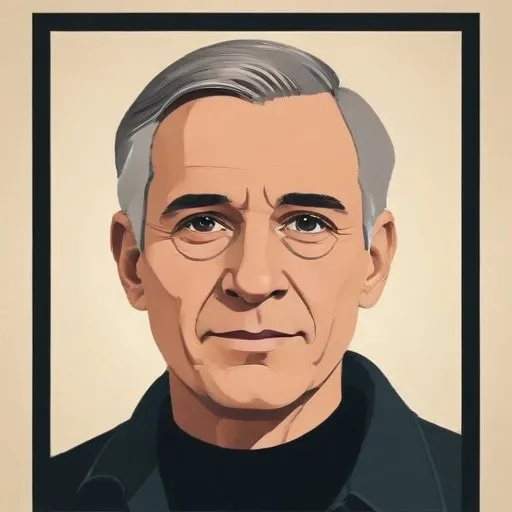
Environmental author and advocate who exposed the consequences of human manipulation of the American West's natural resources, particularly water, in his influential book "Cadillac Desert".
Marc Reisner, a renowned American environmentalist and writer, left an indelible mark on the world of conservation with his groundbreaking book, Cadillac Desert: The American West and Its Disappearing Water. This seminal work, first published in 1986, illuminated the complexities of water management in the American West, earning Reisner widespread recognition and critical acclaim.
Born on September 14, 1948, in Minneapolis, Minnesota, Reisner was the son of a lawyer and a scriptwriter. He graduated from Earlham College in 1970, laying the foundation for a career that would blend his passion for the environment with his talent for storytelling.
Reisner's professional journey began with stints at Environmental Action and the Population Institute in Washington, D.C. He later worked as a staff writer and director of communications for the Natural Resources Defense Council in New York, a position he held for seven years starting in 1972. This experience honed his skills as a writer and advocate, preparing him for the literary masterpiece that would soon follow.
In 1979, Reisner received an Alicia Patterson Journalism Fellowship, which enabled him to conduct research and write Cadillac Desert. This magnum opus was a finalist for both the National Book Critics Circle Award and the Bay Area Book Reviewers Award in 1986. The book's impact was further underscored in 1999, when a Modern Library panel of authors and critics ranked it 61st on a list of the 100 most notable English-language works of nonfiction of the 20th century.
Reisner's work extended beyond the printed page, as he collaborated on a 1997 PBS documentary film series based on Cadillac Desert, which won a Columbia University-Peabody Award. He was also featured as an interviewee in Stephen Ives's 1996 PBS documentary series, The West, produced by Ken Burns.
Marc Reisner's contributions to environmentalism and conservation are undeniable. His work has inspired generations of environmentalists, policymakers, and writers. Cadillac Desert remains a seminal text, illuminating the importance of water conservation in the American West and beyond.
Before his untimely passing on July 21, 2000, Reisner was awarded a Pew Charitable Trusts Fellowship to support his work on dam removal. This milestone reflects his tireless commitment to environmental causes, even in the face of personal challenges.
Reisner's writing embodies a profound respect for the natural world and a deep understanding of humanity's interconnectedness with the environment. His work serves as a clarion call, urging us to reexamine our relationship with the planet and to strive for a more sustainable future.
Born in 1834
Led a groundbreaking expedition down the Colorado River, mapping the Grand Canyon and making significant geological discoveries. He's considered one of the most important figures in the exploration of the American West.
Born in 1838
A pioneering conservationist and writer who advocated for the preservation of America's wilderness and national parks, inspiring generations to appreciate and protect the natural world.
Born in 1887
Pioneering ecologist and author who advocated for land ethics and conservation, inspiring a new generation of environmentalists.
99 Years Old
A fierce advocate for wilderness preservation and critic of industrialization, he wrote influential novels and essays that inspired a generation of environmentalists. His iconic book "Desert Solitaire" is a classic of nature writing.
Born in 1909
A Pulitzer Prize-winning writer who explored the American West through novels, short stories, and essays, capturing the region's spirit and complexities. His works often blended history, fiction, and personal reflection.
86 Years Old
The Lord-Lieutenant of Greater London, responsible for supporting the monarch and representing the crown in the city, and known for their ceremonial and civic duties. They play a key role in promoting London's interests and fostering community spirit.
Born in 1907
Pioneering biologist and environmentalist who exposed the dangers of pesticides and inspired the modern environmental movement through her groundbreaking book "Silent Spring".
Born in 1858
A pioneering leader who championed progressive reforms, trust-busting, and conservation, earning a Nobel Peace Prize for mediating the Russo-Japanese War. He's also famous for his rugged outdoorsmanship and "big stick" diplomacy.
