


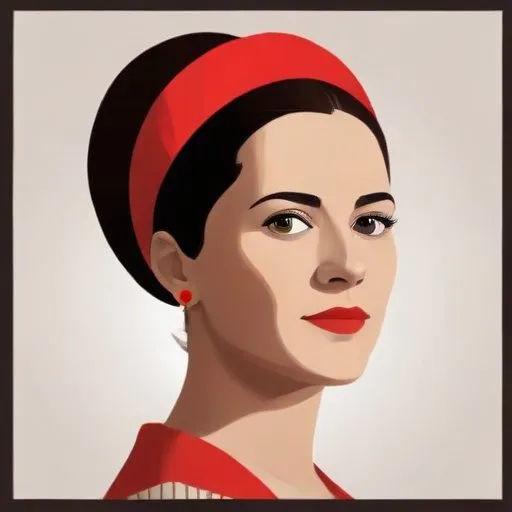
The Queen of Etruria and Duchess of Lucca, known for her brief reign and marriage to Louis of Parma, which led to the unification of Italy. She played a significant role in the Napoleonic Wars.
Maria Luisa of Spain, born on July 6, 1782, was a Spanish infanta, daughter of King Charles IV and his wife, Maria Luisa of Parma, and is best known for her brave resistance against Napoleon Bonaparte's occupation of Spain and her fight for the Spanish monarchy.
In 1795, Maria Luisa married her first cousin, Louis, Hereditary Prince of Parma, and the couple spent the early years of their married life at the Spanish court. Their first child, Charles, was born in 1796.
In 1801, the Treaty of Aranjuez created the Kingdom of Etruria, a new state formed from the former Grand Duchy of Tuscany, with Maria Luisa's husband as its king. The couple arrived in Florence, the capital of Etruria, in August 1801. During a brief visit to Spain in 1802, Maria Luisa gave birth to her second child.
Maria Luisa's husband's reign in Etruria was marked by his poor health, and he died in 1803 at the age of 30. Maria Luisa acted as regent for their son, Charles, who was just six years old at the time. She tried to gain the support of her subjects, but her administration of Etruria was cut short by Napoleon Bonaparte, who forced her to leave with her children in December 1807.
After a futile interview with Napoleon in Milan, Maria Luisa sought refuge in exile with her family in Spain. However, she soon found herself in the midst of a tumultuous period in Spanish history. The Spanish court was divided, and a popular uprising, known as the Mutiny of Aranjuez, forced her father to abdicate in favor of her brother, Ferdinand VII.
Maria Luisa was the only member of the Spanish royal family to oppose Napoleon directly. She continued to defy him, even after he called the remaining members of the Spanish royal family to France, where she was reunited with her parents in exile.
Maria Luisa's bravery and defiance in the face of adversity have made her a beloved figure in Spanish history. Her legacy serves as an inspiration to future generations, and her story is a testament to the resilience of the Spanish monarchy in the face of foreign occupation and internal turmoil.
Born in 1661
The last ruler of the Spanish Empire's Habsburg dynasty, known for their physical and mental disabilities, which led to a decline in the empire's power and eventual downfall. They are infamous for their inbreeding and the subsequent weaknesses it brought to the throne.
Born in 1713
King of Spain from 1746 to 1759, known for his cultural and economic reforms, and for being the first Spanish monarch to visit Catalonia in over a century.
Born in 1830
Queen of Spain from 1833 to 1868, known for her tumultuous reign marked by political instability, corruption, and social unrest. She was eventually exiled to France after a revolution.
Born in 1886
The last Bourbon king of Spain, ruling from 1886 to 1931, known for his tumultuous reign marked by political instability, economic struggles, and the loss of Spain's last colonies.
Born in 1886
The last Bourbon king of Spain, ruling from 1886 to 1931, known for his tumultuous reign marked by political instability, economic struggles, and the loss of Spain's last colonies.
Born in 1887
The last queen of Spain before the abolition of the monarchy, she was a British princess who married King Alfonso XIII and played a significant role in Spanish history.
Born in 1892
The authoritarian leader who ruled Spain with an iron fist from 1939 to 1975, suppressing opposition and imposing conservative values, while also modernizing the economy. He's infamous for his brutal regime and human rights abuses.
88 Years Old
The former King of Spain who reigned from 1975 to 2014, known for transitioning the country from dictatorship to democracy and playing a key role in preventing a military coup in 1981.
