


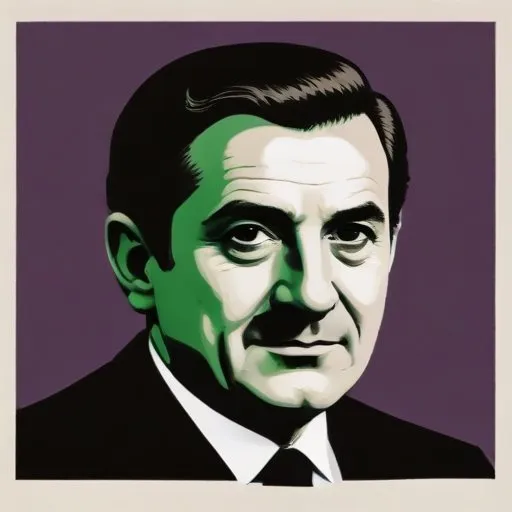
The 33rd Prime Minister of Italy, a Christian Democrat who played a key role in shaping post-WWII Italy's politics and economy, known for his anti-communist stance and efforts to rebuild the country.
Mario Scelba, pronounced "marjo shelba," was a stalwart figure in Italian politics, serving as the 33rd Prime Minister of Italy from February 1954 to July 1955. He is renowned for his unwavering commitment to European unity, his stringent law and order policies, and his instrumental role in Italy's post-war reconstruction.
Born on September 5, 1901, in Caltagirone, Sicily, Scelba grew up in a devout Catholic family. His father, Gaetano Scelba, was a poor sharecropper, and his mother, Maria Gambino, was a homemaker. Despite the family's financial struggles, Scelba's mentor, Don Luigi Sturzo, recognized his potential and facilitated his education.
Scelba's academic journey was marked by perseverance and determination. He began attending the lower gymnasium in Caltagirone at the age of 12, but the outbreak of World War I forced him to suspend his studies. Undeterred, he continued his education as a privatist, eventually earning his classical diploma in 1920. He then pursued a law degree at the Sapienza University of Rome, graduating in 1924 with a thesis on regional decentralization.
Scelba's association with Don Sturzo, the leader of the Italian People's Party (PPI), proved instrumental in his political rise. During the 1920s, Scelba served as Sturzo's private assistant and secretary, gaining invaluable experience in the world of politics.
With the rise of fascism in Italy, Scelba's political trajectory took a significant turn. He became a founding member of Christian Democracy (DC), a party that championed the principles of democracy and social justice. His commitment to the party's ideals earned him recognition as one of the most influential politicians of his era.
Scelba's tenure as Minister of the Interior, which spanned three distinct terms from 1947 to 1962, was marked by his unwavering dedication to maintaining law and order in Italy. He implemented sweeping reforms, reorganizing the Italian police to restore public confidence and stabilize the country's security apparatus.
In February 1954, Scelba became the Prime Minister of Italy, a position he held until July 1955. During his tenure, he prioritized economic development, education, and social welfare, effectively guiding Italy's post-war reconstruction efforts.
A fervent pro-Europeanist, Scelba was instrumental in shaping Italy's European policy. He served as the President of the European Parliament from March 1969 to March 1971, playing a crucial role in fostering European integration.
In the latter years of his life, Scelba continued to engage in politics, albeit in a less prominent capacity. He passed away on October 29, 1991, leaving behind a legacy that continues to inspire generations of Italian politicians and European leaders.
Mario Scelba's contributions to Italian politics and European unity are immeasurable. His commitment to law and order, economic development, and social justice has left an indelible mark on Italy's post-war reconstruction. As a champion of European integration, Scelba's vision continues to shape the European project, inspiring future generations to strive for a united and prosperous Europe.
Born in 1881
Italian journalist and politician who served as the 30th Prime Minister of Italy, leading the country's post-WWII reconstruction and European integration efforts. He's known for his key role in shaping modern Italy's politics and economy.
Born in 1908
Italian journalist and politician who served as Prime Minister of Italy six times, playing a key role in shaping the country's post-war politics and economy. He was a dominant figure in Italian politics for over three decades.
Born in 1919
A dominant figure in Italian politics, serving as Prime Minister seven times, known for his cunning and controversial leadership style. He was a key player in shaping Italy's post-war politics.
Born in 1916
The 39th Prime Minister of Italy, a prominent figure in post-war Italian politics, known for his efforts to establish a historic compromise between Christian Democrats and Communists. He was kidnapped and murdered by the Red Brigades in 1978.
Born in 1877
First President of the Italian Republic, instrumental in shaping the country's post-WWII government and constitution. Known for his key role in Italy's transition to a republic.
98 Years Old
An Italian academic and politician who served as the 8th President of Italy, known for his role in shaping the country's politics and foreign policy during the Cold War era. He was a key figure in Italy's transition from a monarchy to a republic.
Born in 1887
An Italian war hero and statesman who served as President of the Italian Republic from 1955 to 1962, known for his efforts to rebuild and stabilize post-war Italy.
