


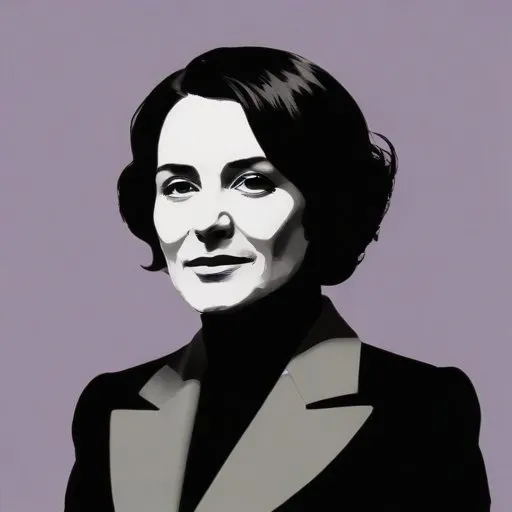
American composer and critic who wrote orchestral and chamber music, and was a prominent music educator and critic, known for her advocacy of American music and women composers.
Marion Bauer was a renowned American composer, teacher, writer, and music critic who played a significant role in shaping American musical identity in the early 20th century. She is best known for her contributions to promoting new music, advocating for American composers, and leaving an indelible mark on the country's musical landscape.
Bauer was born on August 15, 1882, in Walla Walla, Washington, to parents of French-Jewish background. She began her musical journey at a young age, studying piano and music theory in her hometown. She later pursued her passion for music at the University of Washington, where she earned her degree in music.
Bauer's compositional style was characterized by the use of dissonance and extended tertian, quartal, and quintal harmonies. While she rarely ventured outside the bounds of extended tonality, she did experiment with serialism in the 1940s. Her music was performed by prominent ensembles, including the New York Philharmonic, which premiered her work "Sun Splendor" in 1947 under the baton of Leopold Stokowski.
Bauer was an esteemed teacher, serving on the faculty of Washington Square College of New York University from 1926 to 1951. She taught music history and composition, inspiring a generation of young musicians. In addition to her academic pursuits, Bauer was a prolific writer, penning articles and books on music. Her 1933 text, "Twentieth Century Music," remains a seminal work in the field.
Bauer was a dedicated advocate for American music and composers. She helped found the American Music Guild, the American Music Center, and the American Composers Alliance, serving as a board member of the latter. She also held leadership roles in the League of Composers and the Society for the Publication of American Music.
Marion Bauer's tireless efforts to promote American music and composers have had a lasting impact on the country's musical landscape. Her contributions as a composer, teacher, and advocate have paved the way for future generations of American musicians. Today, her music remains a testament to her innovative spirit and her dedication to the advancement of American music.
Bauer received numerous awards and honors for her contributions to music, including a 1948 Guggenheim Fellowship and a 1950 American Academy of Arts and Letters Award.
Bauer's personal life was marked by her determination and perseverance. She remained committed to her craft, even in the face of challenges and obstacles. Her legacy serves as an inspiration to aspiring musicians and composers, demonstrating the power of dedication and hard work.
"Music is not just a profession, but a way of life." - Marion Bauer
"The future of American music depends on our ability to honor our past, while embracing the new and innovative." - Marion Bauer
Marion Bauer's life and work were shaped by the cultural and social currents of her time. Her contributions to American music reflect the country's growing recognition of its own unique cultural identity. Today, her legacy continues to inspire new generations of musicians, composers, and music lovers.
By examining Bauer's life and work, we gain a deeper understanding of the complex and multifaceted nature of American music in the early 20th century. Her story serves as a testament to the power of creativity, perseverance, and dedication, inspiring us to continue pushing the boundaries of American music.
45 Years Old
A pioneering filmmaker behind groundbreaking documentaries and dramas, exploring themes of social justice, identity, and humanity. Her works often spark crucial conversations and inspire empathy.
Born in 1858
A pioneering female composer who broke glass ceilings in the male-dominated world of classical music, creating works that showcased her unique voice and perspective.
Born in 1886
A pioneering female viola player and composer who broke gender barriers in the early 20th-century classical music scene, known for her innovative and expressive works.
Born in 1892
A pioneering female composer and educator, she broke gender barriers in the classical music world, leaving a lasting legacy in the development of modern French music.
Born in 1887
A renowned composer and educator who taught many famous musicians, including Philip Glass and Quincy Jones, and was one of the first women to achieve international recognition as a conductor. She played a crucial role in promoting modern classical music and nurturing new talent.
94 Years Old
A visionary musician who pioneered electronic music and improvisation, creating a new language for the accordion and pushing boundaries of sound art.
Born in 1908
A pioneering composer of modern classical music, known for his complex and innovative works that pushed the boundaries of harmony and rhythm.
Born in 1897
A pioneering composer and pianist who experimented with avant-garde techniques, creating innovative works that blended traditional and modern styles. Known for his radical approach to music, pushing boundaries and inspiring future generations.
