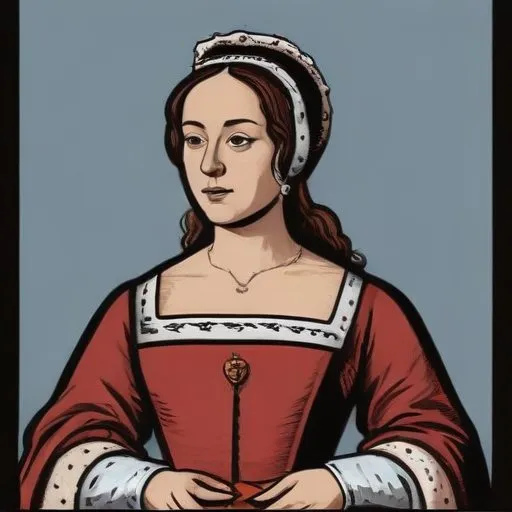
Mary II of England: The Protestant Queen Who Ruled with Flair
A Joint Monarch Like No Other
Mary II of England is best known for being the co-monarch of England, Scotland, and Ireland alongside her husband, William III, from 1689 until her untimely death in 1694. As a Protestant queen, she played a crucial role in the Glorious Revolution, which saw the overthrow of her Catholic father, King James II, and the establishment of a Protestant-dominated government.
A Royal Upbringing
Born on April 30, 1662, Mary was the eldest daughter of King James II and VII and his first wife,
Anne Hyde. She was raised as a Protestant, much to the dismay of her Catholic father, who had converted to Catholicism in the 1660s. Mary's upbringing was marked by a strong emphasis on education, and she developed a keen interest in music, art, and literature.
Rise to Power
In 1677, Mary married her first cousin, William of Orange, a Dutch Protestant prince. The union was a strategic move to secure Protestant alliances in Europe and strengthen England's position against Catholic France. When her father, King James II, was overthrown in the Glorious Revolution of 1688, Mary and William were invited to take the throne jointly.
A Joint Reign Like No Other
Mary and William's joint reign was a unique experiment in English history. While William handled the bulk of the administrative tasks, Mary focused on ceremonial duties and the arts. She was a patron of the composer
Henry Purcell and supported the arts, commissioning numerous paintings and decorative arts pieces.
Personal Milestones and Key Life Events
- 1677: Mary marries William of Orange, Prince of the Netherlands
- 1688: The Glorious Revolution overthrows Mary's father, King James II
- 1689: Mary and William are crowned joint monarchs of England, Scotland, and Ireland
- 1694: Mary dies of smallpox at the age of 32
Influence on Modern Society
Mary's legacy extends beyond her joint reign. She played a crucial role in solidifying the Protestant ascendancy in England, paving the way for the Act of Settlement in 1701, which ensured that the throne would pass to Protestant heirs. Her patronage of the arts also helped establish London as a major cultural center.
Historical Context and Legacy
Mary's reign took place during a tumultuous period in English history, marked by religious strife and political upheaval. Her joint reign with William helped stabilize the government and paved the way for the modern British monarchy. Despite her relatively short reign, Mary left an indelible mark on English history, cementing her place as one of the most influential Protestant queens of all time.
Personal Relationships and Anecdotes
Mary's marriage to William was a close and affectionate one. The couple had no children, but Mary was known for her kindness to her attendants and ladies-in-waiting. She was also close to her sister, Anne, who would later become Queen Anne of England.
Trivia and Fun Facts
- Mary was known as the "Protestant Queen" due to her strong Protestant beliefs
- She was a talented musician and played the harpsichord with ease
- Mary's love of art and architecture led to the construction of the Orangery at Kensington Palace
A Life Cut Short
Mary's life was cut short when she died of smallpox on December 28, 1694, at the age of 32. Her death was a devastating blow to William, who was deeply affected by her passing. Despite her untimely death, Mary's legacy as a Protestant queen and patron of the arts continues to inspire and fascinate to this day.
FAQ
Who was Mary II of England and what was her royal connection?
Mary II of England was the Queen of England, Scotland, and Ireland from 1689 to 1694. She was the daughter of King James II and VII and the wife of King William III.
What was Mary IIs role in the Glorious Revolution?
Mary II played a significant role in the Glorious Revolution, which overthrew her father, King James II and VII, and established a Protestant monarchy in England. She and her husband, William III, were invited to take the throne by the English Parliament.
What were Mary IIs accomplishments as queen?
During her reign, Mary II encouraged the arts, supported the Church of England, and promoted the welfare of the poor. She also played a key role in the government, particularly in the early years of her reign, when her husband was away fighting wars.
What was Mary IIs relationship with her husband, William III?
Mary IIs marriage to William III was a close and supportive partnership. They worked together to govern England and supported each others interests. Despite their differences, they remained devoted to each other until Marys death in 1694.
What is Mary IIs legacy in English history?
Mary IIs legacy in English history is that of a capable and supportive queen who played a significant role in the Glorious Revolution and promoted the arts and welfare of the poor during her reign.