


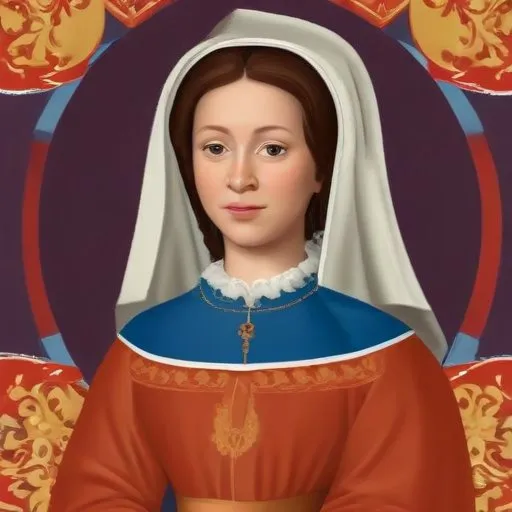
The second wife of King James II of England, she was a Catholic queen in a Protestant country, sparking controversy and ultimately leading to the Glorious Revolution. She's also known for her numerous pregnancies and children.
Mary of Modena, born Maria Beatrice Eleonora Anna Margherita Isabella d'Este on October 5, 1658, was a princess of the northwestern Italian Duchy of Modena. She is primarily remembered for the controversial birth of James Francis Edward, her only surviving son, which sparked intense scrutiny and ultimately contributed to the Glorious Revolution that overthrew her husband, James II and VII.
The birth of James Francis Edward on June 10, 1688, was shrouded in controversy. Widely rumored to have been smuggled into the birth chamber in a warming pan, the legitimacy of his birth was questioned by many, sparking fears that Mary's husband, James II and VII, was attempting to perpetuate a Catholic Stuart dynasty. This controversy ultimately contributed to the Glorious Revolution, which deposed James II and VII and replaced him with Mary II, a Protestant, and her husband, William III of Orange.
Following the Glorious Revolution, Mary went into exile in France, where she was known as the "Queen over the water" among Jacobites. She lived with her husband and children at the Château de Saint-Germain-en-Laye, provided by King Louis XIV. Mary spent time with the nuns at the Convent of Chaillot, frequently during summers with her daughter, Louisa Maria Teresa. After James II's death in 1701, Mary represented her son, James Francis Edward, who was considered the rightful king by Jacobites, until he reached the age of 16.
Mary of Modena's life and legacy are inextricably linked with the tumultuous period of English history surrounding the Glorious Revolution. Her marriage to James II and VII, a Catholic monarch, and the birth of her son, James Francis Edward, sparked intense controversy and ultimately contributed to the downfall of the Stuart dynasty. Despite her tumultuous reign, Mary remains an important figure in English history, symbolizing the struggles between Catholicism and Protestantism during the late 17th century.
Mary of Modena's legacy has had a lasting impact on modern society, shaping the course of English history and influencing the development of the British monarchy. Her story serves as a testament to the enduring power of politics, religion, and family dynamics in shaping the course of human events.
Born in 1633
The last Catholic monarch of England, Scotland, and Ireland, who attempted to restore Catholicism and absolute monarchy, sparking the Glorious Revolution. He's infamous for his authoritarian rule and religious intolerance.
Born in 1650
The Prince of Orange, King of England, Scotland, and Ireland, led the Glorious Revolution, overthrowing the Catholic King James II, and ruled with his wife Mary II, establishing a Protestant monarchy. He's also known for his military victories in Ireland and Europe.
Born in 1516
The first queen to rule England in her own right, Bloody Mary tried to restore Catholicism, earning her notorious reputation for burning hundreds of Protestants at the stake.
Born in 1683
King of Great Britain and Ireland from 1727 to 1760, known for his military victories, particularly the Battle of Dettingen, and his role in the War of the Austrian Succession.
Born in 1683
King of Great Britain and Ireland from 1727 to 1760, known for his military victories, particularly the Battle of Dettingen, and his role in the War of the Austrian Succession.
Born in 1630
The last monarch of the House of Stuart, restored to the throne after a republican Commonwealth, known for his lavish spending, mistresses, and the Great Fire of London. He ruled with a mix of absolutism and indulgence, shaping England's Restoration era.
Born in 1633
The last Catholic monarch of England, Scotland, and Ireland, who attempted to restore Catholicism and absolute monarchy, sparking the Glorious Revolution. He's infamous for his authoritarian rule and religious intolerance.
