


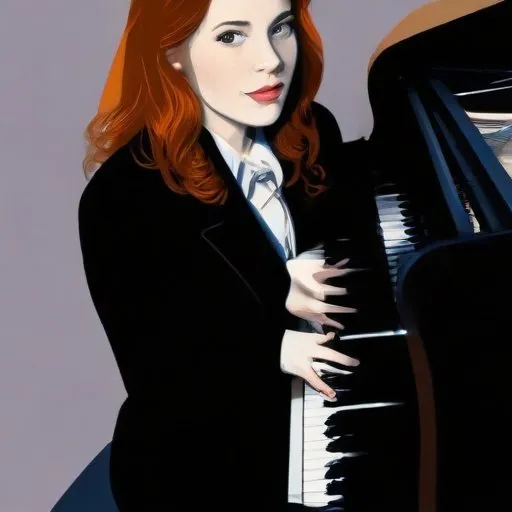
A renowned pianist and educator, known for her exceptional skill and dedication to teaching, inspiring generations of musicians.
Verne was the fourth of ten children born to John Wurm, a German descent. Alongside her sisters, she adopted the surname Verne in 1893 following their father's demise. She began her musical journey under the tutelage of Clara Schumann in Frankfurt, where she spent four years honing her craft. This training laid the foundation for her successful career as a concert pianist and music teacher.
Verne's professional career took off in 1887, with performances at St. James's Hall in London, where she played a Mendelssohn piano trio. She soon became a regular fixture at the Queens Hall Promenade Concerts, led by Henry Wood, and was particularly associated with the Tuesday 12 O'Clock Concerts, which focused on chamber music. Her impressive skills led to collaborations with renowned conductors, including Arthur Nikisch, Hans Richter, Sir August Manns, and Sir Henry J. Wood.
Verne's international reputation grew with her visits to the United States, where she performed under the baton of Theodore Thomas. Her interpretations of Robert Schumann's works earned her special acclaim, and she was celebrated for her authentic and nuanced playing style.
Verne's teaching legacy is just as impressive as her performing career. Her students included notable names such as Solomon, Dame Moura Lympany, Harold Samuel, Herbert Menges, and Lady Elizabeth Bowes-Lyon, the future Queen Elizabeth, HM The Queen Mother. Her nephew, John Vallier, was also among her pupils.
Verne's life was marked by her dedication to music and her love for her pupils. She passed away on June 4, 1936, surrounded by her musician friends at a party at the Savoy, where she was launching her book, Chords of Remembrance. Her remarkable life and career serve as a testament to her passion and commitment to the world of music.
Born in 1819
A renowned 19th-century pianist and composer, she was one of the first females to achieve recognition in a male-dominated field, creating over 60 pieces of music. Her compositions showcased romanticism and lyricism.
Born in 1809
A renowned 19th-century musician who masterfully blended classical and romantic styles, creating iconic works like the "Wedding March" and "Elijah" oratorio. His compositions continue to inspire and influence generations of artists.
Born in 1810
A renowned Romantic-era composer and influential music critic, known for his expressive and emotionally charged works, including symphonies, piano music, and art songs.
Born in 1833
A renowned pianist and composer, he crafted complex, expressive works that blended traditional and innovative techniques, leaving an indelible mark on classical music.
Born in 1811
A virtuosic pianist and composer who revolutionized classical music with his technically demanding and emotionally expressive works, blending Hungarian folk influences with Romantic-era drama.
Born in 1803
A French Romantic-era mastermind who composed iconic symphonies, operas, and orchestral works, revolutionizing classical music with his bold, expressive style.
Born in 1810
A Polish pianist and composer renowned for his delicate, expressive, and technically demanding piano music that evokes deep emotions and continues to inspire generations of musicians and music lovers. His nocturnes, waltzes, and preludes are staples of classical music.
Born in 1822
A Belgian organist and composer who created iconic works that blended Romanticism and Impressionism, leaving a lasting impact on classical music.
