


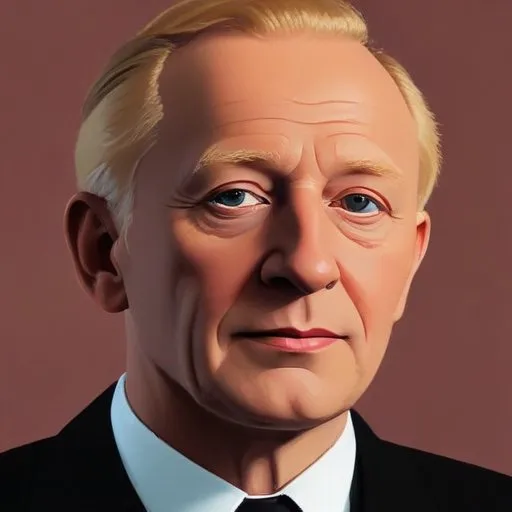
A pioneering anarchist historian and archivist, known for collecting and preserving the history of anarchism, particularly through his extensive archives and writings.
Max Nettlau, a German anarchist and historian, is renowned for his extensive collection of archives, which he meticulously compiled and sold to the International Institute of Social History in Amsterdam in 1935. His remarkable work, Bibliographie de l'Anarchie, published in 1887, is a testament to his dedication to chronicling the history of anarchism.
Born on April 30, 1865, in Neuwied, Germany, Nettlau's fascination with anarchism began at a young age. He was drawn to the ideology's emphasis on individual freedom, social equality, and the rejection of authoritarian power structures. Throughout his life, Nettlau remained committed to the anarchist cause, using his intellectual pursuits to promote its principles.
Nettlau's magnum opus, Bibliographie de l'Anarchie, is a comprehensive bibliography of anarchist literature, featuring over 4,000 entries. This monumental work showcases his extraordinary dedication to documenting the history of anarchism. Additionally, he wrote La Première Internationale en Espagne (1868-1888) and edited the Oeuvres of Mikhail Bakunin, vol. 1 (1895), further solidifying his reputation as a preeminent anarchist historian.
In 1938, Nettlau relocated to Amsterdam, where he worked tirelessly to catalog the archives for the International Institute of Social History. Despite living in a time of great turmoil, Nettlau remained committed to his work, avoiding persecution and harassment. He passed away suddenly on July 23, 1944, due to stomach cancer.
Nettlau's work has had a profound impact on the understanding and development of anarchism. His archives, now housed at the International Institute of Social History, serve as a valuable resource for scholars and researchers. His contributions have inspired generations of anarchists, historians, and social activists, cementing his place as a pioneering figure in the history of anarchism.
Max Nettlau's remarkable life and work serve as a testament to the power of dedication and intellectual curiosity. His contributions to the field of anarchism continue to inspire and educate, ensuring his legacy as a pioneering figure in the history of social activism.
Born in 1820
A 19th-century philosopher and economist who co-authored "The Communist Manifesto" with Karl Marx, shaping modern socialist and communist thought. He also wrote extensively on economics, history, and politics.
Born in 1818
A 19th-century philosopher who developed the theory of communism, arguing that capitalism would eventually be replaced by a socialist society. He's known for his critique of capitalism and the concept of class struggle.
Born in 1814
A Russian philosopher and theorist who advocated for anarchism and the abolition of the state, and is known for his influence on the development of anarchist thought. His ideas emphasized individual freedom and the rejection of authority.
Born in 1809
A 19th-century French economist and politician who advocated for anarchism, socialism, and mutualism, and is known for coining the phrase "Property is Theft."
Born in 1873
A prominent anarchist writer and historian, known for his influential works on anarcho-syndicalism and his role in the development of modern anarchist thought.
Born in 1870
A German theorist and activist who advocated for anarchism and social reform, known for his role in the German Revolution of 1918-1919 and his writings on the importance of community and social change.
Born in 1878
A German literary figure who wrote provocative plays and poetry that critiqued societal norms and authority, inspiring anarchist and anti-war movements.
Born in 1870
A Lithuanian-American anarchist and writer who advocated for labor rights and prison reform through his writings and activism, including a 14-year prison sentence for attempting to assassinate a businessman.
