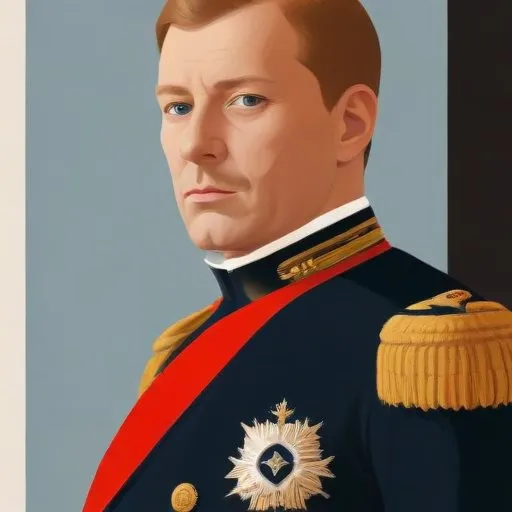
Maximilian von Spee: The German Admiral Who Made History in the High Seas
A Legendary Naval Officer
Maximilian von Spee is renowned for his exceptional bravery and tactical genius as a naval officer of the German Kaiserliche Marine during World War I. He is immortalized in history for commanding the East Asia Squadron, which achieved a series of impressive victories against the British Navy, earning him the respect and admiration of his contemporaries.
Early Life and Career
Born on June 22, 1861, in Copenhagen, Denmark, Maximilian von Spee was raised in the Rhineland region of Germany, where his family had an estate. He joined the Kaiserliche Marine in 1878 and served in various roles and locations, including on a colonial gunboat in German West Africa in the 1880s and the East Africa Squadron in the late 1890s.
Rise to Prominence
By the early 1900s, Spee had commanded several warships in the main German fleet. During this period, he married Margareta and had three children: Heinrich, Otto, and Huberta. In 1912, he returned to the East Asia Squadron as its commander and was promoted to the rank of Vizeadmiral (Vice Admiral) the following year.
The Battle of Coronel
On November 1, 1914, Spee led his squadron to a decisive victory against the British 4th Cruiser Squadron under Rear Admiral Christopher Cradock in the Battle of Coronel. He successfully sank two of Cradock's cruisers and forced the other two ships to retreat. This remarkable achievement made him a celebrated figure in Germany and earned him the respect of his peers.
The Battle of the Falkland Islands
A month after the Battle of Coronel, Spee decided to attack the British naval base in the Falkland Islands. However, a superior British force, led by Vice Admiral Doveton Sturdee, surprised him, and in the ensuing battle, the East Asia Squadron was destroyed. Spee and his two sons, who were serving on two of his ships, were killed, along with about 2,200 other men.
Legacy
Maximilian von Spee's bravery and tactical genius have made him a legendary figure in naval history. He is remembered as a hero in Germany, and several ships have been named in his honor, including the heavy cruiser Admiral Graf Spee, built in the 1930s.
Personal Life
Spee's personal life was marked by a strong sense of duty and loyalty to his family. He was devoted to his wife, Margareta, and their three children, and his decision to take his sons into battle with him ultimately led to their tragic fate.
Trivia and Fun Facts
- Spee's family estate in the Rhineland region of Germany is still standing today.
- He was known for his exceptional seamanship and was an expert in naval tactics.
- The Battle of Coronel was the first naval battle in which a British naval squadron was defeated since the Napoleonic Wars.
Inspirational Quotes
"The sea has never been a barrier to me, but a highway."
— Maximilian von Spee
Conclusion
Maximilian von Spee's remarkable career and tragic fate have left an indelible mark on naval history. His bravery, tactical genius, and devotion to his family have made him an inspiration to generations of naval officers and historians alike.
FAQ
What was Maximilian von Spees role in World War I?
Maximilian von Spee was a German admiral who played a key role in World War I, commanding the German East Asia Squadron and engaging in several naval battles, including the Battle of the Falkland Islands.
What was the fate of Maximilian von Spees fleet in World War I?
Maximilian von Spees fleet was largely destroyed in the Battle of the Falkland Islands in December 1914, and he himself was killed in action.
What was Maximilian von Spees strategy in World War I?
Maximilian von Spees strategy in World War I was to disrupt British trade routes and attack British naval forces, but he was ultimately outmaneuvered and outgunned by the British.
What is Maximilian von Spees legacy in German naval history?
Maximilian von Spees legacy in German naval history is that of a brave and skilled commander who fought against overwhelming odds, and his actions are still studied by naval historians and strategists.
How did Maximilian von Spees death affect Germanys war effort?
Maximilian von Spees death was a significant blow to Germanys war effort, as he was a highly respected and experienced commander, and his loss was deeply felt by the German navy.