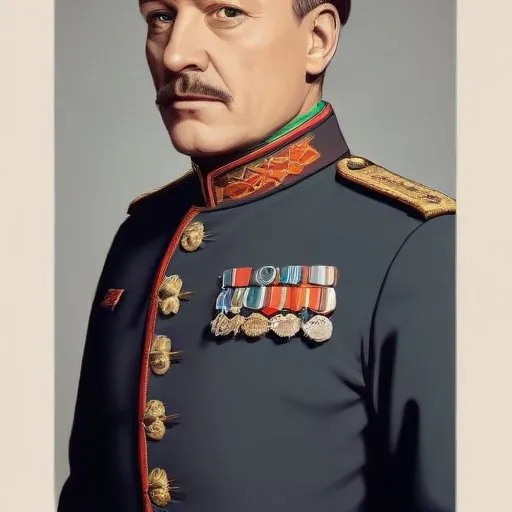
Maximilian von Weichs

Maximilian von Weichs

Maximilian von Weichs was born on November 12th, 1881

Full Name: Maximilian von Weichs
Nationality: German
Profession: Field Marshal
Branch: German Army
War: World War II
Role: Commander
Notability: Eastern Front
Rank: Generalfeldmarschall

A high-ranking German officer who played a crucial role in World War II, leading troops on the Eastern Front and later becoming a defendant in the Nuremberg Trials.

Written by: Emma Thompson Emma Thompson

Maximilian von Weichs: The German Generalfeldmarschall of World War II

The Rise to Prominence

Maximilian von Weichs, a German Generalfeldmarschall, played a pivotal role in the Wehrmacht during World War II, earning recognition for his tactical prowess and battlefield accomplishments. Born into an aristocratic family on November 12, 1881, Weichs' military career spanned multiple conflicts, cementing his reputation as a respected military leader.

Early Life and Career

Weichs' entry into the Bavarian cavalry in 1900 marked the beginning of his illustrious military career. During World War I, he served as a staff officer, later transitioning to the Reichswehr after the war. Throughout the interwar period, Weichs held various General Staff positions, eventually becoming the commander of the 1st Panzer Division in 1935.

World War II: A Commander's Legacy

Weichs' most notable contributions came during World War II, where he commanded the XIII Corps in the invasion of Poland, the 2nd Army in the invasions of France, Yugoslavia, and the Soviet Union, and later, Army Group B during the German offensive in southern Russia. His appointment as commander of Army Group F in 1944 oversaw the German retreat from Greece and most of Yugoslavia.

War Crimes Allegations and Trial

Following the war, Weichs was implicated in war crimes committed in the Balkans during the Nuremberg Trials. Scheduled to participate in the US Army's Hostages Trial, he was removed from the proceedings due to medical reasons, avoiding judgment and sentencing.

Military Honors and Awards

Throughout his military career, Weichs received several notable awards, including the Iron Cross (Second and First Class), the Knight's Cross of the Iron Cross, and the Eastern Front Medal.

Personal Milestones and Legacy

Weichs' remarkable military career was marked by his aristocratic heritage, cavalry background, and adaptability in modern warfare. Despite his legacy being marred by war crimes allegations, Weichs remains an important figure in the history of World War II, offering valuable insights into the complexities of modern warfare.

Trivia and Fun Facts

Maximilian von Weichs' remarkable military career, marked by both triumph and controversy, continues to fascinate historians and military enthusiasts alike, offering a glimpse into the complexities of World War II and the men who shaped its course.

Timeline
1881
Birth in Dessau
Maximilian von Weichs was born on November 12, 1881, in Dessau, Germany. He would go on to become a prominent German field marshal.
1900
Joins German Army
Weichs joined the German Army, beginning a long and distinguished military career.
1939
Participates in Invasion of Poland
Weichs participated in the invasion of Poland, which marked the beginning of World War II.
1941
Invades Soviet Union
Weichs played a key role in the invasion of the Soviet Union, known as Operation Barbarossa.
1954
Dies in Rosdorf
Maximilian von Weichs passed away on September 27, 1954, in Rosdorf, Germany, leaving behind a legacy as a high-ranking military officer.
Maximilian von Weichs

Maximilian von Weichs Quiz

What was Maximilian von Weichs' role in World War II?

Score: 0/5
FAQ
Who was Maximilian von Weichs and what did he achieve?
Maximilian von Weichs was a German field marshal who served during World War II. He played a crucial role in several key battles, including the invasion of Poland and the Battle of France.
What was Maximilian von Weichs role in World War II?
Maximilian von Weichs held various commands during World War II, including commander of the 2nd Army and Army Group F. He was involved in several key battles, including the invasion of Poland, the Battle of France, and the Eastern Front.
What are Maximilian von Weichs notable military achievements?
Maximilian von Weichs notable military achievements include the capture of Warsaw, the Battle of Sedan, and the advance on the Eastern Front. He was known for his tactical skills and strategic thinking.
How did Maximilian von Weichs contribute to the German war effort?
Maximilian von Weichs contributions to the German war effort were significant, as he played a key role in several important battles and campaigns. His military expertise and leadership helped to shape the course of World War II.
What is Maximilian von Weichs legacy in military history?
Maximilian von Weichs legacy in military history is that of a skilled and accomplished commander. He is remembered for his bravery, tactical expertise, and strategic thinking during World War II.

Related People:

Adolf Hitler

Born in 1889

The dictator of Nazi Germany, responsible for the genocide of six million Jews and millions of other people during World War II, and infamous for his extreme nationalist and anti-Semitic ideology.

Hermann Göring

Born in 1893

A high-ranking Nazi official, he was a decorated World War I fighter pilot and later became a prominent politician, serving as Minister President of Prussia. He's infamous for his role in the Nazi regime and war crimes trials.

Heinrich Himmler

Born in 1900

Leading the SS and Gestapo, he oversaw the Nazi regime's brutal security apparatus and implemented the "Final Solution," orchestrating the genocide of six million Jews during World War II.

Joseph Goebbels

Born in 1897

A mastermind of Nazi propaganda, he crafted a persuasive narrative that fueled the Third Reich's rise to power, leaving a lasting impact on the world.

Erich Raeder

Born in 1876

A German naval leader who played a key role in the Kriegsmarine during World War II, overseeing the German U-boat fleet and naval operations. He was a close advisor to Adolf Hitler and implemented the German naval strategy during the war.

Karl Dönitz

Born in 1891

A German naval commander who led the U-boat fleet during World War II and briefly served as President of Germany after Hitler's death, known for his role in the war and its aftermath.

Fedor von Bock

Born in 1880

A German field marshal who led the Wehrmacht during World War II, playing a key role in the invasion of Poland and the Battle of Moscow. He was a prominent figure in the German high command during the war.

Wilhelm Keitel

Born in 1882

A high-ranking Nazi officer who served as the Chief of the OKW, the German High Command, during World War II, and was known for his unwavering loyalty to Hitler. He was tried and executed for war crimes after the war.