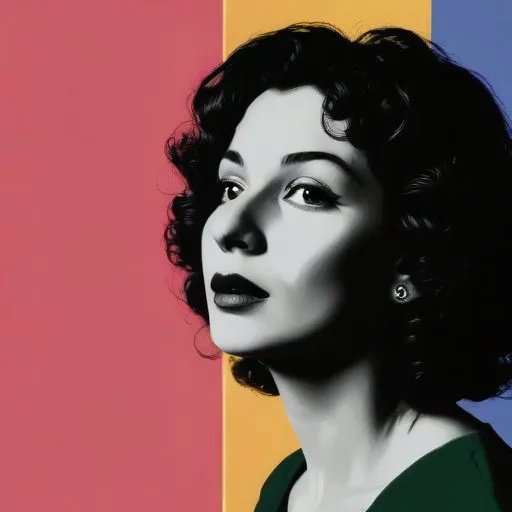
Maya Deren: The Visionary Experimental Filmmaker
Experimenting with the Boundaries of Film
Maya Deren, born Eleonora Derenkovskaya, was a Ukrainian-American experimental filmmaker who pushed the boundaries of cinematic storytelling in the 1940s and 1950s. Her innovative short films, which combined dance, ethnography, and gestalt psychology, continue to influence American cinema history.
Early Life and Influences
Born on May 12, 1917, in Kyiv, Ukraine, Deren grew up in a Jewish family with a father who was a psychologist. The family fled Ukraine in 1922 due to antisemitic pogroms and settled in Syracuse, New York. Deren's interest in dance and movement led her to study ethnography and gestalt psychology, which later influenced her filmmaking style.
Breaking Ground with Meshes of the Afternoon
Deren's most influential film,
Meshes of the Afternoon (1943), was a collaboration with her then-husband Alexander Hammid. This 14-minute short film, shot in black and white, explored the relationship between time, space, and the human experience. Through innovative camera techniques, such as multiple exposures, jump cuts, and slow motion, Deren created a dreamlike atmosphere that challenged traditional notions of film narrative.
A Pioneering Filmmaker and Artist
Deren went on to create several more experimental films, including
At Land (1944),
A Study in Choreography for Camera (1945), and
Ritual in Transfigured Time (1946). She wrote, produced, directed, edited, and photographed these films with the help of only one other person, Hella Heyman, her camerawoman. Deren's films showcased her expertise in dance, ethnography, and gestalt psychology, and her innovative techniques paved the way for future experimental filmmakers.
Influence on Modern Cinema
Maya Deren's contributions to experimental film have inspired generations of filmmakers, artists, and scholars. Her work has been recognized by the Museum of Modern Art, the Walker Art Center, and the Getty Research Institute, among others. Deren's legacy continues to influence contemporary artists working in film, video, and new media.
Philosophical Contributions and Beliefs
Deren believed that film should create an experience, rather than simply tell a story. She saw film as a medium that could tap into the viewer's subconscious, evoking emotions and thoughts that might not be accessible through other art forms. Deren's philosophy was rooted in her background in gestalt psychology, which emphasized the importance of perception and the role of the viewer in shaping the artistic experience.
Personal Milestones and Key Life Events
- 1922: Deren's family fled Ukraine due to antisemitic pogroms and settled in Syracuse, New York.
- 1943: Deren collaborated with Alexander Hammid on Meshes of the Afternoon, her most influential film.
- 1940s-1950s: Deren created several experimental films, solidifying her reputation as a pioneering filmmaker.
- 1961: Deren passed away on October 13, at the age of 44.
Legacy and Educational Contributions
Maya Deren's work continues to inspire new generations of artists, filmmakers, and scholars. Her innovative techniques and philosophical contributions have made her a legendary figure in experimental film. Deren's legacy serves as a reminder of the power of film to challenge our perceptions and shape our understanding of the world around us.
FAQ
What was Maya Derens approach to filmmaking?
Maya Derens approach to filmmaking was experimental and avant-garde, often blurring the lines between narrative and documentary styles. She explored themes of identity, ritual, and the human experience.
What is Maya Derens most famous film?
Maya Derens most famous film is Meshes of the Afternoon, a surrealist short film that explores the world of dreams and the subconscious.
What was Maya Derens background in dance and movement?
Maya Deren had a background in dance and movement, having studied with Martha Graham and later incorporating elements of dance into her filmmaking.
How did Maya Derens Ukrainian heritage influence her work?
Maya Derens Ukrainian heritage had a significant influence on her work, with many of her films exploring themes of identity, culture, and displacement.
What was Maya Derens role in the development of American avant-garde film?
Maya Deren was a key figure in the development of American avant-garde film, influencing a generation of filmmakers and helping to establish the genre as a distinct art form.