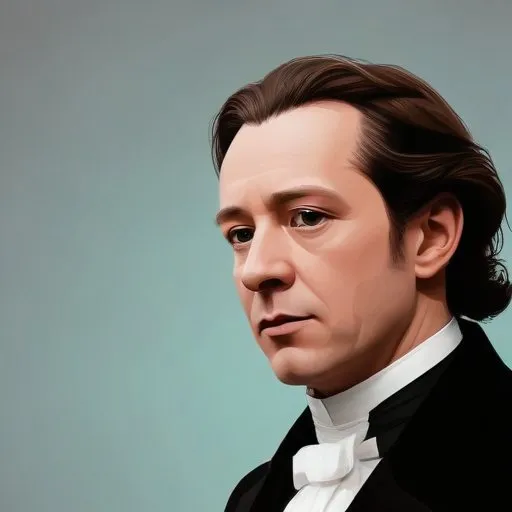
Michael William Balfe: The Maestro of Opera and Song
A Legendary Composer and Conductor
Michael William Balfe is revered as one of the most prolific and influential composers of opera and song in the 19th century. With a career spanning over 40 years, he left an indelible mark on the world of music, earning him the title of "the most successful composer of operas of his generation."
Early Life and Career
Born on May 15, 1808, in Dublin, Ireland, Balfe showcased his musical talents at a tender age. His father, a dancing master and violinist, and his instructor William Rooke, recognized and nurtured his gifts. The young Balfe played the violin for his father's dancing classes and even composed a polacca at the age of seven.
Operatic Ambitions
Balfe's operatic career took off in London, where he debuted as a singer in 1825. Although his initial performances were met with limited success, he persevered, eventually becoming a protégé of
Gioachino Rossini. In 1827, he sang Figaro in
The Barber of Seville at the Italian opera in Paris, solidifying his position as a formidable opera singer.
A Compositional Genius
Balfe's compositional prowess flourished in Italy, where he wrote his first dramatic work, the ballet
La Perouse. He went on to compose at least 29 operas, 250 songs, and several cantatas, cementing his reputation as a master of operatic composition.
The Bohemian Girl: A Timeless Masterpiece
Balfe's magnum opus,
The Bohemian Girl, premiered in 1843 and remains one of his most beloved and enduring works. This mesmerizing opera has captivated audiences with its beautiful melodies, witty dialogue, and poignant story, solidifying its place as a cornerstone of operatic repertoire.
A Conductor's Baton
Balfe's conducting career was equally impressive, with posts at Her Majesty's Theatre, where he directed Italian Opera for seven years. His leadership and expertise earned him the respect of his peers and the admiration of his audiences.
Legacy and Impact
Michael William Balfe's contributions to opera and music have been profound and far-reaching. His works have inspired generations of composers, and his legacy continues to enchant audiences today. As a testament to his enduring impact, his music remains a staple of opera houses and concert halls around the world.
Trivia and Fun Facts
- Balfe was known for his remarkable versatility, having performed as a violinist, singer, and conductor.
- He was a prolific composer, with at least 29 operas, 250 songs, and several cantatas to his credit.
- Balfe's music was celebrated by audiences and critics alike, earning him the respect of his contemporaries, including Rossini and Meyerbeer.
Personal Milestones and Key Life Events
- 1823: Balfe moved to London and became a violinist in the orchestra of the Theatre Royal, Drury Lane.
- 1825: He debuted as an opera singer in Norwich, although the performance was met with limited success.
- 1827: Balfe sang Figaro in The Barber of Seville at the Italian opera in Paris.
- 1843: His opera The Bohemian Girl premiered, cementing his reputation as a master composer.
Quotes and Memorable Sayings
"Music is the divine way to tell beautiful, poetic things to the heart."
— Michael William Balfe
Historical Context and Legacy
Michael William Balfe's life and work are a testament to his dedication to his craft and his passion for music. His contributions have enriched the world of opera, and his legacy continues to inspire new generations of composers, singers, and music lovers alike.
FAQ
What is Michael William Balfes contribution to Irish opera?
Michael William Balfe was a renowned Irish composer and conductor who made significant contributions to Irish opera. He composed over 30 operas, including The Bohemian Girl and Falstaff, which were highly acclaimed in Europe and the US. His work helped to establish a national identity for Irish music.
What was Michael William Balfes early life like?
Michael William Balfe was born on May 15, 1808, in Dublin, Ireland. His early life was marked by poverty, and he was largely self-taught in music. He began his musical career as a violinist and later became a composer, conductor, and singer.
What are some of Michael William Balfes notable works?
Michael William Balfes notable works include TheSiege of Rochelle, The Maid of Artois, and Satanella. His opera The Bohemian Girl is considered one of his masterpieces and was a huge success in Londons Drury Lane Theatre.
How did Michael William Balfe influence Irish music?
Michael William Balfes contributions to Irish music were immense. He helped to create a national identity for Irish music, incorporating traditional Irish melodies into his compositions. His work also inspired a new generation of Irish composers and musicians.
What awards and recognition did Michael William Balfe receive?
Michael William Balfe received numerous awards and recognition for his contributions to music. He was appointed as the conductor of the Italian Opera in Paris and later became the musical director of the Queens Theatre in London. He was also knighted in 1871 for his services to music.