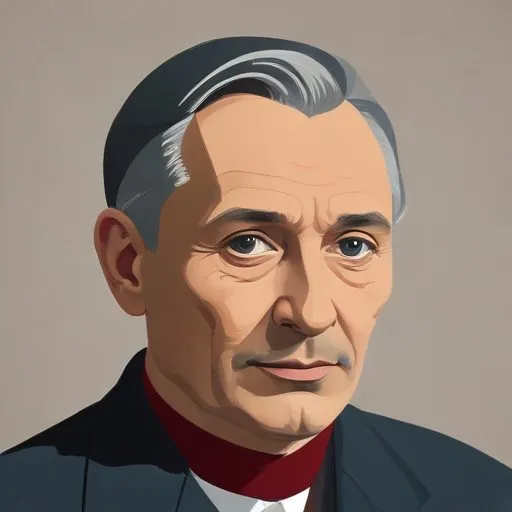
Mikhail Sholokhov

Mikhail Sholokhov

Mikhail Sholokhov was born on May 24th, 1905

Full Name: Mikhail Aleksandrovich Sholokhov
Nationality: Russian
Profession: Novelist and Short Story Writer
Place of Birth: Veshenskaya, Russia
Notable Works: And Quiet Flows the Don
Nobel Prize: 1965 Nobel Prize in Literature
Style: Realism
Language: Russian

A Russian literary giant, renowned for his vivid portrayals of rural life and the human experience during times of war and social change, earning him the Nobel Prize in Literature.

Timeline
1905
Born in Kruzhilin, Russia
Mikhail Sholokhov was born on May 24, 1905, in Kruzhilin, Russia.
1926
Published his first novel
Sholokhov published his first novel, Tikhy Don (And Quiet Flows the Don), in 1926, which became a literary sensation.
1940
Worked as a journalist and writer
Sholokhov worked as a journalist and writer in the 1940s, covering World War II and the Soviet Unions role in it.
1965
Awarded the Nobel Prize in Literature
Sholokhov was awarded the Nobel Prize in Literature in 1965 for his contributions to Soviet literature.
1984
Died in Veshenskaya, Russia
Mikhail Sholokhov died on February 21, 1984, in Veshenskaya, Russia, leaving behind a legacy as a celebrated Russian novelist.
Mikhail Sholokhov

Mikhail Sholokhov Quiz

Mikhail Sholokhov's most famous novel is set during which war?

Score: 0/5
FAQ
What is Mikhail Sholokhovs most famous literary work?
Mikhail Sholokhov is best known for his epic novel And Quiet Flows the Don, which won him the Nobel Prize in Literature in 1965.
What is the significance of Mikhail Sholokhovs Nobel Prize?
Sholokhovs Nobel Prize marked a rare recognition of Soviet literature on the international stage, cementing his status as a major literary figure of the 20th century.
What are the key themes in Mikhail Sholokhovs writing?
Sholokhovs works often explored the lives of the Don Cossacks, delving into themes of love, war, and the human condition, set against the backdrop of the Russian Revolution and World War II.
How did Mikhail Sholokhovs life influence his writing?
Sholokhovs experiences as a Red Army soldier during World War II and his roots in the Don Cossack region deeply informed his writing, lending authenticity to his characters and stories.
What is Mikhail Sholokhovs legacy in Russian literature?
Sholokhovs contributions to Russian literature are immense, and his works continue to be widely read and studied, offering a window into the countrys tumultuous 20th-century history.

Related People:

Aleksandr Solzhenitsyn

Born in 1918

A Russian literary giant who exposed the harsh realities of Soviet forced labor camps through his writings, earning him a Nobel Prize in Literature.

Leo Tolstoy

Born in 1828

A Russian literary giant who penned sweeping novels like "War and Peace" and "Anna Karenina", exploring the human condition with profound insight and masterful storytelling.

Fyodor Dostoevsky

Born in 1821

A Russian literary mastermind who penned psychologically complex novels that probed the human condition, exploring themes of morality, philosophy, and the darker aspects of human nature.

Vladimir Nabokov

Born in 1899

A Russian-born novelist and critic, renowned for crafting intricate, lyrical prose and exploring themes of identity, morality, and the human condition through works like "Lolita" and "Pale Fire".

Andrei Bely

Born in 1880

A Russian literary giant, known for pioneering the avant-garde movement in literature, blending poetry and prose to create innovative, symbolic works that explored the human experience.

Ivan Bunin

Born in 1870

A Russian literary master, celebrated for his poignant and evocative short stories that captured the essence of rural Russia, earning him the Nobel Prize in Literature in 1933.

Anton Chekhov

Born in 1860

A renowned Russian literary mastermind, celebrated for crafting poignant, psychologically nuanced tales that probe the human condition, and pioneering the modern short story genre.

Maxim Gorky

Born in 1868

A Russian literary giant who penned powerful, realistic stories of the working class and social change, influencing the development of socialist realism.