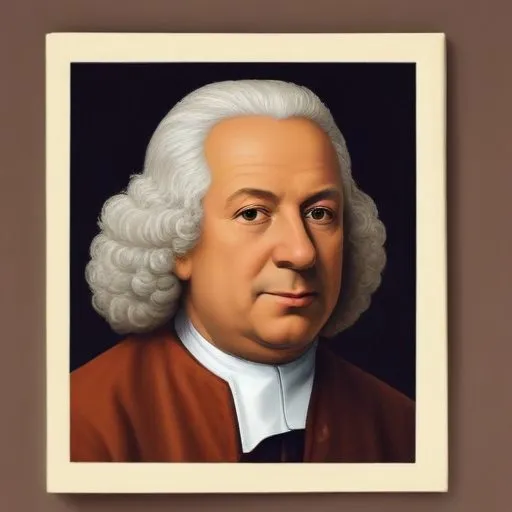
Nicolaus I Bernoulli

Nicolaus I Bernoulli

Nicolaus I Bernoulli was born on October 21st, 1687

Full Name: Nicolaus I Bernoulli
Nationality: Swiss
Profession: Mathematician and theorist
Born: 1695
Death: 1726
Field: Probability theory
Notable Work: Ars Conjectandi
Influenced By: Jakob Bernoulli

Swiss mathematician and theorist who developed the Bernoulli numbers and contributed significantly to number theory, probability, and algebra. His work laid the foundation for modern mathematics and statistics.

Timeline
1695
Birth of Nicolaus Bernoulli
Nicolaus Bernoulli was born in Basel, Switzerland, to a family of mathematicians.
1716
Graduation from University of Basel
Bernoulli graduated from the University of Basel, where he studied law and mathematics.
1722
Lecturer at University of Basel
Bernoulli became a lecturer at the University of Basel, where he taught mathematics and law.
1729
Publication of Specimen Infinitorum
Bernoulli published his work Specimen Infinitorum, a treatise on infinite series and probability theory.
1726
Death
Nicolaus Bernoulli died at the age of 31, leaving behind a significant contribution to the field of mathematics.
Nicolaus I Bernoulli

Nicolaus I Bernoulli Quiz

Nicolaus I Bernoulli's work laid the foundation for which field of study?

Score: 0/5
FAQ
What was Nicolaus I Bernoullis contribution to mathematics?
Nicolaus I Bernoulli was a Swiss mathematician, who made significant contributions to the fields of probability theory, number theory, and algebra, and was a member of the famous Bernoulli family of mathematicians.
What was Nicolaus I Bernoullis most famous work?
Nicolaus I Bernoullis most famous work is his book ARS CONJECTANDI, which deals with probability theory and the Bernoulli numbers, a sequence of rational numbers that arise in number theory.
What was Nicolaus I Bernoullis family background?
Nicolaus I Bernoulli was born in 1695 to Nicolaus Bernoulli, a member of the Bernoulli family, and was the uncle of the famous mathematician Daniel Bernoulli.
What were Nicolaus I Bernoullis academic achievements?
Nicolaus I Bernoulli studied law and mathematics at the University of Basil, and later became a professor of mathematics at the University of St. Petersburg.
What was Nicolaus I Bernoullis relationship with other mathematicians?
Nicolaus I Bernoulli corresponded with other prominent mathematicians of his time, including Gottfried Wilhelm Leibniz, and was a member of several learned societies, including the Russian Academy of Sciences.

Related People:

Johann Bernoulli

Born in 1667

A renowned 17th-century mathematician who made significant contributions to the development of calculus, probability, and optics, leaving an indelible mark on the scientific community.

Daniel Bernoulli

Born in 1700

This 18th-century polymath is renowned for his groundbreaking work on fluid dynamics, particularly the Bernoulli's Principle, which explains the relationship between pressure and velocity in fluids.

Nicolaus I Bernoulli

Born in 1687

Swiss mathematician and theorist who developed the Bernoulli numbers and contributed significantly to number theory, probability, and algebra. His work laid the foundation for modern mathematics and statistics.

Leonhard Euler

Born in 1707

Pioneering mathematician and physicist who made immense contributions to fields like calculus, number theory, and optics, shaping the course of modern mathematics and physics.

Pierre-Simon Laplace

Born in 1749

Developed nebular hypothesis of the origin of the solar system and formulated Laplace's equation, a fundamental concept in mathematics and physics. He's considered the founder of celestial mechanics.

Joseph-Louis Lagrange

Born in 1736

Developed calculus, number theory, and celestial mechanics, making significant contributions to the fields of mathematics and astronomy.

Adrien-Marie Legendre

Born in 1752

Developed the theory of elliptic integrals, and his work on number theory laid the foundation for modern cryptography.

Carl Friedrich Gauss

Born in 1777

A pioneer in mathematics and physics, he made major contributions to number theory, algebra, and electromagnetism, shaping our understanding of the natural world.