


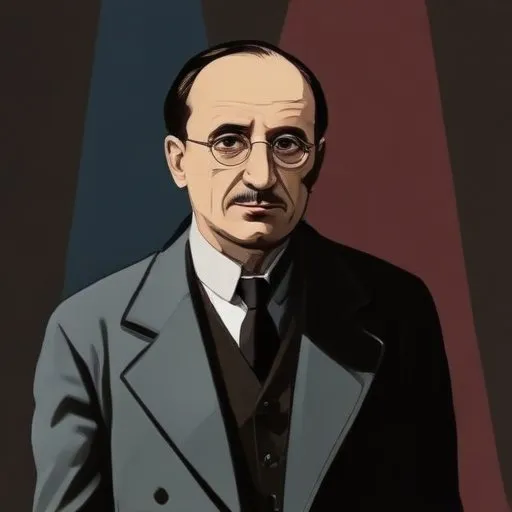
A Jewish-Austrian writer who kept a diary during his time in the Lodz Ghetto, providing a rare and intimate account of life in the ghetto before its liquidation. His diary is a valuable historical resource and a powerful testament to the human spirit.
Born in 1883
A writer of surreal, psychologically complex fiction that explores the human condition, often featuring isolated protagonists in absurd, nightmarish scenarios.
Born in 1884
A Czech writer, composer, and journalist who preserved and published the works of his friend Franz Kafka, introducing his unique literary style to the world. He also wrote novels, plays, and essays, exploring themes of identity, morality, and social justice.
Born in 1878
A philosopher who explored the nature of human relationships, dialogue, and existence, and is best known for his concept of "I-Thou" relationships, which emphasizes mutual respect and understanding.
Born in 1905
A Bulgarian-Swiss writer who explored the human condition through novels, plays, and memoirs, winning the Nobel Prize in Literature in 1981 for his thought-provoking works.
Born in 1886
Austrian-American author and poet, known for his novels that explored the decay of values in modern society, particularly in his masterpiece "The Death of Virgil".
Born in 1881
A celebrated writer of psychological novels and biographies that probed the human condition, known for his vivid storytelling and insightful portrayals of historical figures.
Born in 1894
Austrian journalist and author who wrote novels and essays that explored the decline of the Austro-Hungarian Empire and the rise of fascism in Europe, known for his lyrical and poignant prose.
Born in 1878
A Polish-German physician and author who wrote influential novels that explored the human condition, blending psychology, philosophy, and social commentary. His works are considered precursors to magical realism.