


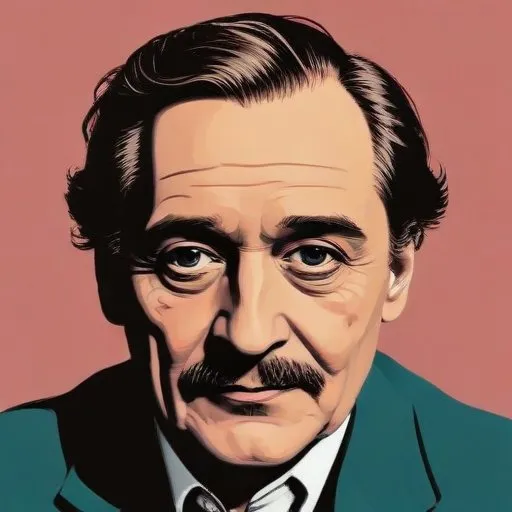
A German literary mastermind, renowned for his poetic and dramatic works that explored the human condition, earning him the Nobel Prize in Literature in 1910.
Paul Heyse, a distinguished German writer, poet, and translator, is renowned for his remarkable contributions to literature, earning him the prestigious Nobel Prize in Literature in 1910. With an impressive repertoire of over 177 short stories, sixty dramas, and numerous novels and poems, Heyse solidified his position as a dominant figure in German literature.
Born on March 15, 1830, in Berlin, Germany, Heyse was the son of Karl Wilhelm Ludwig Heyse, a professor at the University of Berlin and a philologist. His paternal grandfather, Johann Christian August Heyse, was a celebrated German grammarian and lexicographer. Heyse's mother was Jewish, and his family connections allowed him to enter the artistic circles of Berlin at a young age.
Heyse attended the Friedrich-Wilhelms-Gymnasium until 1847, where he was remembered as a model student. He later began studying classical philology, during which he met influential figures such as Jacob Burckhardt, Adolph Menzel, and Theodor Fontane.
Heyse's literary career spanned over six decades, during which he wrote novels, poetry, short stories, and dramas. He was a member of two important literary societies: the Tunnel über der Spree in Berlin and Die Krokodile in Munich. His works were characterized by idealism, lyricism, and a deep understanding of human nature.
Some of his notable works include:
Heyse's literary genius was recognized globally, and he received numerous awards and honors. The pinnacle of his recognition came in 1910 when he was awarded the Nobel Prize in Literature, solidifying his position as a master of German literature.
Heyse's works had a profound impact on German literature and beyond. His idealism and lyricism influenced generations of writers, and his contributions continue to be celebrated and studied. He is remembered as one of the greatest literary figures of Germany, alongside giants like Goethe.
As one of the oldest laureates in literature, Heyse's life and works serve as a testament to the power of dedication, hard work, and creativity.
Heyse married Margarete Klingenberg in 1854, and the couple had three children together. He was close friends with Emanuel Geibel, who introduced him to his future father-in-law, Franz Kugler. Heyse's family connections and networking played a significant role in shaping his literary career.
Throughout his life, Heyse remained committed to his art, and his legacy continues to inspire and captivate readers worldwide.
Born in 1813
A revolutionary composer who transformed opera with his epic, mythological works, creating a new era of musical storytelling. His iconic operas, such as "Der Ring des Nibelungen," continue to captivate audiences worldwide.
Born in 1819
A 19th-century literary mastermind, celebrated for his vivid storytelling and poetic flair, particularly in his novel "Green Henry", which explores the human condition. His works are considered a cornerstone of Swiss literature.
