


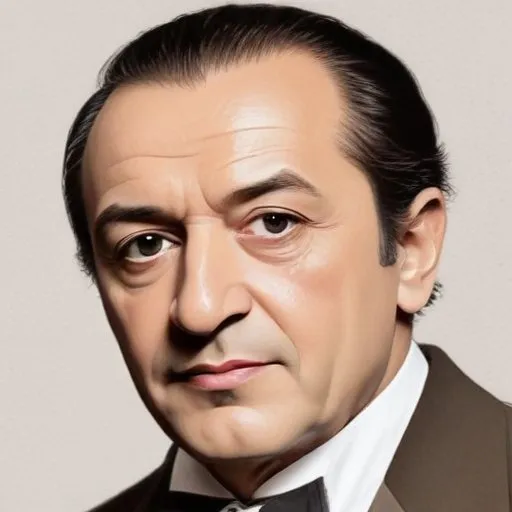
A Turkish-French composer and historian, he wrote music for films and stage productions, and researched the history of jazz and popular music in France. His work blended different cultural influences, creating a unique sound.
Paul Misraki, the renowned French composer, left an indelible mark on the world of film music, scoring over 130 films across six decades. With a career spanning from the 1930s to the 1990s, Misraki's work was synonymous with the golden era of French cinema, collaborating with iconic directors like Jean Renoir, Claude Chabrol, and Jean-Luc Godard.
Born Paul Misrachi on January 28, 1908, in Constantinople, Ottoman Empire (now Istanbul, Turkey), Misraki was part of a French Jewish family of Italian descent. He demonstrated a natural aptitude for music from an early age, which led him to study classical composition in Paris. By the 1930s, he had established himself as a jazz pianist, arranger, and writer of popular songs.
Misraki's foray into film scoring began in the early 1930s, with his first credited work being Jean Renoir's On purge bébé Laxative (1931). This marked the beginning of a long and fruitful collaboration with Renoir, which continued even during World War II when both artists fled to Argentina and eventually, Hollywood. During his time in Hollywood, Misraki composed music for all of Renoir's American films.
After the war, Misraki returned to France, where he worked tirelessly throughout the 1950s, scoring six or more films a year. This period saw him collaborate with prominent directors like Yves Allgret, Jean Boyer, Jacques Becker, and Orson Welles. The 1960s brought opportunities to work with the French New Wave pioneers, including Jean-Luc Godard (Alphaville, 1965) and Claude Chabrol, for whom he scored several films.
Misraki's contributions to French cinema were recognized with the honor of Chevalier de la Légion d'Honneur. Although he slowed down in the latter years of his life, Misraki continued to compose intermittently until his final score at the age of 85. His expansive body of work has left a lasting impact on the world of film music, earning him a place among the most prolific and celebrated French composers of all time.
Misraki's legacy is a testament to his dedication, creativity, and passion for film music. As a composer, he was instrumental in shaping the soundtracks of French cinema, leaving behind a rich and diverse body of work that continues to inspire and influence generations of filmmakers and composers.
Born in 1903
A renowned composer and conductor, famous for blending Armenian folk elements with classical music, creating iconic works like the "Sabre Dance" and "Masquerade Suite".
Born in 1892
A French composer and educator who blended jazz and classical music to create a unique sound, and is best known for his ballet scores and chamber music compositions.
Born in 1866
A pioneering composer of minimalist and avant-garde music, known for his unconventional and humorous approach to classical music, creating a new kind of simplicity and clarity. His music often featured repetitive patterns and witty titles.
Born in 1899
A renowned French pianist and composer, celebrated for his eclectic and innovative works that blend jazz, classical, and sacred music, leaving a lasting impact on modern classical music.
Born in 1916
A renowned French pianist, composer, and educator, he was a prominent figure in 20th-century classical music, celebrated for his unique and innovative compositions.
Born in 1905
A French composer who blended modernist techniques with ancient and exotic influences, creating a unique sound that explored the intersection of Western and non-Western musical traditions.
Born in 1908
A French composer and ornithologist who merged birdsong with avant-garde music, creating a unique and influential sound. His work continues to inspire musicians and bird enthusiasts alike.
