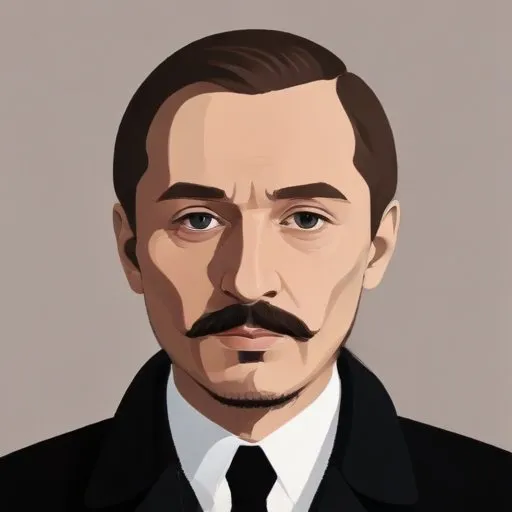
Pavel Chistyakov: The Visionary Russian Painter and Art Teacher
A Master of Historical and Genre Scenes
Pavel Chistyakov was a renowned Russian painter and art teacher, celebrated for his captivating historical and genre scenes, as well as his stunning portraits. His contributions to the world of art are multifaceted, and his influence can still be felt in the art world today.
Early Life and Education
Born on July 5, 1832, in Russia, Chistyakov's father was a freed serf who worked as an estate manager. Despite the financial struggles, his father ensured that Pavel received a proper education. He studied at a parish school in Krasny Kholm and later at the secondary school in Bezhetsk. In 1849, he enrolled at the Imperial Academy of Arts, where he honed his skills under the guidance of Pyotr Basin and Maxim Vorobiev.
Award-Winning Artist
Chistyakov's talent was soon recognized, and he received several awards during his time at the academy. In 1854-1858, he was awarded two silver medals and one gold medal for his depiction of Hermogenes in prison. This was followed by another gold medal in 1861 for his painting of Sophia of Lithuania at the wedding of her son, Vasily II.
Teaching and Travel
After graduating, Chistyakov taught at a preparatory school in Saint Petersburg before embarking on a journey to Germany, Paris, and Rome. This exposure broadened his artistic horizons, and upon his return to Russia in 1870, he was awarded the title of Academician for his outstanding works.
A Devoted Teacher
Chistyakov dedicated himself to teaching, initially at the Imperial Society for the Encouragement of the Arts and later at the academy. He developed his unique teaching methods, which combined direct observation with scientific study. This approach inspired a new generation of artists, and he became an associate professor at the academy in 1872. Chistyakov's influence extended beyond the classroom, as he became a member of the academic council following the reorganization of 1892.
Notable Works and Legacy
Chistyakov's artwork is characterized by its historical nature, infused with a deep psychological depth. His contributions to the art world are numerous, including his role as the head of the Department of Mosaics from 1890 to 1912. During this period, he oversaw several mosaic projects, notably at the Cathedral of Christ the Saviour and Saint Isaacs Cathedral.
Personal Life
Chistyakov's personal life was marked by his marriage to Vera, the daughter of the painter Yegor Meyer. Vera was also an accomplished artist in her own right. The street where they lived was later named in Chistyakov's honor, a testament to his enduring legacy.
A Lasting Impact
Pavel Chistyakov's influence on Russian art and culture is immeasurable. As an artist, teacher, and mentor, he left an indelible mark on the art world. His commitment to his craft and his dedication to nurturing future generations of artists have ensured that his legacy continues to inspire and educate artists to this day.
FAQ
What was Pavel Chistyakovs contribution to Russian art?
Pavel Chistyakov was a Russian painter and educator who made significant contributions to the development of Russian art, particularly in the fields of landscape and genre painting. He was a member of the Peredvizhniki, a group of Russian realist artists.
What is Pavel Chistyakovs style of painting?
Pavel Chistyakovs style of painting is characterized by its realism, attention to detail, and emphasis on light and color. He was particularly known for his landscapes, which captured the beauty and ruggedness of the Russian countryside.
What are some of Pavel Chistyakovs most famous works?
Pavel Chistyakovs most famous works include The Coast of the Gulf of Finland, The Forest in the Vicinity of Moscow, and The Lake. These paintings showcase his skill in capturing the beauty of the Russian landscape and his attention to detail and composition.
How did Pavel Chistyakovs art reflect his Russian heritage?
Pavel Chistyakovs art reflected his Russian heritage through its emphasis on the Russian landscape, folk culture, and national identity. His paintings often featured traditional Russian scenes, such as peasants working in the fields or rural landscapes, which helped to promote a sense of national pride and identity.