


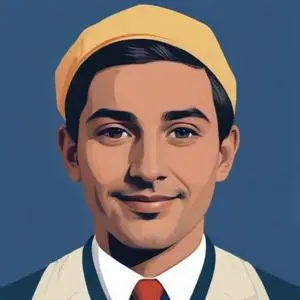
A British pioneer who established the world's first voluntary blood donor service, revolutionizing medical care by making blood transfusions possible.
Percy Lane Oliver is credited with founding the world's first volunteer blood donation service, a groundbreaking achievement that has saved countless lives. His innovative approach to blood donation has made him a pioneer in the field of medicine, and his legacy continues to inspire and influence the way we think about blood donation today.
Olivier was born on 11 April 1878 in St. Ives, Cornwall, to two teachers. His family moved to London five years later, where he grew up to become a librarian for the Camberwell Borough Council. In 1901, he took up a position with the Camberwell Town Hall, and in 1905, he married Ethel Grace, with whom he had three children.
In 1921, Oliver responded to a call from a local hospital requesting an urgent blood donation. This experience led him to organize a panel of donors whose blood types were known and who were available to donate on request – a revolutionary concept at the time. What was unusual about Oliver's approach was that the donors were not paid, a decision that was both bold and innovative.
Oliver's blood donation service, which he ran out of his London home, started with just 20 volunteers. However, through his tireless efforts, the service grew exponentially, reaching approximately 2700 volunteers by 1938. His model of voluntary blood donation was soon adopted throughout Britain and other countries, cementing his legacy in the field of medicine.
Olivier's contributions to society were recognized, and he was appointed to the Order of the British Empire in 1918, along with his wife Ethel. His selfless work in the field of volunteer blood donation has earned him a place in the annals of medical history.
Olivier's pioneering work in volunteer blood donation has had a profound impact on modern society. His legacy has inspired many to follow in his footsteps, resulting in the establishment of numerous blood banks and transfusion services around the world. Today, volunteer blood donation is a norm, and Oliver's contribution to this movement is immeasurable.
Percy Lane Oliver's selfless work has left an indelible mark on the world of medicine. His innovative approach to volunteer blood donation has saved countless lives, and his legacy continues to inspire future generations. Today, Oliver is remembered as a true pioneer, whose contributions to humanity will never be forgotten.
Born in 1749
Developed the smallpox vaccine, revolutionizing disease prevention and saving countless lives.
Born in 1881
Discovered penicillin, a revolutionary antibiotic, and pioneered its use in medicine. This breakthrough has saved countless lives and transformed the field of healthcare.
Born in 1820
Pioneering nurse and statistician who revolutionized healthcare by introducing sanitation practices and data-driven decision making, becoming the founder of modern nursing.
Born in 1827
Pioneering antiseptic surgery, revolutionizing medical practices with germ-killing techniques, saving countless lives.
Born in 1890
A pioneer in statistics and genetics, he developed techniques for data analysis and laid the foundations for modern evolutionary theory. His work has far-reaching implications in fields like medicine, agriculture, and social sciences.
Born in 1915
A Nobel Prize-winning biologist and immunologist who made groundbreaking discoveries in tissue transplantation and immunology, leading to significant advancements in organ transplants and our understanding of the immune system.
Born in 1916
Pioneering scientist who discovered the structure of DNA, revolutionizing our understanding of genetics and life itself.
98 Years Old
Discovered the structure of DNA, revolutionizing our understanding of genetics and earning a Nobel Prize. Pioneering work in molecular biology has far-reaching implications for medicine and beyond.
