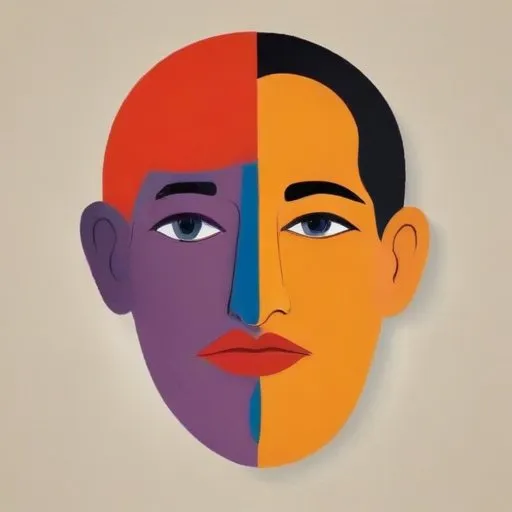
Peter Blume: The Visionary Artist who Defied Conventions
A Legacy of Innovation and Provocation
Peter Blume, a Russian-born American painter and sculptor, was a force to be reckoned with in the art world. Known for his innovative fusion of folk art, Precisionism, Parisian Purism, Cubism, and Surrealism, Blume's work continues to inspire and provoke audiences to this day.
Early Life and Influences
Born on October 27, 1906, in Smarhon, Russian Empire (now Belarus), Blume emigrated with his Jewish family to New York City in 1912. The family settled in Brooklyn, where Blume's fascination with art began. He studied art at the Educational Alliance, the Beaux-Arts Institute of Design, and the Art Students League of New York, establishing his own studio by 1926.
Artistic Training and Early Career
Blume trained with renowned artists Raphael Soyer and Isaac Soyer, and exhibited with Charles Daniel. His talent didn't go unnoticed, as he was soon patronized by the influential Rockefeller family. In 1931, Blume married Grace Douglas, and although they didn't have any surviving children, his artistic career flourished.
Breakthrough and Recognition
Blume's big break came in 1934, when he won first prize at the Carnegie Institute International Exhibition for his painting "South of Scranton." This recognition catapulted him to fame, and in 1932, he received a prestigious Guggenheim Fellowship, which allowed him to spend a year in Italy. During this period, he created some of his most iconic works, including "Eternal City" (1934-1937), a politically charged masterpiece that portrayed
Benito Mussolini as a jack-in-the-box emerging from the Colosseum.
"Eternal City" was a bold statement, and its provocative nature sparked both criticism and admiration. When Mussolini was deposed in 1943, the Museum of Modern Art purchased the artwork for its permanent collection, cementing Blume's status as a visionary artist.
Public Art and Murals
In addition to his studio work, Blume also created public art, including post office murals in Geneva, New York, and Canonsburg, Pennsylvania, as part of the Section of Painting and Sculpture of the U.S. Treasury Department.
Honors and Legacy
Throughout his career, Blume received numerous accolades, including election to the National Academy of Design as an Associate member in 1948 and full membership in 1956. His work continues to inspire generations of artists, and his legacy is a testament to the power of innovation and creative courage.
Personal Milestones and Key Life Events
- 1906: Born on October 27th in Smarhon, Russian Empire (now Belarus)
- 1912: Emigrated to New York City with his family
- 1926: Established his own studio
- 1931: Married Grace Douglas
- 1932: Received a Guggenheim Fellowship
- 1934: Won first prize at the Carnegie Institute International Exhibition
- 1943: "Eternal City" purchased by the Museum of Modern Art
- 1948: Elected to the National Academy of Design as an Associate member
- 1956: Became a full member of the National Academy of Design
- 1992: Passed away on November 30th at the age of 86
Fun Facts and Trivia
- Blume's work often incorporated Renaissance techniques, which he admired greatly.
- He spent five years creating "Eternal City," which was inspired by his trip to Italy as a Guggenheim Fellow.
- Blume's studio was located in the heart of New York City's art district.
Influence on Modern Society
Peter Blume's groundbreaking artwork continues to inspire artists, designers, and thinkers today. His fusion of styles and techniques paved the way for future generations of innovators, ensuring his legacy as a true visionary.
FAQ
What style of art did Peter Blume create?
Peter Blume was a pioneer of modern American art, known for his unique blend of surrealism, abstraction, and representational art. His style was characterized by bold colors and dreamlike imagery.
What themes did Peter Blume explore in his art?
Peter Blumes art explored themes such as nature, technology, and the human condition. He was particularly interested in exploring the relationship between the individual and the environment.
What was Peter Blumes background and education?
Peter Blume was born in Belarus and emigrated to the United States as a young man. He studied art at the Pratt Institute and later at the Art Students League of New York.
What awards and honors did Peter Blume receive?
Peter Blume received several awards and honors, including the Guggenheim Fellowship and the National Institute of Arts and Letters Award.
What is Peter Blumes legacy in American art?
Peter Blumes legacy in American art is that of a pioneering figure who helped shape the countrys modern art movement. His unique style and thematic focus continue to inspire artists today.