


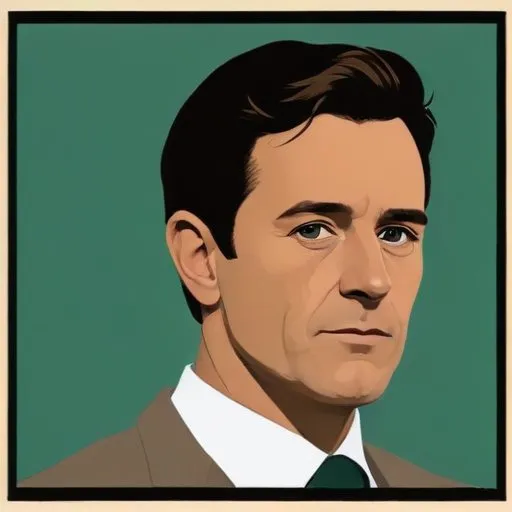
Leader of the Eureka Stockade rebellion, a pivotal event in Australian history, fighting for miners' rights and democracy.
Peter Lalor is revered in Australian history as the leader of the Eureka Rebellion, a pivotal event that marked the birth of democracy in the country. His courageous stand against British colonial rule and his fight for miners' rights has made him a legendary figure in Australian politics.
Lalor was born on February 5, 1827, at Tenakill House, Raheen, in Queens County, Ireland (now County Laois). He was the youngest of 11 children born to Ann (née Dillon) and Patrick Patt Lalor, a landowner and supporter of the abolition of tithes who was a member of the British Parliament.
Lalor received his education at Carlow College and later trained as a civil engineer at Trinity College. His family's strong political roots and his own education laid the foundation for his future leadership role in the Eureka Rebellion.
In 1852, Lalor migrated to Australia with his brother Richard, settling in Victoria. He worked as a civil engineer on the Melbourne-Geelong railway line before resigning to take part in the Victorian Gold Rush. It was during this time that Lalor became acutely aware of the injustices faced by miners, including the high cost of mining licenses and the lack of representation in government.
On November 3, 1854, Lalor led a group of miners in the Eureka Rebellion, a protest against the British colonial government's harsh regulations and lack of democratic representation. The rebellion was crushed, but Lalor's bravery and leadership earned him widespread admiration and respect.
Following the Eureka Rebellion, Lalor was elected to the Victorian Legislative Council in 1856. He became a vocal advocate for democratic reform, pushing for the introduction of the ballot, the abolition of plural voting, and the extension of the franchise to all male colonists.
Lalor's political career spanned over three decades, during which he held various positions, including Speaker of the Legislative Assembly and Member of the Legislative Council. He was a strong opponent of corruption and worked tirelessly to promote transparency and accountability in government.
Lalor married Alicia Dunn in 1855, and the couple had one son, Joseph. After his death on February 9, 1889, Lalor was buried in Melbourne General Cemetery, where he lies alongside his wife and son.
Lalor's legacy extends far beyond his role in the Eureka Rebellion. He is celebrated as a champion of democracy, a pioneer of Australian politics, and a symbol of the country's struggle for independence. His bravery, leadership, and unwavering commitment to democratic principles continue to inspire Australians to this day.
"We swear by the Southern Cross to stand truly by each other and fight to defend our rights and liberties."
- Peter Lalor, Eureka Oath, 1854
Born in 1775
Irish lawyer and politician who championed Catholic emancipation and served as Lord Mayor of Dublin, known for his advocacy for Irish rights and liberties.
Born in 1816
An Irish-Australian politician who served as the 8th Premier of Victoria, known for his role in shaping the colony's early development and infrastructure. He was a key figure in Australian politics during the mid-19th century.
Born in 1815
A pioneering figure in Australian politics, instrumental in shaping the country's federation and unity, known for his tireless advocacy for a unified Australia.
Born in 1790
Australian journalist, explorer, and politician who played a key role in the country's early development, advocating for self-government and contributing to the discovery of new lands. He's also known for his writings on Australian history and politics.
Born in 1754
A British naval officer who led the infamous HMS Bounty expedition and later governed New South Wales, known for his strict discipline and mutiny-filled voyages.
Born in 1738
First Governor of New South Wales, establishing the British colony in Australia in 1788, and overseeing its early development. He played a crucial role in shaping the country's early history.
