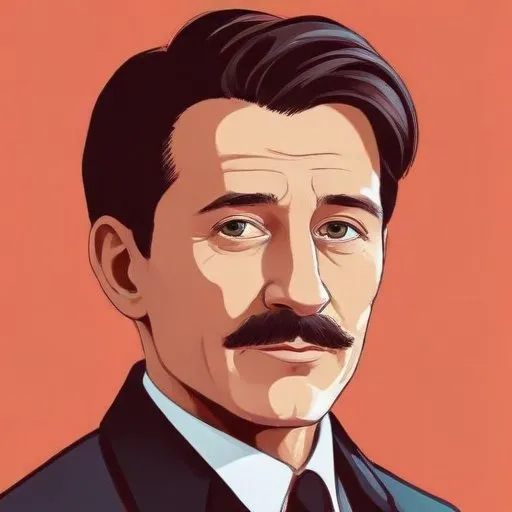
The Visionary Explorer: Unraveling the Life and Legacy of Peter Simon Pallas
A Pioneer in Natural History and Exploration
Peter Simon Pallas, a Prussian-born zoologist, botanist, ethnographer, and explorer, left an indelible mark on the scientific community. His groundbreaking work in natural history, taxonomy, and geography has positioned him as one of the most influential figures of the 18th century.
Early Life and Education
Born on September 22, 1741, in Berlin, Kingdom of Prussia, Pallas was the son of Professor of Surgery Simon Pallas. He demonstrated an insatiable curiosity for natural history from an early age, which led him to study with private tutors and later attend the University of Halle and the University of Göttingen. At just 19, he earned his doctor's degree from the University of Leiden.
The Making of a Naturalist
Pallas' traversal of the Dutch Republic and London further honed his medical and surgical skills. His subsequent settlement in The Hague witnessed the development of his new system of animal classification, which garnered praise from the renowned French zoologist
Georges Cuvier. His seminal work,
Miscellanea Zoologica (1766), introduced several vertebrates new to science, culled from Dutch museum collections. A planned voyage to Southern Africa and the East Indies was aborted when his father recalled him to Berlin, where he began working on his
Spicilegia Zoologica (1767-1780).
Russian Odyssey
In 1767, Pallas was invited by Catherine II of Russia to become a professor at the St Petersburg Academy of Sciences. This marked the beginning of a new chapter in his life, as he embarked on an expedition to central Russian provinces, Povolzhye, Urals, West Siberia, Altai, and Transbaikal between 1768 and 1774. His mission was to collect natural history specimens for the academy, during which he explored the Caspian Sea, the Ural and Altai Mountains, and the upper Amur River, reaching as far eastward as Lake Baikal.
The Pallas Expedition Reports
The regular reports Pallas sent to St Petersburg were compiled and published as
Reise durch verschiedene Provinzen des Russischen Reichs (1771-1776), a comprehensive three-volume work that covered a wide range of topics, including geology, mineralogy, and ethnographic reports.
Legacy and Impact
Pallas' contributions to natural history, taxonomy, and geography have had a lasting impact on modern science. He described over 400 species, many of which remain valid to this day. His work has influenced generations of scientists, including
Charles Darwin, who often referenced Pallas' discoveries in his own writings.
Personal Life and Milestones
- Pallas returned to Berlin in 1810, where he remained until his death on September 8, 1811.
- He was elected a Fellow of the Royal Society (FRS) in 1791 and a Fellow of the Royal Society of Edinburgh (FRSE) in 1794.
Influence on Modern Society
Pallas' expeditions and publications have contributed significantly to the understanding of the natural world, shaping the course of scientific inquiry in the centuries that followed. His work has paved the way for subsequent generations of naturalists, explorers, and scientists, inspiring new discoveries and advancing our knowledge of the world around us.
Fun Facts
- Pallas was only 19 when he earned his doctor's degree, making him one of the youngest ever to achieve this feat.
- He was a prolific writer, publishing numerous papers and books throughout his lifetime.
- Pallas' expedition reports were considered some of the most comprehensive and detailed of his time.
Conclusion
Peter Simon Pallas was a true Renaissance man, whose boundless energy and intellectual curiosity led him to explore the vast expanse of the natural world. His contributions to science, though made over two centuries ago, continue to inspire and inform us today. As we delve into the complexities of our planet, we are reminded of the profound impact of this visionary explorer, whose legacy will endure for generations to come.