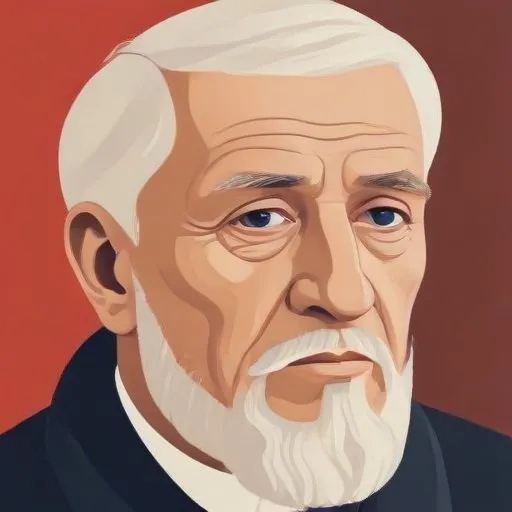
Petrus Peckius the Elder: A Pioneering Jurist in International Maritime Law
Petrus Peckius the Elder, a renowned Netherlandish jurist, is credited with making significant contributions to the field of international maritime law. Born on July 16, 1529, in Zierikzee, Netherlands, Peckius is recognized as one of the first scholars to write extensively on this subject, leaving a lasting impact on the development of maritime law.
Early Life and Education
Peckius was born Pieter Peck, later Latinizing his name to Peckius. He pursued his academic career at the University of Leuven, where he studied Civil and Canon law under the guidance of Gabriel Mudaeus. In 1553, he received his doctorate, a significant milestone in his academic journey.
Academic Career
Peckius's academic career was marked by several notable appointments. In 1555, he was appointed to the chair of introductory law, a position endowed by
Philip II of Spain at the University of Leuven. He later became an ordinarius in Roman Law and professor of Canon law, succeeding Jean Vendeville.
Major Works and Contributions
Peckius's written works include:
- De continentia clericorum sive de concubinatu tollendo (Leuven, 1544)
- Paraphrasis in universam legatorum materiam (Leuven, 1553)
- De testamentis Conjugum libr. V (Leuven, 1564)
- De ecclesiis catholicis aedificandis et reparandis (Leuven, 1573)
- Commentarium ad regulas Juris canonici libri VI decretalium (Leuven, 1564)
- De amortizatione bonorum a principe impetranda (Cologne, 1582)
- Commentaria in omnes pene Juris Civilis titulos ad rem nauticam pertinentes (Leuven, 1556)
His most notable work, Commentaria in omnes pene Juris Civilis titulos ad rem nauticam pertinentes, is considered a seminal work in the field of international maritime law.
Legacy and Impact
Peckius's contributions to international maritime law have had a lasting impact on the development of this field. His works have been widely referenced and cited by subsequent scholars, and his ideas continue to influence modern maritime law.
Personal Life
Peckius was married to Catharina Gillis, sister of a secretary of Margaret of Parma and a governor of Ostend. The couple had several children, including Petrus Peckius the Younger, who followed in his father's footsteps as a jurist.
Career Highlights
- Appointed justice in the Great Council, the supreme law court of the Seventeen Provinces, in 1582
- Served as professor of Canon law at the University of Leuven
- Published numerous works on international maritime law and other legal topics
Historical Context
Peckius lived during a time of great turmoil in the Netherlands, with the Dutch Revolt against Spanish rule affecting the country. Despite this, he remained loyal to the Crown and continued to make significant contributions to the field of law.
Comparative Analysis with Contemporaries
Peckius's work in international maritime law was unparalleled during his time. His contributions surpassed those of his contemporaries, establishing him as a leading authority in this field.
Influence on Modern Society
Peckius's work continues to influence modern maritime law, with his ideas shaping the development of international laws and regulations governing the seas.
FAQ
What was Petrus Peckius contribution to international maritime law?
Petrus Peckius the Elder was a pioneering jurist who made significant contributions to international maritime law. His work, De arte navandi, is considered one of the earliest and most influential treatises on the subject.
How did Petrus Peckius work shape the development of maritime law?
Petrus Peckius work had a profound impact on the development of maritime law. His treatise, De arte navandi, provided a comprehensive framework for understanding and applying maritime law, and it remains an important reference point for scholars and practitioners today.
What is the significance of Petrus Peckius early life?
Petrus Peckius early life is significant because it laid the foundation for his later accomplishments. Born into a family of scholars, he was educated at the University of Leuven and went on to become a respected jurist and writer.
How did Petrus Peckius work influence later jurists?
Petrus Peckius work had a lasting impact on later jurists, who built upon his foundational research and ideas. His treatise, De arte navandi, remains an important reference point for scholars and practitioners of maritime law.
What is Petrus Peckius place in the history of Dutch law?
Petrus Peckius the Elder holds a significant place in the history of Dutch law. As a pioneering jurist, he played a crucial role in shaping the development of maritime law in the Netherlands and beyond.