


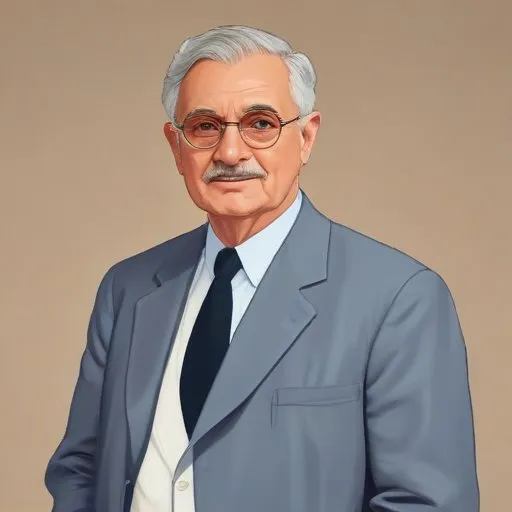
A pioneering endocrinologist who discovered the hormone cortisone and its role in treating rheumatoid arthritis, earning him a Nobel Prize in Physiology or Medicine in 1950.
Philip Showalter Hench, an American physician, made history in 1950 when he, along with Edward Calvin Kendall and Tadeus Reichstein, was awarded the Nobel Prize in Physiology or Medicine for the discovery of cortisone, a hormone that transformed the treatment of rheumatoid arthritis.
Born on February 28, 1896, Hench received his undergraduate education from Lafayette College in Easton, Pennsylvania, where he earned a Bachelor of Arts degree in 1916. He later pursued his medical training at the United States Army Medical Corps and the University of Pittsburgh, earning his doctorate in medicine in 1920.
Hench's medical career began at Mayo Clinic in 1923, where he worked in the Department of Rheumatic Diseases. By 1926, he had become the head of the department, focusing his work on arthritic diseases. It was during this period that he hypothesized that steroids alleviated pain associated with arthritis, leading to his groundbreaking research on cortisone.
In 1928 and 1929, Hench furthered his education at Freiburg University and the von Mller Clinic in Munich, where he refined his understanding of the adrenal cortex and its hormones. This knowledge eventually led to the discovery of cortisone and its application in treating rheumatoid arthritis.
In addition to the Nobel Prize, Hench received numerous awards and honors throughout his career, recognizing his contributions to the field of medicine. Some of his notable awards include:
Hench's lifelong interest in the history and discovery of yellow fever led him to write several papers on the subject. He also served as a Fellow of the Mayo Foundation and was an esteemed member of various medical organizations.
Philip Showalter Hench's discovery of cortisone and its application in treating rheumatoid arthritis revolutionized the field of medicine. His work paved the way for the development of new treatments for various diseases, including cancer, and earned him a place among the most influential physicians of the 20th century.
Today, Hench's legacy extends beyond his medical achievements, inspiring future generations of researchers and physicians to pursue groundbreaking work in the field of medicine.
In conclusion, Philip Showalter Hench's remarkable journey from a small-town Pennsylvania boy to a Nobel laureate is a testament to his dedication, perseverance, and passion for medical research. His work continues to inspire and improve the lives of countless individuals worldwide, cementing his place in the annals of medical history.
Born in 1897
A Polish-Swiss chemist and academic who discovered vitamin C and developed a method for its industrial production, earning a Nobel Prize in Physiology or Medicine in 1937.
Born in 1918
Developed techniques for sequencing DNA and proteins, revolutionizing molecular biology and earning two Nobel Prizes in Chemistry.
Born in 1898
A high-ranking officer in the German Wehrmacht during World War II, known for his involvement in the July 20 plot to assassinate Adolf Hitler.
Born in 1896
A Nobel Prize-winning biochemist and pharmacologist who discovered the Cori cycle, a crucial process by which our bodies convert glucose into energy. Their work has had a lasting impact on our understanding of metabolism and disease.
Born in 1896
A pioneering scientist who discovered how the body breaks down and uses carbohydrates, earning a Nobel Prize in Physiology or Medicine in 1947. Her groundbreaking work has led to a deeper understanding of diabetes and other metabolic disorders.
Born in 1887
A pioneering physiologist who discovered the role of pituitary hormones in regulating blood sugar levels, earning him a Nobel Prize in Physiology or Medicine. His work laid the foundation for modern endocrinology.
Born in 1895
A Danish biochemist and physiologist who discovered vitamin K and its role in blood clotting, earning a Nobel Prize in Physiology or Medicine in 1943.
