


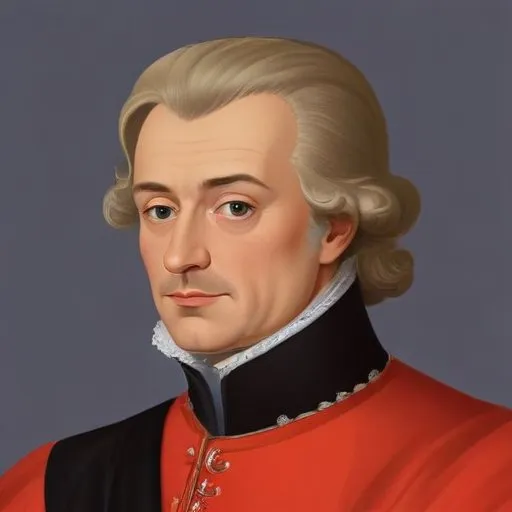
Ruling Pomerania from 1603 to 1625, he implemented reforms, strengthened the economy, and promoted education, earning him a reputation as a wise and just leader.
Philipp Julius, Duke of Pomerania, is renowned for his extravagant travels that took him to nearly every court in Europe, from England to Italy, and his extensive education at the University of Leipzig. As the ruler of Pomerania-Wolgast from 1592 to 1625, he left a lasting impact on the region, despite his prolonged absences.
Philipp Julius was born on 27 December 1584, in Wolgast, to Ernst Ludwig, Duke of Pomerania, and Sophia Hedwig, daughter of Julius of Brunswick-Lüneburg. After his father's death in 1592, he was placed under the tutelage of his uncle, Bogislaw XIII, until he reached his majority in 1604.
Philipp Julius's travels took him to various courts and locations, including England, the Dutch Republic, Denmark, Berlin, Danzig, Courland, and many others. His itinerant lifestyle often kept him absent from his duchy for extended periods, earning him the reputation as the "traveling duke."
On 25 June 1604, Philipp Julius married Agnes of Brandenburg (1584-1629), daughter of John George, Elector of Brandenburg, and his second wife, Elisabeth of Anhalt-Zerbst. A month later, he took on his position as duke, marking the beginning of his reign.
Philipp Julius's love for travel and extravagant lifestyle led to severe financial difficulties during his reign. To compensate, he limited the travels of his court functionaries and leased out ducal domains to third parties, worsening the situation of the peasants. The rate of compulsory work for peasants doubled during his reign, leading to widespread poverty and indebtedness.
Philipp Julius's attempts to get the Hanseatic towns of Greifswald and Stralsund to assume parts of his debts led to heavy conflicts. In 1604, he intervened in Greifswald's inner affairs, but in 1612, he humiliated the towns by entering their limits with several hundred mercenaries. In 1613, he granted town law to Bergen, but at a great cost to the townspeople.
Philipp Julius, Duke of Pomerania, left a complex legacy characterized by his love for travel, his educational pursuits, and his financial woes. While he may have been absent from his duchy for extended periods, his travels and experiences shaped him into a well-rounded individual who ruled Pomerania-Wolgast for over three decades.
Born in 1542
A Protestant bishop and duke who ruled Pomerania and played a key role in the Protestant Reformation in Germany. He's known for his efforts to establish Lutheranism in his territories.
Born in 1454
Ruling Pomerania from 1478 to 1523, he unified the duchy, promoted trade, and supported the Hanseatic League, leaving a lasting legacy in the region.
Born in 1493
A 16th-century German nobleman who ruled Pomerania and played a significant role in the Protestant Reformation, supporting key figures like Martin Luther. He's also known for his military campaigns against the Teutonic Knights.
Born in 1515
Ruler of Pomerania from 1531 to 1560, known for his efforts to strengthen the duchy and promote the Protestant Reformation. He played a significant role in shaping the region's politics and religion.
