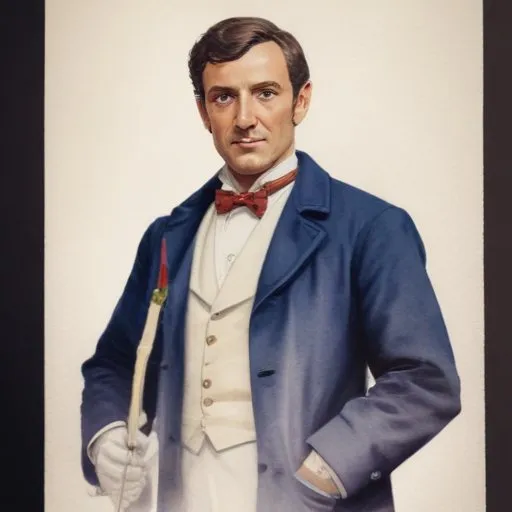
Pierre Bretonneau: The Pioneer of Modern Medicine
A Life Dedicated to Unraveling the Mysteries of Disease
Pierre Bretonneau, a French medical doctor born on April 3, 1778, left an indelible mark on the field of medicine. He is widely regarded as one of the pioneers of modern medicine, credited with identifying and naming diphtheria, and performing the first successful tracheotomy in 1825.
Early Life and Education
Born in Saint-Georges-sur-Cher, in the Loiret-Cher department, Bretonneau's father was a surgeon who instilled in him a passion for medicine. He studied with his uncle, the vicar at Chenonceaux, Indre-et-Loire department, where he was fortunate enough to receive financial support from Madame Dupin, the grandmother of
George Sand, to pursue his medical studies in Paris.
A Curious and Clever Mind
Bretonneau's curiosity and love for manual labor led him to maintain a laboratory and garden at his disposal. During his spare time, he would indulge in gardening and other manual labors, which later influenced his approach to medicine. He served as the mayor of Chenonceaux from 1803 to 1807, gaining valuable experience that would shape his future endeavors.
Contributions to Medicine
Bretonneau's greatest contributions to medicine were his groundbreaking theories on disease. He believed in the concept of "morbid seeds" that spread specific diseases from person to person, a precursor to the germ theory of disease. His work led to the identification of typhoid fever and diphtheria, and he was the first to distinguish between scarlet fever and diphtheria in 1826.
A Visionary Ahead of His Time
In 1855, Bretonneau hypothesized that disease was caused by bacteria, a revolutionary idea that was ahead of its time. Unfortunately, the lack of a microscope prevented him from confirming his hypothesis. Nevertheless, his work laid the foundation for modern medicine, where careful observation and scientific inquiry are used to find cures for sickness and solutions to problems.
Legacy and Impact
Bretonneau's students, including Alfred-Armand-Louis-Marie Velpeau and Armand Trousseau, went on to become prominent figures in the medical community. The faculty of medicine in Tours, which bears his name, is a testament to his enduring legacy. He will always be remembered as a true pioneer in the field of medicine, whose contributions continue to inspire and influence generations of medical professionals.
Awards and Honors
- The hospital in Tours, where Bretonneau served as medical director, was renamed in his honor.
- The faculty of medicine in Tours is decorated with three large busts, a tribute to his contributions to the field of medicine.
Personal Milestones and Key Life Events
Bretonneau died on February 18, 1862, in Paris, and was buried in Saint-Cyr-sur-Loire, near Tours. His remarkable life and achievements continue to inspire and motivate those who follow in his footsteps.
Quotes and Memorable Sayings
Though there are no recorded quotes from Bretonneau, his work and legacy speak volumes about his dedication to the pursuit of medical knowledge and his commitment to improving human lives.
Historical Context and Legacy
Bretonneau's work took place during a time of great change and upheaval in the medical community. His contributions helped lay the foundations for modern medicine, paving the way for later pioneers like
Louis Pasteur and
Robert Koch. Today, his legacy continues to influence medical research and practice, a testament to the power of human curiosity and ingenuity.