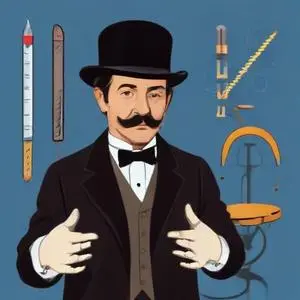
Claude Bernard: The Father of Modern Physiology
The Concept of Milieu Intérieur and Homeostasis
Claude Bernard, a French physiologist, is renowned for introducing the concept of
milieu intérieur, a term that refers to the internal environment of the body, and its associated concept of homeostasis. This groundbreaking idea revolutionized the field of physiology, earning him the title of one of the greatest scientists of all time.
Early Life and Education
Born on July 12, 1813, in the village of Saint-Julien, near Villefranche-sur-Saône, Bernard received his early education at the Jesuit school in his hometown. He later moved to the college at Lyon, but soon left to become an assistant in a druggist's shop.
The Unlikely Path to Physiology
In his leisure hours, Bernard pursued his passion for writing, composing a vaudeville comedy that achieved success. This encouraged him to attempt a prose drama in five acts,
Arthur de Bretagne. However, his mentor, Saint-Marc Girardin, advised him to abandon literature and pursue medicine instead. Bernard heeded this advice and went on to become an interne at the Hôtel-Dieu de Paris, where he was introduced to the renowned physiologist Franois Magendie.
Rise to Prominence
Bernard's association with Magendie proved instrumental in shaping his career. He became a
préparateur (lab assistant) at the Collège de France in 1841 and later succeeded Magendie as a full professor in 1855. During this period, he conducted extensive research, making significant contributions to the field of physiology.
Marriage and Personal Life
In 1845, Bernard married Marie-Françoise Fanny Martin, a union that was arranged by a colleague and largely motivated by financial considerations. The marriage provided Bernard with the financial security needed to pursue his research endeavors.
Philosophical Contributions and Beliefs
While Bernard is often described as an agnostic, his philosophical views are shrouded in mystery. Despite being referred to as a "great priest of atheism" by his colleagues, Cardinal Ferdinand Donnet claimed that Bernard was a fervent Catholic. This dichotomy has sparked debates about Bernard's true beliefs, leaving behind a trail of intrigue.
Legacy and Impact
Claude Bernard's work had a profound impact on modern physiology, paving the way for future scientists. His concept of
milieu intérieur and homeostasis continues to influence research in fields such as biology, medicine, and ecology. In recognition of his contributions, Bernard was elected an international member of the American Philosophical Society in 1860.
Quotes and Memorable Sayings
- "The universe is not a collection of distinct objects, but a continuum, where everything blends into everything else."
- "The living being is a harmonic system, and disease is a discord."
Honors and Recognition
Bernard's work was recognized with numerous honors, including his election to the French Academy of Sciences in 1854 and his appointment as a grand officer of the Legion of Honor in 1865.
Historical Context and Legacy
Bernard's contributions to physiology paved the way for significant advances in the field. His work on homeostasis laid the foundation for modern understandings of human physiology, influencing generations of scientists. Today, Claude Bernard is remembered as one of the most influential scientists of the 19th century, leaving behind a rich legacy that continues to inspire research and discovery.
FAQ
What was Claude Bernards contribution to physiology?
Claude Bernard was a French physiologist who made significant contributions to the field of physiology, including the discovery of the role of the pancreas in digestion and the concept of homeostasis.
How did Claude Bernards work impact our understanding of the human body?
Claude Bernards work greatly expanded our understanding of the human body, particularly in the areas of digestion, metabolism, and the regulation of bodily functions. His discoveries paved the way for significant advances in medicine and physiology.
What were Claude Bernards views on the scientific method?
Claude Bernard was a strong advocate for the scientific method, believing in the importance of experimentation, observation, and empirical evidence in the pursuit of scientific knowledge. He emphasized the need for rigor, precision, and skepticism in scientific inquiry.
How is Claude Bernard remembered in the history of science?
Claude Bernard is remembered as one of the most important physiologists of the 19th century, whose work laid the foundations for modern physiology and medicine. He is regarded as a pioneer in the field and a champion of the scientific method.
What were Claude Bernards contributions to medical education?
Claude Bernard was a dedicated teacher and educator who made significant contributions to medical education. He wrote several influential textbooks and was a strong advocate for the importance of scientific education in medicine.