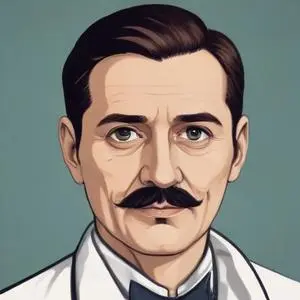
Pierre Paul Émile Roux: The Father of Modern Vaccinology
A Pioneer in the Fight Against Infectious Diseases
Pierre Paul Émile Roux was a French physician and bacteriologist who made groundbreaking contributions to the field of vaccinology, earning him the title of "Father of Modern Vaccinology." Roux is best known for developing the first vaccine against diphtheria, a dreaded disease that had claimed countless lives, especially among children.
Early Life and Education
Born on December 17, 1853, in Confolens, France, Roux came from a family of modest means. Despite the financial constraints, his parents encouraged his interest in science, which led him to pursue a degree in medicine from the University of Paris. After completing his studies, Roux worked under the guidance of renowned scientist
Louis Pasteur, who had a profound influence on his career.
Career Highlights and Major Works
Roux's work with Pasteur laid the foundation for his future accomplishments. In 1888, he successfully developed the first vaccine against diphtheria, a disease that was ravaging Europe at the time. This achievement not only saved countless lives but also paved the way for the development of vaccines against other infectious diseases. Roux's contributions to the field of vaccinology are immense, and his work continues to inspire scientists and researchers to this day.
Philosophical Contributions and Beliefs
Roux's work was guided by a deep understanding of the importance of preventive medicine. He believed that vaccines had the potential to eradicate infectious diseases, which were the leading causes of death and disability at the time. His philosophy was centered around the idea that medicine should focus on preventing illnesses rather than just treating them. This approach has had a lasting impact on the field of medicine and public health.
Personal Milestones and Key Life Events
Roux's personal life was marked by significant events that shaped his career and personality. In 1885, he married Louise Rivière, with whom he had two children. His family life was marked by tragedy, however, when his wife died in 1893. This personal loss did not deter Roux from his work, and he continued to dedicate himself to finding solutions to the pressing health issues of his time.
Influence on Modern Society
Roux's contributions to the field of vaccinology have had a profound impact on modern society. His work has saved countless lives and has enabled humanity to combat some of the deadliest diseases in history. The development of vaccines has also enabled the eradication of diseases such as smallpox and polio, which were once rampant. Roux's legacy continues to inspire scientists, researchers, and healthcare professionals around the world.
Awards and Honors
Roux's contributions to the field of vaccinology have been recognized through numerous awards and honors. He was awarded the Pasteur Medal in 1903 and was elected as a member of the French Academy of Sciences in 1913. Roux's work has also been recognized by the international scientific community, and he is widely regarded as one of the most important scientists of the 20th century.
Legacy
Pierre Paul Émile Roux's legacy extends far beyond his contributions to the field of vaccinology. He has inspired generations of scientists, researchers, and healthcare professionals to work towards finding solutions to the pressing health issues of our time. His philosophy of preventive medicine has become a cornerstone of modern healthcare, and his work continues to shape the way we approach public health.
Trivia and Fun Facts
- Roux was known for his humility and simplicity, despite his immense contributions to the field of science.
- He was an avid music lover and played the violin in his spare time.
- Roux was a strong advocate for women's education and supported the admission of women to the University of Paris.
Conclusion
Pierre Paul Émile Roux's contributions to the field of vaccinology have had a profound impact on human history. His work has saved countless lives and has enabled humanity to combat some of the deadliest diseases in history. As a pioneer in the fight against infectious diseases, Roux's legacy continues to inspire generations of scientists, researchers, and healthcare professionals around the world.
FAQ
What was Pierre Paul Émile Rouxs contribution to immunology?
Pierre Paul Émile Roux was a French physician and immunologist who made significant contributions to the field of immunology, including the development of the first vaccine against diphtheria. He was a co-founder of the Pasteur Institute and played a key role in the development of modern immunology.
What was Pierre Paul Émile Rouxs role in the Pasteur Institute?
Pierre Paul Émile Roux was a co-founder of the Pasteur Institute and served as its director for many years. He played a key role in the development of the institutes research programs and was instrumental in shaping the direction of modern immunology.
What were Pierre Paul Émile Rouxs most notable discoveries?
Pierre Paul Émile Rouxs most notable discoveries include the development of the first vaccine against diphtheria and his work on the nature of toxins and antitoxins. He also made significant contributions to our understanding of immunology and the development of vaccines.
What awards did Pierre Paul Émile Roux receive for his work?
Pierre Paul Émile Roux received numerous awards for his work, including the Copley Medal and the Leeuwenhoek Medal. He was also elected a member of several scientific academies, including the French Academy of Sciences.
How is Pierre Paul Émile Roux remembered in the history of immunology?
Pierre Paul Émile Roux is remembered in the history of immunology as a pioneer in the field and a co-founder of the Pasteur Institute. His contributions to our understanding of immunology and the development of vaccines have had a lasting impact on the field.