


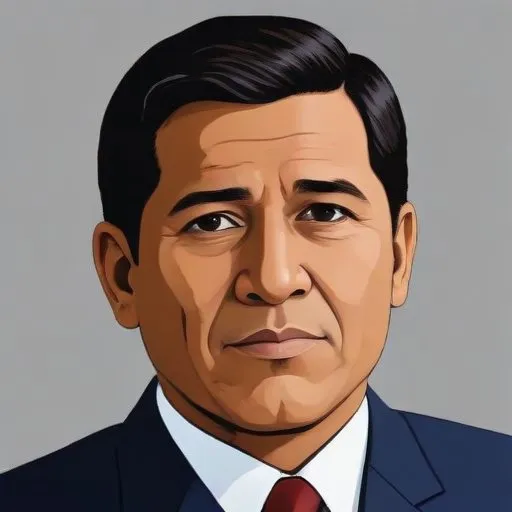
Honduran academic and politician who served as the Minister of Education and was a prominent figure in the country's educational development. He's known for his efforts to improve the education system in Honduras.
Rafael Pineda Ponce, a renowned Honduran professor and politician, is most notable for his tenure as the President of the National Congress of Honduras from 1998 to 2002, leaving an indelible mark on the country's political landscape.
Pineda Ponce was born on August 18, 1930, in San Miguelito, Honduras, to Juan Rafael Pineda López and María Ponce. His early life was marked by tragedy, with his mother passing away when he was just six years old. He was subsequently raised by relatives in various parts of the country.
Despite these challenges, Pineda Ponce excelled academically, completing his elementary education in three different schools. He went on to pursue his secondary education at the Instituto Departamental de Occidente and later at the Escuela Normal de Varones in Tegucigalpa, where he earned a certificate as a Maestro de Educación Primaria.
Pineda Ponce's foray into politics began with his affiliation with the Liberal Party of Honduras. He served in various capacities, including as a member of the National Congress, before being elected as its President in 1998. During his tenure, he worked tirelessly to promote democracy, social justice, and economic development in Honduras.
As a professor, Pineda Ponce was known for his exceptional teaching skills and dedication to education. He authored several books and academic papers, contributing significantly to the field of education in Honduras.
Pineda Ponce's political and educational philosophy was rooted in the principles of social justice, equality, and democracy. He believed in the importance of education in empowering individuals and promoting national development.
In addition to his illustrious political and academic career, Pineda Ponce's life was marked by personal milestones, including the loss of his mother at a young age and the tragic murder of his brother, Carlos.
Rafael Pineda Ponce's contributions to Honduran politics and education have had a lasting impact on modern society. His commitment to democracy, social justice, and education continues to inspire future generations of leaders and educators.
Pineda Ponce's life and work are a testament to the complex and often challenging history of Honduras. His legacy serves as a beacon of hope, demonstrating the power of education, perseverance, and dedication to creating positive change in society.
While Pineda Ponce's precise awards and honors are not well-documented, his contributions to education and politics have earned him widespread recognition and respect in Honduras and beyond.
67 Years Old
A Guatemalan indigenous rights activist and politician who fought for social justice and peace, particularly for the rights of indigenous peoples, and was awarded the Nobel Peace Prize in 1992.
Born in 1926
A Honduran lawyer and politician who served as President of Honduras from 1994 to 1998, known for his efforts to reform the country's economy and reduce poverty. He also played a key role in resolving the country's border disputes with El Salvador.
Born in 1916
A Venezuelan lawyer and politician who served as the 65th President of Venezuela, known for his efforts to reform the country's economy and politics, and for being a key figure in the country's transition to democracy.
86 Years Old
A Costa Rican leader who served as President and was awarded the Nobel Peace Prize for his efforts to broker peace in Central America, particularly in ending the Nicaraguan Civil War.
97 Years Old
First female president of Nicaragua, leading the country from 1990 to 1997 and playing a key role in ending the Contra War. She's a symbol of democracy and female empowerment in Central America.
81 Years Old
The former Marxist guerrilla leader who ruled Nicaragua with an iron fist, known for his authoritarian regime and controversial human rights record.
