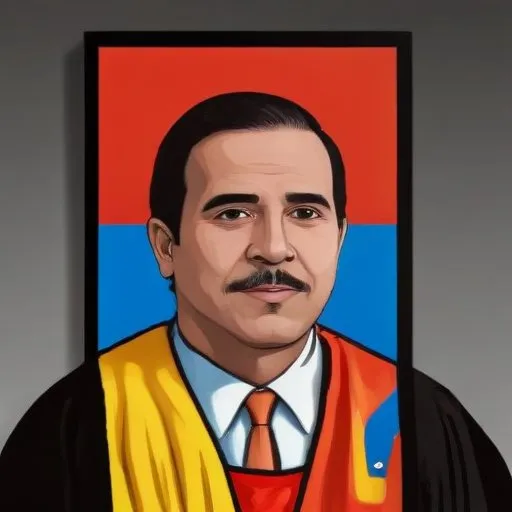
Ramn Jos Velsquez: A Trailblazer in Venezuelan Politics and History
A Man of Many Hats: President, Historian, and Journalist
Ramn Jos Velsquez Mujica is best known for his stint as the President of Venezuela from 1993 to 1994, but his impact extends far beyond his brief tenure in the topmost office. A polymath with a passion for history, journalism, and law, Velsquez left an indelible mark on Venezuela's political landscape.
Early Life and Education
Born on November 28, 1916, in Tchira, Velsquez was the son of Ramon Velasquez Ordoez, a journalist and proofreader, and Regina Mujica, an educator. Home-schooled by his parents, he later completed his primary education in San Cristbal Simn Bolvar and high school at the Liceo Andres Bello in Caracas. Velsquez pursued higher education at the Central University of Venezuela, earning a PhD in social and political sciences in 1942 and a law degree in 1943.
A Writer and Historian
Velsquez's writing career took off in 1941 when he became a reporter for ltimas Noticias. He went on to author numerous books on Venezuela's political history, earning him the reputation as the country's foremost historian. His work as the president of El Nacional on two separate occasions (1964-1968 and 1979-1981) further cemented his position as a leading voice in Venezuelan journalism.
A Statesman and Champion of Democracy
During the dictatorship of Marcos Prez Jimnez, Velsquez played a key role in compiling the Libro negro de la dictadura (Black book of dictatorship), which exposed the crimes of the regime. His efforts led to his imprisonment for a year. Upon his release, he became an ardent advocate for democracy and human rights.
A Life of Public Service
- In 1958, Velsquez was elected to the Venezuelan Senate for the state of Tachira.
- He later served in the Venezuelan Chamber of Deputies for the state of Miranda.
- During the government of Rmulo Betancourt, Velsquez held the position of Secretary General and Chief of Staff of the Presidency.
- Under Rafael Caldera's administration, he served as Minister of Communications from 1969 to 1971.
- From 1984 to 1987, Velsquez was the President of the Comisin para la Reforma del Estado (COPRE), a commission aimed at reforming the state.
A Lasting Legacy
Ramn Jos Velsquez's life was a testament to his unwavering commitment to democracy, history, and public service. His contributions to Venezuelan politics and society have left a lasting impact, shaping the country's trajectory for generations to come.
Personal Milestones and Key Life Events
- 1916: Born on November 28th in Tchira, Venezuela
- 1941: Became a reporter for ltimas Noticias
- 1942: Earned a PhD in social and political sciences from the Central University of Venezuela
- 1943: Received a law degree from the Central University of Venezuela
- 1958: Elected to the Venezuelan Senate for the state of Tachira
- 1964-1968 and 1979-1981: Served as president of El Nacional
- 1969-1971: Served as Minister of Communications under Rafael Caldera's administration
- 1984-1987: President of the Comisin para la Reforma del Estado (COPRE)
- 1993-1994: Served as President of Venezuela
- 2014: Passed away on June 24th at the age of 97
Net Worth and Financial Impact
Velsquez's financial impact was largely driven by his public service career, which spanned multiple decades. His net worth at the time of his passing was estimated to be modest, with most of his wealth derived from his literary works and journalism career.
Influence on Modern Society
Ramn Jos Velsquez's contributions to Venezuelan politics and history have had a lasting impact on modern society. His commitment to democracy and human rights has inspired generations of Venezuelans to fight for their rights and freedoms. His literary works continue to be studied by scholars and historians, providing a unique glimpse into Venezuela's complex past.
Controversies and Public Perception
Despite his many accomplishments, Velsquez faced criticism for his involvement in Venezuelan politics, which was often plagued by corruption and political instability. However, his commitment to democracy and human rights has largely overshadowed any controversies, solidifying his legacy as a champion of Venezuelan history and politics.
Quotes and Memorable Sayings
"I believe that history is not just a collection of dates and events, but a living, breathing entity that shapes our collective identity."
"Democracy is not just a form of government, but a way of life."
Historical Context and Legacy
Ramn Jos Velsquez's life and work must be viewed within the context of Venezuela's complex history, marked by periods of authoritarian rule and democratic transition. His contributions have helped shape the country's political and social landscape, earning him a place among the most revered figures in Venezuelan history.
FAQ
What was Ramón José Velásquezs role in Venezuelan politics?
Ramón José Velásquez was a Venezuelan journalist, lawyer, and politician who served as President of Venezuela from 1993 to 1994. He played a key role in shaping the countrys political landscape during a time of economic and social upheaval.
What were Ramón José Velásquezs accomplishments as President?
During his presidency, Ramón José Velásquez implemented several economic reforms, including the privatization of state-owned companies and the liberalization of trade. He also worked to strengthen democratic institutions and promote social justice.
What was Ramón José Velásquezs early life like?
Ramón José Velásquez was born in San Juan de los Morros, Venezuela, and studied law at the Central University of Venezuela. He began his career as a journalist and later became involved in politics, serving in various government positions.
What awards did Ramón José Velásquez receive for his contributions?
Ramón José Velásquez received several awards for his contributions to democracy and journalism, including the National Journalism Award and the Order of Andrés Bello.
How did Ramón José Velásquez contribute to Venezuelan journalism?
Ramón José Velásquez made significant contributions to Venezuelan journalism through his work as a journalist and editor. He promoted freedom of speech and press, and his writing and broadcasting helped to shape public opinion and promote democratic values.