


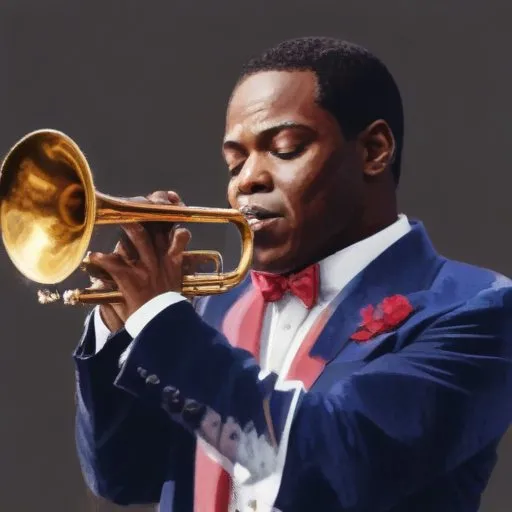
A virtuosic jazz musician who played trumpet, violin, and sang, known for his versatility and unique style that blended swing and bebop. He was a longtime member of Duke Ellington's Orchestra.
Ray Nance is best remembered for his extraordinary talent and long-standing association with the legendary Duke Ellington and his orchestra, where he played a pivotal role as a trumpeter, violinist, and singer. With a career spanning over three decades, Nance's impressive musicianship and unique style left an indelible mark on the world of jazz.
Born on December 10, 1913, in Chicago, Illinois, Nance began studying piano and violin at a young age. He later taught himself trumpet in high school, driven by a desire to be heard on a louder instrument. Nance's early career was marked by leadership roles in his own band in Chicago (1932-1937) and stints with renowned musicians Earl Hines (1937-1939) and Horace Henderson (1939-1940).
In 1940, Duke Ellington hired Nance to replace the departing trumpeter Cootie Williams, who had joined Benny Goodman's orchestra. Nance's first recorded performance with Ellington was at the Fargo, North Dakota ballroom dance, where he took center stage with a memorable trumpet solo on the earliest recorded version of "Take the A Train." This iconic solo became one of the most emulated and admired in jazz history.
Nance was also featured as a violin soloist in Ellington's orchestra, a rare distinction in itself. His violin contributions to the original 1942 version of "The C Jam Blues" are particularly noteworthy. As a vocalist, Nance was known for his smooth, soulful delivery, often taking the lead on songs like "It Don't Mean a Thing If It Ain't Got That Swing" and "Jump for Joy."
Ray Nance's impact on jazz and modern music is multifaceted. He inspired generations of musicians with his virtuosic playing, singing, and composing. His work with Ellington helped shape the sound of the orchestra and contributed to its enduring legacy. Nance's influence can be seen in the careers of musicians like Miles Davis, Dizzy Gillespie, and even rock icons like Eric Clapton.
Nance's career was marked by numerous personal milestones, including his leadership of his own band, his work with Earl Hines, and his long-standing association with Duke Ellington. When asked about his approach to music, Nance once said, "I've always tried to play from the heart, to let the music come from within."
Beyond his remarkable talent, Ray Nance's legacy is a testament to his dedication, perseverance, and passion for music. Today, his contributions continue to inspire new generations of musicians and fans alike, cementing his place as one of the most important figures in jazz history.
Born in 1899
A legendary jazz pianist, composer, and bandleader who revolutionized the genre with his unique style and iconic compositions, such as "Take the A Train" and "Mood Indigo".
Born in 1906
A renowned jazz musician, celebrated for his smooth, melodic sound and virtuosic improvisations on the alto saxophone and clarinet, particularly with Duke Ellington's Orchestra.
Born in 1911
A virtuosic trumpeter and bandleader, known for his smooth, melodic style and influential work with Duke Ellington and Benny Goodman. He was a key figure in the development of modern jazz trumpet playing.
Born in 1878
A pioneering figure in Hollywood's early days, he was a prolific actor, director, and screenwriter, starring in over 200 films, including many classic Westerns. He's most famous for his rugged, macho screen presence and iconic roles in silent films.
Born in 1907
A renowned trombonist and composer, he was a key figure in the development of modern jazz, particularly in the swing and bebop styles, collaborating with iconic musicians like Duke Ellington and Count Basie.
