


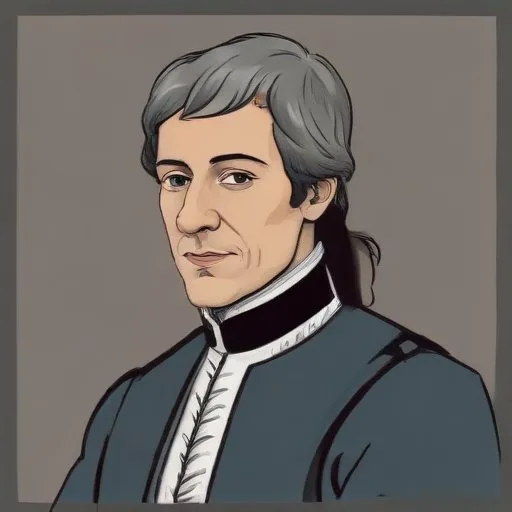
A 15th-century English nobleman and military leader who fought in the Wars of the Roses, known for his loyalty to the Lancastrian cause.
Richard Grey, 3rd Earl of Tankerville, was a prominent figure in the Wars of the Roses, fighting on the side of the House of York and earning the respect of powerful nobles like the Duke of York and the Earl of Warwick. He is known for his unwavering loyalty to the Yorkist cause, even when faced with the threat of attainder and the loss of his hereditary titles.
Sir Richard Grey was born on November 5, 1436, at Pontesbury, Shropshire, to Henry Grey, 2nd Earl of Tankerville, and Antigone Plantagenet, the illegitimate daughter of Humphrey of Lancaster, 1st Duke of Gloucester.
He married Margaret Audley, daughter of James Tuchet, 5th Baron Audley, and Eleanor, illegitimate daughter of Edmund Holland, 4th Earl of Kent, before January 14, 1459.
The Wars of the Roses were a tumultuous time for the English monarchy, with the House of York and the House of Lancaster vying for power. Grey fought on the side of the Yorkists, participating in several key battles, including the Battle of Ludford Bridge in 1459.
In 1460, he was attainted by Henry VI, along with many other Yorkist supporters, and his hereditary titles were abolished. However, when Edward IV came to the throne in 1461, Grey's loyalty was rewarded, and he received the stewardship of Kerry, Kedwen, and Montgomery.
Grey's loyalty to the Yorkist cause was matched only by his loyalty to his allies. He was a close associate of Richard Neville, 16th Earl of Warwick, and fought alongside him at the siege of Alnwick Castle in 1462.
His cousin, Sir Ralph Grey of Heton, was also a key figure in his life, and the two men shared a complex and often tumultuous relationship.
Richard Grey, 3rd Earl of Tankerville, may have lost his titles and lands, but he left behind a legacy of loyalty and dedication to the Yorkist cause. His name is remembered alongside other prominent figures of the Wars of the Roses, a testament to his bravery and commitment.
Despite the turmoil of his time, Grey's story serves as a reminder of the importance of loyalty and honor in the face of adversity.
Born in 1284
The king whose disastrous reign led to his eventual deposition and mysterious death, remembered for his alleged homosexual relationships and power struggles with nobles.
Born in 1367
The last king of the House of Plantagenet, deposed in a coup, known for his extravagance and tyranny, leading to his downfall and the rise of the Lancastrian dynasty.
Born in 1133
King of England from 1154 to 1189, known for establishing a strong centralized government, reforming the English church, and his tumultuous relationships with Thomas Becket and his sons.
Born in 1340
A powerful and wealthy medieval English nobleman, known for his immense influence on English politics and his role in the Hundred Years' War. He was also a patron of the arts and a founder of Trinity College, Cambridge.
