


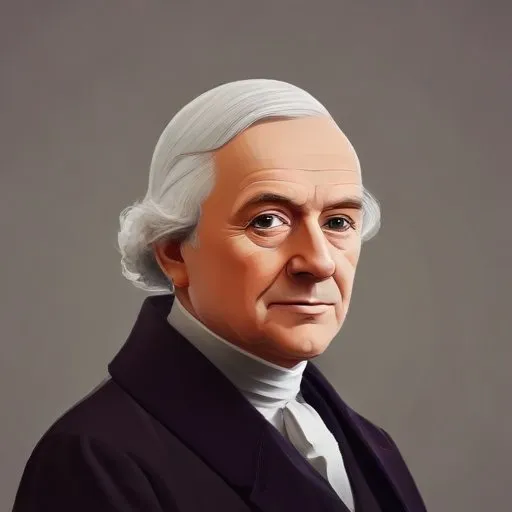
A British historian and academic who specialized in modern European history, particularly the French Revolution and Napoleon's reign. He's known for his extensive research and writings on these topics.
Sir Richard Lodge was a renowned British historian, professor, and educator, best known for his profound contributions to the field of history and his distinguished academic career. With a career spanning over four decades, Lodge left an indelible mark on the academic community, shaping the minds of countless students and scholars.
Born on June 20, 1855, in Penkhull, Staffordshire, England, Lodge was the fourth of eight sons and a daughter of Oliver Lodge, a china clay merchant, and his wife, Grace. He was part of a distinguished family, with his siblings going on to become accomplished individuals in their respective fields, including Sir Oliver Lodge, a physicist, and Alfred Lodge, a mathematician.
Lodge's academic journey began at Balliol College, Oxford, where he matriculated in 1874 and graduated with a B.A. in 1877. He became a Fellow of Brasenose College in 1878 and went on to hold esteemed positions at the University of Glasgow and the University of Edinburgh, where he served as Professor of History from 1894 to 1925. During his time at Edinburgh, he was appointed Dean of the Faculty of Arts and founded the Edinburgh University Settlement charity, which aimed to establish houses for students and fellows to live amongst the poor of the city.
Lodge's literary contributions are a testament to his scholarly prowess. His biography of Cardinal Richelieu, published in 1896, is a seminal work in the field of history. Throughout his career, he was recognized for his outstanding achievements, including being knighted in 1917 and becoming the president of the Royal Historical Society from 1929 to 1933.
Sir Richard Lodge's contributions to the field of history and education have had a lasting impact on modern society. His work has inspired generations of scholars, and his commitment to improving social conditions through education has left a permanent mark on the academic community.
Through his remarkable life and achievements, Sir Richard Lodge has demonstrated the power of dedication, hard work, and a passion for knowledge. His legacy continues to inspire and educate, shaping the minds of future generations.
Born in 1906
A renowned historian and academic who reshaped the understanding of modern European history, particularly World War I and II, through provocative and insightful writings.
Born in 1909
A Latvian-English historian and philosopher who explored the intersection of philosophy, history, and politics, and is renowned for his work on the Enlightenment, liberty, and the nature of humanity.
Born in 1914
A renowned historian and academic who wrote extensively on European history, particularly the Renaissance and Nazi Germany, and was known for his meticulous research and engaging writing style.
Born in 1921
A renowned Tudor historian, expertly reconstructing 16th-century English politics and society through meticulous archival research. His work significantly shaped modern understanding of the Tudor period.
Born in 1876
A renowned British historian and academic who wrote extensively on English history, particularly the social and cultural aspects of the 18th and 19th centuries.
