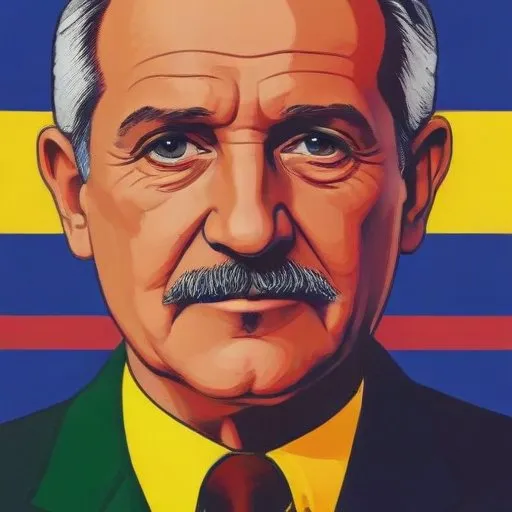
Richard Pipes: The Doyen of Soviet Historians
A Life Dedicated to Understanding the Enigmatic Soviet Union
Richard Pipes, the renowned American historian, is best known for his authoritative works on Russian and Soviet history, particularly his revelatory analyses of the Soviet regime's inner workings and its tumultuous relationship with the West. As a frequent commentator in the press and a prolific author, Pipes has left an indelible mark on our understanding of the Soviet Union's complexities and contradictions.
Early Life and Academic Formation
Born on July 11, 1923, in Cieszyn, Poland, to an assimilated Jewish family, Pipes was exposed to the rich cultural heritage of Eastern Europe. His father, Marek Pipes, a businessman and Polish legionnaire, instilled in him a deep understanding of the region's history and politics. After fleeing occupied Poland in 1939, the Pipes family arrived in the United States in 1940, where Richard would go on to become a naturalized citizen in 1943 while serving in the United States Army Air Corps. He pursued higher education at Muskingum College, Cornell University, and Harvard University, where he would later teach and guide numerous graduate students to their PhDs.
The Historian's Craft
Pipes' academic career spanned over five decades, during which he taught large courses on Imperial Russia, the Russian Revolution, and Soviet history at Harvard University. His writings appeared in esteemed publications such as Commentary, The New York Times, and The Times Literary Supplement, cementing his reputation as a leading authority on Soviet affairs. In 1976, he headed Team B, a group of analysts organized by the Central Intelligence Agency (CIA), which analyzed the strategic capacities and goals of the Soviet military and political leadership.
Influence on Modern Society
Pipes' work has had a profound impact on modern society, particularly in the realm of international relations and foreign policy. His critiques of Soviet communism and his warnings about the Soviet Union's expansionist tendencies influenced policymakers and scholars alike. His son,
Daniel Pipes, also an American historian, has continued this legacy of scholarly inquiry and public engagement.
Major Works
- The Formation of the Soviet Union (1954) - a seminal work on the Soviet Union's early years
- Russia Under the Old Regime (1974) - a comprehensive study of Imperial Russia
- The Russian Revolution (1990) - a detailed analysis of the Bolshevik Revolution
- Communism: A History (2001) - a sweeping narrative of communism's rise and fall
Legacy and Controversies
Pipes' unwavering commitment to academic rigor and his willingness to challenge conventional wisdom has earned him both admiration and criticism. While some have praised his unflinching critiques of Soviet communism, others have accused him of being overly ideologically driven. Despite these controversies, Pipes' contributions to the field of Soviet history remain unparalleled, and his legacy continues to inspire new generations of scholars and thinkers.
Personal Milestones and Key Life Events
- 1939: Fled occupied Poland with his family
- 1940: Arrived in the United States
- 1943: Became a naturalized citizen of the United States
- 1958: Began teaching at Harvard University
- 1976: Headed Team B, a CIA-organized analytical group
- 2018: Passed away on May 17, at the age of 94
Pipes' remarkable life, marked by a passion for understanding the complexities of Soviet history, has left an indelible mark on the world of scholarship and beyond.
FAQ
What was Richard Pipes area of expertise?
Richard Pipes was a renowned historian and academic specializing in Russian history, Sovietology, and Eastern European affairs.
What was Richard Pipes most influential work?
Pipes two-volume work The Russian Revolution is considered a seminal study of the Russian Revolution and its aftermath.
What role did Richard Pipes play in shaping American foreign policy?
Richard Pipes served as a member of the National Security Council and advised several U.S. presidents on Soviet and Eastern European affairs, influencing American foreign policy during the Cold War.
What awards did Richard Pipes receive for his scholarship?
Richard Pipes was awarded the National Humanities Medal in 2007 and received honorary degrees from several institutions, recognizing his contributions to the field of history.
What was Richard Pipes stance on communism?
Richard Pipes was a vocal critic of communism and the Soviet Union, arguing that the ideology was inherently flawed and morally bankrupt.