


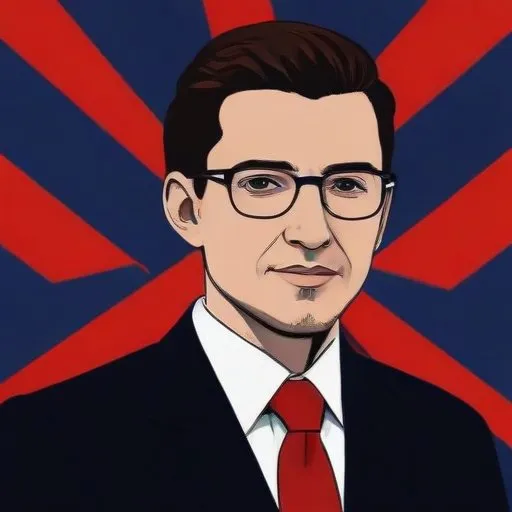
Developed the Timberlake Plan, a monetary reform proposal, and was a strong advocate for the gold standard and limited government intervention in the economy.
Renowned economist Richard Timberlake is best known for his unwavering advocacy of free banking, a belief that money should be issued by private companies rather than a government monopoly. Through his groundbreaking research and influential writings, Timberlake has left an indelible mark on the world of economics, challenging conventional thinking on monetary policy and central banking.
Born on June 24, 1922, in Steubenville, Ohio, Timberlake's life was marked by a strong sense of duty and a passion for learning. He served in World War II as a pilot in the U.S. Air Forces, flying 26 missions and earning three Purple Hearts. After the war, he pursued higher education, earning a Bachelor of Arts from Kenyon College, a Master's from Columbia University, and a Ph.D. from the University of Chicago, where he studied under the esteemed economists Milton Friedman and Earl J. Hamilton.
Timberlake's academic career spanned over three decades, during which he taught economics at several prestigious institutions, including Muhlenberg College, Norwich University, Rensselaer Polytechnic, Florida State University, and the University of Georgia. His research focused on the history of money, central banking, and monetary policy, yielding valuable insights that continue to shape economic discourse today.
At the heart of Timberlake's work lies his advocacy for free banking, a concept that suggests private companies should be free to issue their own currencies, competing with one another in the market. This idea, first proposed by Friedrich Hayek, was extensively developed and expanded upon by Timberlake, who argued that a free market in money production would lead to greater efficiency, innovation, and stability in the financial system.
Timberlake's research also shed light on the role of the Federal Reserve in exacerbating the Great Depression. He contended that the Fed's adoption of the real bills doctrine and its anti-speculation policy in 1929 led to a severe contraction in the money supply, ultimately deepening the economic crisis.
In recognition of his contributions to the field of economics, Timberlake received numerous awards and honors, including the prestigious Milton Friedman Prize for Advancing Liberty.
Timberlake's work has had a profound impact on modern society, shaping economic policy and inspiring a new generation of scholars and thinkers. His advocacy for free banking and monetary freedom continues to influence economic discourse, offering a compelling alternative to traditional central banking models.
"The power to create money should be taken away from the government and given to the people."
Through his remarkable life and work, Richard Timberlake has left a lasting legacy, one that continues to inspire and challenge us to rethink our understanding of money, banking, and economic freedom.
Born in 1912
A Nobel Prize-winning economist who championed free market capitalism and limited government intervention, known for his advocacy of laissez-faire economics and influential writings on monetary policy.
Born in 1899
Austrian economist and philosopher who championed free market capitalism and limited government intervention, warning of the dangers of socialism and totalitarianism. His work influenced economic policy and shaped modern libertarian thought.
Born in 1881
A pioneer of Austrian economics, he developed the concept of praxeology, which focuses on human action and its consequences, and is known for his critiques of socialism and central planning.
Born in 1905
Russian-born American novelist and philosopher who wrote influential novels like "The Fountainhead" and "Atlas Shrugged", promoting individualism and capitalism.
Born in 1883
A pioneer of innovation theory, he's credited with coining the term "creative destruction" to describe how new technologies and businesses disrupt existing ones, driving economic growth and progress.
Born in 1883
A pioneering economist who revolutionized modern economic theory with his groundbreaking ideas on government intervention and fiscal policy, shaping global economic policies.
Born in 1915
A renowned economist and academic who made significant contributions to the field of economics, particularly in the areas of macroeconomics and international trade. He was awarded the Nobel Prize in Economics in 1970.
89 Years Old
Developed the theory of rational expectations, which revolutionized macroeconomics by showing how people's expectations of future events affect current economic decisions.
