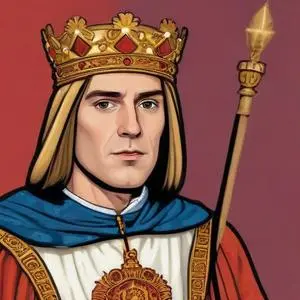
Richard of York, 3rd Duke of York: The Plantagenet Claimant to the Throne
A Leading English Magnate and Claimant to the Throne
Richard of York, 3rd Duke of York, also known as Richard Plantagenet, was a prominent English nobleman and claimant to the throne during the tumultuous period of the Wars of the Roses. He was a direct male-line descendant of King Edward III, making him a strong contender for the throne, and his complex web of family connections and alliances ultimately led to his demise at the Battle of Wakefield in 1460.
Family Connections and Claim to the Throne
Richard's claim to the throne was through his mother, Anne Mortimer, a descendant of Edward III's second surviving son, Lionel of Antwerp. This connection gave him a stronger claim than the House of Lancaster, which was descended from
John of Gaunt, Duke of Lancaster, Edward III's third surviving son. Richard's father, Richard, Earl of Cambridge, was also a descendant of Edward III, making him a member of the ruling House of Plantagenet.
Vast Estates and Offices of State
Richard inherited vast estates and held various offices of state in Ireland, France, and England. He served as Lord Lieutenant of Ireland and Constable of England, and later governed England as Lord Protector due to King Henry VI's mental instability.
Conflicts with the Royal Court
Richard's conflicts with Henry VI's wife,
Margaret of Anjou, and other members of the royal court, such as Edmund Beaufort, 2nd Duke of Somerset, were major factors in the political upheaval of mid-15th-century England. His competing claim to the throne led to tensions with the House of Lancaster, ultimately contributing to the outbreak of the Wars of the Roses.
The Act of Accord and the Battle of Wakefield
In 1460, Richard attempted to take the throne, but was dissuaded. Instead, he secured an agreement, known as the Act of Accord, which stated that he would become king on Henry VI's death. However, within weeks of securing this agreement, Richard was killed at the Battle of Wakefield, alongside his son, Edmund. This event marked a turning point in the Wars of the Roses, as Richard's two surviving sons,
Edward IV and Richard III, would later ascend the throne.
Legacy and Impact on English History
Richard of York, 3rd Duke of York, played a pivotal role in shaping English history, particularly during the tumultuous period of the Wars of the Roses. His complex web of family connections, offices of state, and conflicts with the royal court ultimately led to his demise, but his legacy lived on through his sons, who would go on to shape the course of English monarchy.
Personal Milestones and Key Life Events
- Born on September 22, 1411, to Richard, Earl of Cambridge, and Anne Mortimer
- Inherited vast estates and held various offices of state in Ireland, France, and England
- Served as Lord Lieutenant of Ireland and Constable of England
- Governed England as Lord Protector due to King Henry VI's mental instability
- Killed at the Battle of Wakefield on December 30, 1460
Historical Context and Legacy
Richard of York, 3rd Duke of York, lived during a time of great turmoil and upheaval in English history. His complex relationships with the royal court and his claim to the throne contributed to the outbreak of the Wars of the Roses, a conflict that would shape the course of English monarchy for generations to come. Despite his untimely death, Richard's legacy lived on through his sons, who would go on to play important roles in shaping English history.
FAQ
What was Richard of Yorks role in the Wars of the Roses?
Richard of York was a key figure in the Wars of the Roses, leading the Yorkist faction against the Lancastrians. He claimed the English throne, sparking a dynastic struggle that would shape Englands future.
What were Richard of Yorks motivations for seeking the crown?
Richard of York sought the crown due to his perceived birthright and a sense of injustice. He believed the Lancastrians had usurped the throne, and he aimed to restore the rightful Yorkist dynasty to power.
How did Richard of Yorks military campaigns impact England?
Richard of Yorks military campaigns had a profound impact on England, leading to the devastation of war, the loss of life, and the destabilization of the monarchy. His actions ultimately contributed to the downfall of the House of Lancaster and the rise of the Tudors.
What was Richard of Yorks relationship like with King Henry VI?
Richard of Yorks relationship with King Henry VI was tense and confrontational. He challenged Henrys authority, questioning his legitimacy and ultimately sparking the Wars of the Roses.
How did Richard of Yorks death affect the course of the Wars of the Roses?
Richard of Yorks death at the Battle of Wakefield in 1460 had a significant impact on the course of the Wars of the Roses. His son, Edward IV, would go on to claim the throne, establishing the House of York and sparking a new phase in the conflict.