


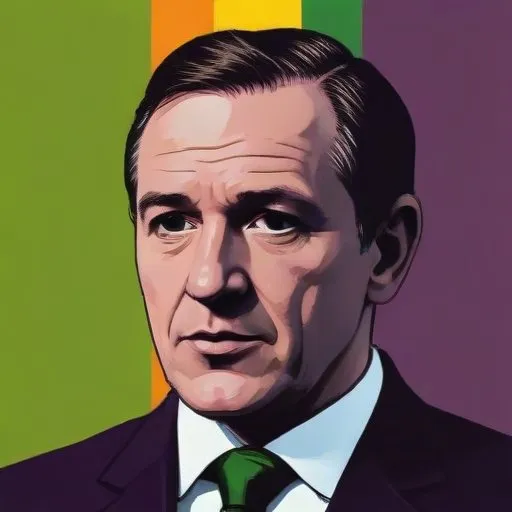
A prominent figure in the Ulster Volunteer Force and later a Unionist politician, he advocated for Ulster's interests and played a key role in shaping Northern Ireland's politics.
Robert Bradford, a Methodist minister and Ulster Unionist politician, is best known for his dedication to public service and his tragic assassination by the Provisional Irish Republican Army (IRA) in 1981. As a Member of Parliament for the Belfast South constituency in Northern Ireland, Bradford played a significant role in shaping the region's political landscape during a tumultuous period in its history.
Robert Jonathan Bradford was born on June 8, 1941, in Belfast, Northern Ireland, to a family that had been evacuated to Limavady, County Londonderry, during World War II. Raised by foster parents after his father abandoned the family and his mother's death, Bradford grew up to become a talented footballer. He signed with Glenavon F.C. as a teenager and later attracted the attention of English club Sheffield Wednesday F.C., who offered him a trial. Although he was not signed by the club, Bradford returned to Northern Ireland to continue his football career with Distillery.
In 1964, Bradford gave up football to pursue a calling to the Methodist ministry. He spent the 1960s attached to congregations in East Belfast and Fivemiletown before being fully ordained in 1970. Bradford was appointed to his own parish in the Suffolk area of southwest Belfast, where he served with dedication and conviction.
Bradford's ministry was not without controversy, however. In 1973, he paid for a front-page advertisement in the News Letter condemning dialogue with the Roman Catholic Church. This move drew criticism from fellow Methodist ministers, who argued that the decision to engage in dialogue with the Catholic Church had been taken at the Methodist Conference in June following an open debate. Bradford's views on ecumenism and politics led to his resignation from the Methodist ministry in the late 1970s.
In 1979, Bradford was elected as the Ulster Unionist Party candidate for the Belfast South constituency, a position he held until his tragic assassination by the IRA on November 14, 1981. During his time in office, Bradford was a vocal advocate for the rights and interests of the Unionist community in Northern Ireland.
Robert Bradford's life was marked by devotion to his faith and service to his community. Despite the controversy and criticism he faced, Bradford remained committed to his principles and values. His assassination was a tragic loss for Northern Ireland and a profound blow to the Unionist community. Today, Bradford is remembered as a dedicated public servant who gave his life in the pursuit of peace and reconciliation.
Robert Bradford's life and work are set against the backdrop of Northern Ireland's tumultuous history, marked by sectarianism, political unrest, and violence. His commitment to his faith and community serves as a testament to the power of dedication and service. Today, Bradford's legacy serves as a reminder of the importance of reconciliation and peaceful coexistence.
Born in 1926
A firebrand Protestant leader who played a key role in Northern Ireland's turbulent politics, known for his strong anti-Catholic stance and later, his surprising shift towards power-sharing.
77 Years Old
The 3rd First Minister of Northern Ireland, a key figure in the country's peace process, led the Democratic Unionist Party and played a crucial role in shaping the region's politics. He's remembered for his efforts to stabilize the power-sharing government and navigate the complexities of Northern Irish politics.
82 Years Old
A Northern Irish lawyer and politician who played a crucial role in the Good Friday Agreement, earning him a Nobel Peace Prize in 1998. He served as the first First Minister of Northern Ireland, working to establish a power-sharing government.
90 Years Old
A key figure in Northern Ireland's peace process, serving as Deputy First Minister and playing a crucial role in the Good Friday Agreement. He worked tirelessly to promote reconciliation and unity in the region.
89 Years Old
A Northern Irish educator and politician who played a key role in the Northern Ireland peace process, earning him the Nobel Peace Prize in 1998. He is known for his tireless efforts to bring about reconciliation and peace in his homeland.
Born in 1926
A Northern Irish politician who played a key role in the country's civil rights movement and was a founder of the Social Democratic and Labour Party, advocating for peaceful reform.
