


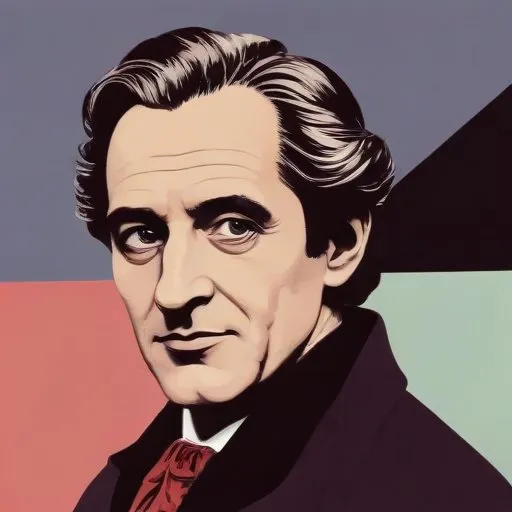
Austrian poet and playwright celebrated for his lyrical and dramatic works, exploring themes of love, nature, and the human condition. His poetry is known for its musicality and emotional depth.
Robert Hamerling, born on March 24, 1830, was a renowned Austrian poet, celebrated for his vivid imagination and captivating verse. His works, infused with life and color, continue to mesmerize readers to this day, earning him a revered position in the modern Austrian school of poetry.
Hamerling's early years were marked by adversity, born into a poor family in Kirchberg am Walde, Lower Austria. Despite the challenges, his innate talent for poetry shone through, impressing influential figures who provided him with the opportunity to attend the gymnasium in Vienna and later the University of Vienna.
In 1848, Hamerling joined the students' legion, actively participating in the revolutions that swept through Vienna. His involvement led to a stint in hiding to evade arrest, following the collapse of the revolutionary movement.
After the tumultuous period, Hamerling dedicated himself to studying natural science and philosophy. In 1855, he became a master at the Gymnasium in Trieste, a position that allowed him to nurture his passion for writing. His literary works soon gained recognition, and in 1866, he retired on a pension, which was later increased by the government to support his continued creative pursuits.
Hamerling's poetry is distinguished by its rich imagination and vivid descriptions. One of his most popular poems, Ahasver in Rom (1866), featuring Emperor Nero as its central figure, showcases his exceptional talent for description. Other notable works include:
Robert Hamerling's contributions to Austrian literature are undeniable. A popular edition of his works, published in four volumes by M. M. Rabenlechner in 1900, solidified his reputation as a poetic visionary. The 1911 Encyclopdia Britannica praised his imagination, characterizing his poems as "full of life and color."
Hamerling's villa in Stiftingstal, near Graz, Austria, became his retreat, where he lived out his final years, passing away on July 13, 1889. His legacy continues to inspire generations of readers and poets, cementing his position as one of the most remarkable poets of the modern Austrian school.
Born in 1790
Austrian actor and playwright who wrote and performed in popular folk plays, often incorporating magic and fantasy elements, and was a key figure in Vienna's theatrical scene. He is particularly known for his humorous and satirical works that poked fun at social issues of his time.
Born in 1801
Austrian actor and playwright who wrote satirical plays that critiqued social issues, known for his witty dialogue and clever characterizations.
Born in 1759
A renowned poet and playwright who crafted influential works that explored the human condition, morality, and the struggle for freedom, leaving a lasting impact on German literature.
Born in 1749
A German literary giant who penned iconic works like "Faust" and "The Sorrows of Young Werther", shaping the Romantic movement and influencing countless writers.
Born in 1791
Austrian literary giant who wrote influential plays and poems that explored themes of identity, morality, and the human condition, leaving a lasting impact on European literature.
Born in 1878
A Hungarian-American author and playwright renowned for his witty, satirical plays and novels that often explored the human condition, love, and social class. His works are still widely performed and adapted today.
Born in 1901
A Hungarian-German author and playwright, known for his socially critical and psychologically insightful works that often explored the human condition, morality, and the search for identity. His plays and novels are still widely performed and read today.
Born in 1862
Austrian author and playwright who explored the human psyche through his works, often focusing on themes of love, relationships, and the bourgeoisie. His plays and novels offered a glimpse into the lives of Viennese high society during the early 20th century.
