


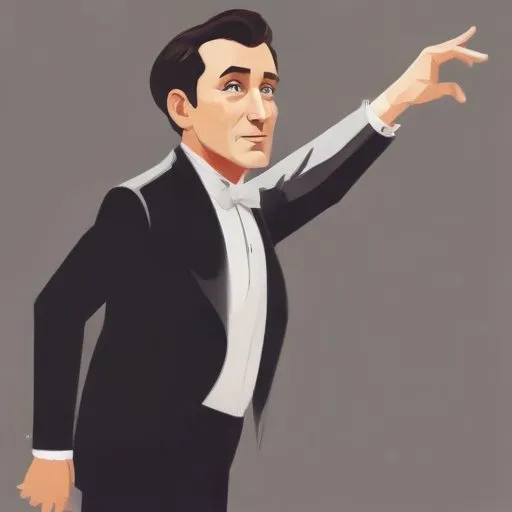
A renowned opera and ballet conductor, he was instrumental in popularizing classical music through his innovative productions and collaborations with prominent artists.
Robert Irving, a British conductor, made a name for himself in the world of ballet, earning a reputation as one of the most celebrated ballet conductors of his time. With a career spanning over three decades, Irving worked closely with some of the most prominent figures in the ballet world, leaving an indelible mark on the art form.
Born on August 28, 1913, in Winchester, England, Robert Irving was the son of mountaineer and author R. L. G. Irving. He received his education at Winchester College and New College, Oxford, graduating with a degree in music. Irving's musical talents were further honed at the Royal College of Music, where he studied under the guidance of Malcolm Sargent and Constant Lambert from 1934 to 1936.
During World War II, Irving served with the Royal Air Force, where he was awarded the Distinguished Flying Cross (DFC) and bar for his bravery in two tours as a navigator in antishipping strike squadrons. He was also the first Captain-Navigator in the Royal Air Force, paving the way for navigators to captain aircraft. Irving left the RAF with the rank of Squadron Leader.
After the war, Irving began his conducting career as an assistant conductor with the BBC Scottish Symphony Orchestra. In 1949, he became the conductor and musical director of Sadlers Wells Ballet, where he worked closely with the esteemed Sir Frederick Ashton on several notable ballets. Irving's tenure with Sadlers Wells Ballet lasted until 1958, during which time he collaborated with Ashton on iconic works such as Picnic at Tintagel and Sylvia.
In 1958, Irving took on the role of music director of the New York City Ballet, a position he held until 1989. During his time with the company, he worked with some of the most renowned dancers of the era, including Margot Fonteyn and Michael Somes. Irving's television appearances with the New York City Ballet included a 1954 production of Swan Lake and a 1958 production of Les Sylphides.
Robert Irving's contributions to the world of ballet are immeasurable. His collaborations with Sir Frederick Ashton resulted in some of the most iconic ballets of the 20th century. Irving's dedication to his craft and his ability to bring out the best in his dancers and musicians have made him a beloved figure in the ballet community. His legacy continues to inspire generations of dancers, conductors, and music lovers alike.
Born in 1904
A renowned thespian, celebrated for his commanding stage presence and iconic performances in Shakespearean plays and films, earning him a knighthood.
Born in 1907
A renowned thespian who dominated the British stage and screen, bringing Shakespearean characters to life with his commanding presence and rich voice.
Born in 1902
A renowned stage and screen actor, celebrated for his distinctive voice and authoritative presence, starring in iconic films like "David Copperfield" and "Doctor Zhivago".
Born in 1914
A renowned actor who brought iconic characters to life on screen, including Obi-Wan Kenobi in the Star Wars franchise.
Born in 1907
A renowned stage and screen actress, celebrated for her powerful performances in classical and modern roles, earning numerous awards and accolades.
Born in 1882
A renowned stage actress of the early 20th century, celebrated for her powerful performances in Shakespearean plays and advocacy for women's rights in the theater.
Born in 1899
A renowned English actor, playwright, and composer, known for his witty humor, sophisticated style, and iconic works like "Private Lives" and "Blithe Spirit".
Born in 1911
A renowned playwright and screenwriter of the 20th century, known for crafting intricate, emotionally charged dramas that probed the British upper class, often exploring themes of love, morality, and social convention.
