


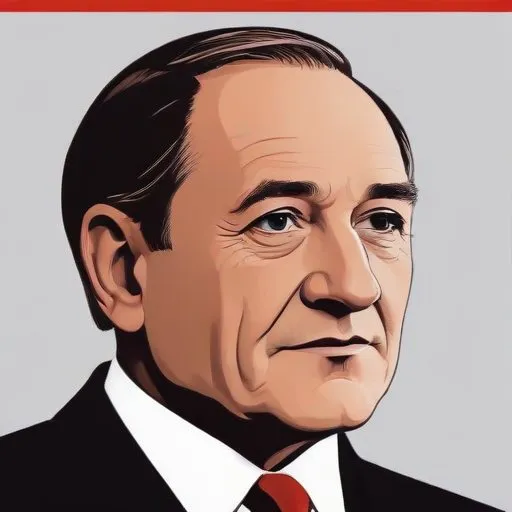
A high-ranking official in the Nazi Party, responsible for organizing the German workforce and implementing Nazi ideology, known for his brutal suppression of labor unions and opposition groups.
Robert Ley, born on February 15, 1890, was a German politician who gained notoriety as the leader of the German Labour Front (Deutsche Arbeitsfront, DAF) from 1933 to 1945. During this period, he held numerous high-ranking positions within the Nazi Party, including Gauleiter, Reichsleiter, and Reichsorganisationsleiter, making him one of the most influential figures in the Third Reich.
Ley was born in Niederbreidenbach, Rhine Province, to a family of farmers. He was the seventh of eleven children, and his early life was marked by poverty. Despite these humble beginnings, Ley pursued higher education, studying chemistry at the universities of Jena, Bonn, and Münster.
In 1914, Ley volunteered for the army, serving in the 10th Foot Artillery Regiment on both the eastern and western fronts. He was promoted to Leutnant in 1916 and trained as an aerial artillery spotter with Artillery Flier Detachment 202. However, in July 1917, his aircraft was shot down over France, and he was taken prisoner of war. This incident had a lasting impact on Ley, who suffered from a traumatic brain injury, leading to a stammer and erratic behavior, which was often exacerbated by heavy drinking.
After the war, Ley was released from captivity in January 1920 and returned to university, earning a doctorate later that year. He was employed as a food chemist by IG Farben, a giant chemical company, in Leverkusen. However, the French occupation of the Ruhr in 1924 sparked Ley's ultranationalist sentiments, leading him to join the Nazi Party. His unwavering loyalty to Adolf Hitler earned him a place in the party's inner circle, despite criticism of his arrogance, incompetence, and drunkenness.
As the leader of the German Labour Front, Ley was responsible for overseeing the Nazi regime's labor policies. He implemented various measures to control the workforce, including the abolition of trade unions, the introduction of forced labor, and the establishment of the Reichsarbeitsdienst (RAD), a mandatory labor service for young people. Ley's policies aimed to increase production, suppress dissent, and promote the Nazi ideology.
Towards the end of World War II, Ley's influence began to wane, and he was eventually arrested by American forces in May 1945. While awaiting trial at Nuremberg for crimes against humanity and war crimes, Ley committed suicide on October 25, 1945, by hanging himself in his cell.
Robert Ley's legacy is marked by controversy and brutal efficiency. His policies and actions during the Nazi regime led to the exploitation and suffering of countless workers, and his unwavering loyalty to Hitler made him complicit in the regime's atrocities. Despite his flaws, Ley's rise to prominence serves as a cautionary tale about the dangers of blind ideology and the corrupting influence of power.
Born in 1889
The dictator of Nazi Germany, responsible for the genocide of six million Jews and millions of other people during World War II, and infamous for his extreme nationalist and anti-Semitic ideology.
Born in 1897
A mastermind of Nazi propaganda, he crafted a persuasive narrative that fueled the Third Reich's rise to power, leaving a lasting impact on the world.
Born in 1893
A high-ranking Nazi official, he was a decorated World War I fighter pilot and later became a prominent politician, serving as Minister President of Prussia. He's infamous for his role in the Nazi regime and war crimes trials.
Born in 1894
A high-ranking Nazi official who flew to Scotland on a solo mission to negotiate peace with the UK, but was instead arrested and imprisoned.
Born in 1893
A German diplomat who served as the Nazi regime's Foreign Minister, orchestrating key alliances and treaties that led to World War II. He was a close associate of Adolf Hitler and played a crucial role in shaping Nazi foreign policy.
Born in 1900
Leading the SS and Gestapo, he oversaw the Nazi regime's brutal security apparatus and implemented the "Final Solution," orchestrating the genocide of six million Jews during World War II.
Born in 1903
Austrian-German lawyer and general who served as the highest-ranking leader of the Nazi police forces, responsible for overseeing the Gestapo, SS, and concentration camps during World War II. He was a key figure in the Holocaust and other atrocities committed by the Nazi regime.
Born in 1882
A high-ranking Nazi officer who served as the Chief of the OKW, the German High Command, during World War II, and was known for his unwavering loyalty to Hitler. He was tried and executed for war crimes after the war.
