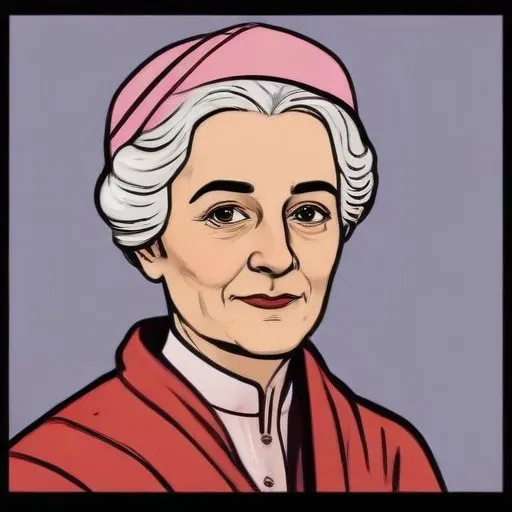
Rose Rand: The Vienna Circle's Forgotten Logician
A Pioneer in Logic and Philosophy
Rose Rand was a trailblazing Austrian-American logician and philosopher who made significant contributions to the development of modern logic and philosophy. As a member of the esteemed Vienna Circle, Rand played a pivotal role in shaping the intellectual landscape of the 20th century.
Lemberg Roots and Vienna Education
Born on June 14, 1903, in Lemberg, Galicia (now Lviv, Ukraine), Rand's intellectual curiosity was nurtured from an early age. After her family moved to Austria, she attended the Polish Gymnasium in Vienna, where she laid the foundation for her future academic pursuits. In 1924, she enrolled at the University of Vienna, where she was fortunate to be taught by luminaries such as Heinrich Gomperz,
Moritz Schlick, and Rudolf Carnap.
The Vienna Circle Years
Between 1930 and 1935, Rand actively participated in the Vienna Circle's discussions, meticulously recording the proceedings. Her involvement with the Circle provided her with a platform to engage with fellow intellectuals and develop her ideas. During this period, she worked at the Psychiatric-Neurological Clinic of the Vienna University, where she honed her skills as a researcher and thinker.
A PhD in Adversity
In 1937, Rand submitted her doctoral thesis on Kotarbiski's philosophy, which was approved in 1938, the same year she completed her final doctoral exam. However, as a Jew in pre-World War II Vienna, Rand faced immense difficulties in pursuing her profession.
A New Chapter in London
With the assistance of Susan Stebbing, Rand emigrated to London in 1939, where she initially worked as a nurse. She later gained admission to the Faculty of Moral Science at Cambridge University, attending seminars led by
Ludwig Wittgenstein. Rand's adaptability and resilience in the face of adversity are a testament to her unwavering dedication to her craft.
Wartime Struggles and New Directions
During World War II, Rand's privileges were revoked, and she was forced to work in a metal factory. She also taught night classes in German and psychology at the Luton Technical College and Tottenham Technical College. Between 1943 and 1950, Rand worked in practical engineering, a testament to her versatility and resourcefulness.
Karl Popper's Timely Intervention
Karl Popper's intervention played a crucial role in Rand's life, helping her secure a research position. This timely assistance enabled Rand to refocus on her academic pursuits, ultimately contributing to the development of modern philosophy.
A Legacy Unfolding
Rose Rand's remarkable story serves as a testament to the power of human resilience and intellectual curiosity. Despite the challenges she faced, Rand continued to make significant contributions to the world of logic and philosophy, leaving behind a rich legacy that continues to inspire future generations of scholars.
Today, Rand's work remains a vital part of the intellectual heritage of the Vienna Circle, a testament to the groundbreaking ideas that continue to shape our understanding of the world.
- Rand's participation in the Vienna Circle discussions highlights the importance of collaboration and intellectual exchange in the development of modern philosophy.
- Her adaptability and resourcefulness in the face of adversity serve as a powerful example for women in academia and beyond.
- Rand's contributions to logic and philosophy continue to influence contemporary thinkers, ensuring her legacy as a pioneer in her field.
Rose Rand's remarkable story is a testament to the power of human resilience, intellectual curiosity, and the pursuit of knowledge in the face of adversity.
FAQ
Who was Rose Rand and what was her contribution to philosophy?
Rose Rand was an Austrian-American logician and philosopher who made significant contributions to the Vienna Circle, a group of philosophers and scientists who developed logical positivism. Her work focused on the foundations of mathematics and logic.
What was Rose Rands role in the Vienna Circle?
Rose Rand was a key figure in the Vienna Circle, a group of philosophers and scientists who sought to develop a scientific philosophy. She worked closely with prominent philosophers such as Moritz Schlick and Rudolf Carnap.
What is logical positivism, and how did Rose Rand influence it?
Logical positivism is a philosophical movement that emphasizes the use of logical and scientific methods to understand the world. Rose Rands work on the foundations of mathematics and logic had a significant impact on the development of logical positivism.
What were Rose Rands views on the nature of knowledge?
Rose Rand believed that knowledge should be based on empirical evidence and logical reasoning. She argued that knowledge claims must be testable and falsifiable, and that metaphysical and philosophical claims should be rejected if they cannot be empirically verified.
What is Rose Rands legacy in the field of philosophy?
Rose Rands work on logical positivism and the foundations of mathematics and logic has had a lasting impact on the development of philosophy. Her contributions have influenced many prominent philosophers, including Karl Popper and W.V. Quine.