


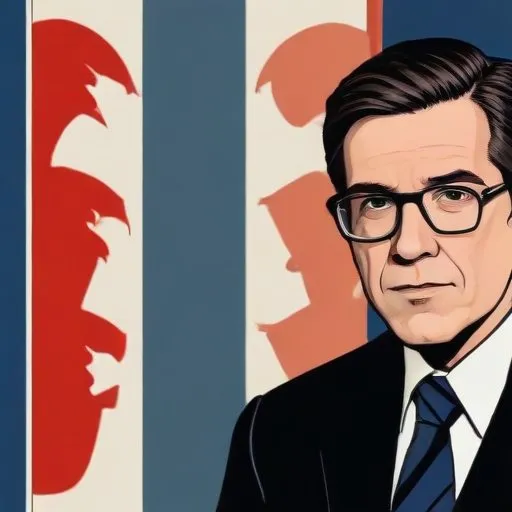
A renowned expert in political philosophy, known for his insightful analysis of conservative thought and the American political landscape.
Ross M. Lence is renowned for his profound contributions to the field of political philosophy, particularly for his work on the American political thinker John C. Calhoun. As a distinguished professor of political science at the University of Houston, Lence dedicated his career to advancing the understanding of political thought and inspiring generations of students.
Lence's commitment to education earned him an unprecedented number of Teaching Excellence Awards from the University of Houston and the State of Texas. His exceptional teaching skills and dedication to his students led to the establishment of the Ross M. Lence Awards for Teaching Excellence in the College of Liberal Arts and Social Sciences at the University of Houston, a testament to his enduring legacy.
Born on December 19, 1943, in Whitefish, Montana, Lence's academic journey took him to the University of Chicago, Georgetown University, and Indiana University, where he earned his Ph.D. in 1970 under the guidance of Charles S. Hyneman. This odyssey was punctuated by a 15,000-mile, five-year trip across America, which provided Lence with firsthand experience of the country and its people.
Lence's research at The British Museum in 1970 further deepened his knowledge of political philosophy. His edited volume, Union and Liberty: The Political Philosophy of John C. Calhoun, is considered a seminal work in the field, offering a comprehensive understanding of Calhoun's ideas.
In 1971, Lence began his teaching career at the University of Houston, where he served as director of undergraduate studies in the department of political science for 23 years. He was also a prolific participant, leader, and director at Liberty Fund Colloquia, fostering intellectual discussions and debates that shaped the landscape of political philosophy.
Throughout his career, Lence inspired countless students and colleagues with his passion for teaching, his dedication to scholarship, and his commitment to mentorship.
Ross M. Lence's passing on July 11, 2006, left an enduring void in the academic community, but his legacy continues to inspire and educate. The University of Houston's College of Liberal Arts and Social Sciences has immortalized his name, ensuring that future generations of scholars will remember his contributions to the field of political philosophy.
In the realm of education, Lence's impact is a testament to the power of dedication, hard work, and a passion for teaching. His life's work serves as a beacon, guiding future scholars and educators to strive for excellence and to make a lasting difference in the world.
73 Years Old
A renowned expert on international relations and democracy, known for his provocative "end of history" theory, which posits that liberal democracy is the final form of human government.
99 Years Old
A renowned author and academic who wrote extensively on political science, international relations, and cultural clashes, particularly in his influential book "The Clash of Civilizations".
Born in 1883
A pioneer of innovation theory, he's credited with coining the term "creative destruction" to describe how new technologies and businesses disrupt existing ones, driving economic growth and progress.
Born in 1818
A 19th-century philosopher who developed the theory of communism, arguing that capitalism would eventually be replaced by a socialist society. He's known for his critique of capitalism and the concept of class struggle.
Born in 1864
Developed the concept of "social action" and is known for his theories on bureaucracy, capitalism, and the role of religion in shaping society.
Born in 1858
A founder of modern sociology, known for establishing the field and exploring the relationships between individuals and society, particularly in his work "Suicide".
Born in 1898
A critical theorist who challenged traditional notions of freedom, democracy, and consumerism, arguing that modern society is oppressive and dehumanizing.
Born in 1916
A pioneering sociologist who coined the term "power elite" and wrote influential books on social structure, criticizing the concentration of power and wealth in modern societies.
