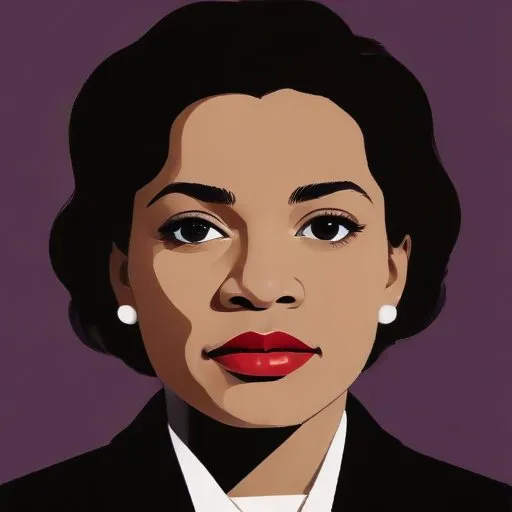
Ruby Hurley: The Pioneering Civil Rights Activist
A Leader in the Fight for Racial Equality
Ruby Hurley was a prominent figure in the American Civil Rights Movement, earning the esteemed title of "Queen of Civil Rights" for her tireless efforts in promoting racial equality and social justice. As a leading administrator for the National Association for the Advancement of Colored People (NAACP), Hurley played a pivotal role in mobilizing and empowering African American communities across the United States.
Early Life and Education
Born Ruby Ruffin on November 7, 1909, in Washington, D.C., Hurley grew up in a family that valued education and community service. She attended Dunbar High School, graduating in 1926, and went on to study at Miner Teachers College (now University of the District of Columbia) and Robert H. Terrell Law School. After completing her education, Hurley worked briefly for the federal government and the Industrial Bank of Washington before dedicating herself to the civil rights movement.
Commitment to Social Justice
In 1939, Hurley was part of a committee that organized a historic concert by renowned African American opera singer
Marian Anderson on the steps of the Lincoln Memorial. This landmark event, which drew a crowd of 75,000 people, was a powerful protest against racial segregation and discrimination.
NAACP Career and Legacy
Hurley's work with the NAACP spanned several decades, during which she held various leadership positions, including National Youth Secretary and Regional Secretary of the Southeast Regional Office. In 1951, she established the first permanent NAACP office in the Deep South, in Birmingham, Alabama, and oversaw membership drives across five states. Her tireless efforts helped to empower local communities, promote civil rights, and challenge racial segregation and discrimination.
Philosophical Contributions and Beliefs
Hurley's commitment to social justice was rooted in her strong sense of moral obligation and her belief in the inherent worth and dignity of all human beings. She advocated for nonviolent direct action, grassroots organizing, and community empowerment, inspiring generations of civil rights activists and leaders.
Personal Milestones and Key Life Events
Hurley's life was marked by significant personal milestones, including her marriage to William L. Hurley, a lieutenant in the US Army Corps of Engineers, in 1942, and her relocation to New York City and later Birmingham, Alabama, as part of her NAACP work.
Influence on Modern Society
Hurley's legacy extends far beyond her own lifetime, inspiring future generations of civil rights activists, leaders, and community organizers. Her work continues to shape the struggle for racial equality and social justice, influencing modern movements and initiatives that seek to promote human rights and challenge systemic inequality.
Controversies and Public Perception
Despite her many achievements, Hurley faced challenges and criticism from both within and outside the civil rights movement. Her strong advocacy and unwavering commitment to social justice often put her at odds with those who sought to maintain the status quo.
Quotes and Memorable Sayings
Hurley's words continue to inspire and motivate, offering a glimpse into her unwavering commitment to social justice: "The struggle for civil rights is not a sprint, but a marathon. We must be prepared to work tirelessly, to face challenges head-on, and to never give up."
Historical Context and Legacy
Ruby Hurley's life and work are a testament to the power of dedicated leadership and grassroots organizing in the pursuit of social justice and racial equality. Her legacy continues to shape the civil rights movement, inspiring future generations to strive for a more just and equitable society.
Comparative Analysis with Contemporaries
Hurley's work and legacy are often compared to those of other prominent civil rights leaders, including
Rosa Parks and
Martin Luther King Jr. While each of these leaders had unique contributions and styles, Hurley's tireless advocacy and grassroots organizing laid the groundwork for many of the movement's key successes.
Personal Relationships and Anecdotes
Hurley's personal relationships and anecdotes offer a glimpse into her humanity and kindness, revealing a leader who was both strong and compassionate. Her ability to connect with people from all walks of life helped to build a broad and diverse coalition of support for the civil rights movement.
Impact on Pop Culture
Hurley's life and work have inspired numerous cultural and artistic works, including films, books, and music that celebrate her legacy and the civil rights movement.
Awards and Honors
Hurley received numerous awards and honors for her work, including recognition from the NAACP and other civil rights organizations.
Educational Contributions and Influence
Hurley's work has had a lasting impact on education, shaping the way we understand and teach about the civil rights movement and its significance.
Scandals and Redemption Stories
While Hurley faced challenges and criticism during her lifetime, her legacy has largely been redeemed through her many contributions to the civil rights movement.
Visual Timelines and Milestones
- 1909: Ruby Ruffin Hurley born on November 7th
- 1926: Graduates from Dunbar High School
- 1939: Participates in organizing Marian Anderson's concert at the Lincoln Memorial
- 1942: Marries William L. Hurley
- 1943: Appointed National Youth Secretary of the NAACP
- 1951: Establishes the first permanent NAACP office in the Deep South
- 1980: Passes away on August 9th
Trivia and Fun Facts
- Hurley was known as the "Queen of Civil Rights" for her tireless advocacy and leadership.
- She worked closely with numerous civil rights leaders, including Walter Francis White and Thurgood Marshall.
- Hurley's work helped to inspire the Montgomery Bus Boycott and other key civil rights campaigns.
Predictions and Speculations
While it is impossible to predict the future, Hurley's legacy suggests that her work will continue to shape the struggle for social justice and racial equality in the years to come.
Charitable Work and Social Contributions
Hurley's charitable work and social contributions extended far beyond her work with the NAACP, inspiring countless individuals and communities to engage in acts of service and social justice.
Inspirational Stories and Motivations
Hurley's life and work offer a powerful testament to the power of individual commitment and collective action in promoting social justice and human rights. Her legacy continues to inspire and motivate future generations to strive for a more just and equitable world.