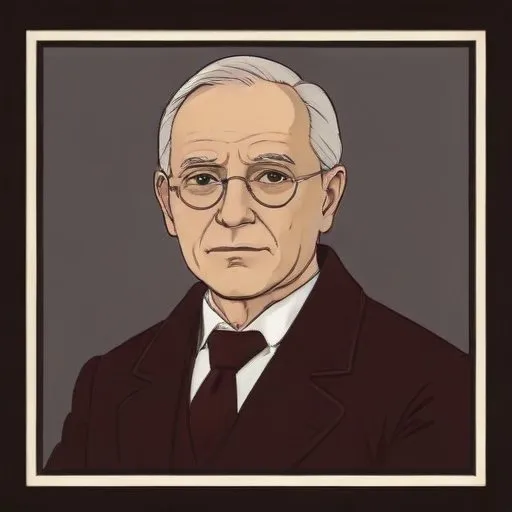
Rudolf Schottlaender: The German Philosopher and Translator Who Defied Boundaries
Rudolf Schottlaender was a German philosopher, classical philologist, translator, and political publicist of Jewish descent, renowned for his groundbreaking work in introducing
Marcel Proust's literary masterpiece, "In Search of Lost Time," to the German-speaking world. Through his meticulous translation of the first part of Proust's novel, Schottlaender pioneered the way for German readers to explore the intricate world of French literature.
Early Life and Academic Pursuits
Born on August 5, 1900, in Berlin, German Empire, Schottlaender embarked on an academic journey that would shape his philosophical foundations. He studied philosophy under the tutelage of prominent thinkers such as
Edmund Husserl,
Martin Heidegger, and Nicolai Hartmann in Freiburg im Breisgau. During this period, he became acquainted with Günther Stern, a future author, and married Stern's sister, Hilde, marking the beginning of his first of three marriages.
Philosophical Contributions and Beliefs
Schottlaender's philosophical inclinations were deeply rooted in the stoic tradition, and he drew inspiration from the works of
Baruch Spinoza. In 1921, he abandoned Judaism, embracing a more secular approach to life. His philosophical pursuits were characterized by a strong sense of humanism and democracy, which would later put him at odds with the authorities during the Soviet occupation.
A Translator's Legacy
Schottlaender's translation of Proust's "Der Weg zu Swann" (The Way to Swann) marked a significant milestone in German literary history. As the first German translator of Proust, he brought the French author's monumental work to the attention of German readers, paving the way for future literary exchange.
Surviving the Nazi Regime and Beyond
During World War II, Schottlaender survived the Nazi regime by hiding in Berlin. After the war, he took up teaching positions in West Berlin, instructing students in Latin and Greek. A brief stint at the Dresden University of Technology (1947-1949) saw him teaching philosophy, but his democratic views and humanist ideology led to conflicts with the Soviet occupation authorities. He eventually returned to West Berlin, where he continued teaching and became entangled in a slander campaign aimed at undermining his efforts to bridge the Cold War divide.
Awards and Honors
In 1959, Schottlaender was offered a chair as professor for Latin literature, with special consideration of Greek literature, at the University of Berlin. Although he was unable to teach philosophy due to his non-Marxist stance, this appointment marked a significant recognition of his academic contributions.
Personal Milestones and Key Life Events
- Married Hilde Stern in 1921, his first wife
- Survived the Nazi regime by hiding in Berlin
- Returned to West Berlin and became the victim of a slander campaign
- Accepted a chair as professor for Latin literature in 1959
- Moved to East Berlin with his family in 1961 after the construction of the Berlin Wall
Legacy and Impact
Rudolf Schottlaender's remarkable life and work continue to inspire future generations of philosophers, translators, and scholars. His unyielding commitment to humanism, democracy, and intellectual freedom serves as a beacon of hope in the face of adversity. As a champion of cultural exchange and understanding, Schottlaender's legacy extends far beyond the boundaries of his native Germany, influencing the literary and philosophical landscape of the 20th century.
FAQ
What was Rudolf Schottlaenders contribution to philosophy?
Rudolf Schottlaender was a German philosopher who made significant contributions to the field of classical philosophy, particularly in the areas of Plato and Aristotle. His work focused on the historical development of philosophical ideas.
What was Rudolf Schottlaenders approach to classical philology?
Rudolf Schottlaender was a classical philologist who approached the study of ancient texts with a focus on historical context and literary analysis. He translated many classical works into German, making them accessible to a wider audience.
How did Rudolf Schottlaenders work influence German philosophy?
Rudolf Schottlaenders work had a significant impact on German philosophy in the early 20th century. He helped to shape the development of phenomenology and existentialism, and his students went on to become prominent philosophers in their own right.
What was Rudolf Schottlaenders role in the German academic community?
Rudolf Schottlaender was a respected member of the German academic community, serving as a professor of philosophy at several universities and publishing numerous works on classical philosophy and philology.
What is Rudolf Schottlaenders legacy in German intellectual history?
Rudolf Schottlaenders legacy in German intellectual history is one of scholarship and intellectual rigor. He helped to establish the study of classical philosophy as a central component of German intellectual life.