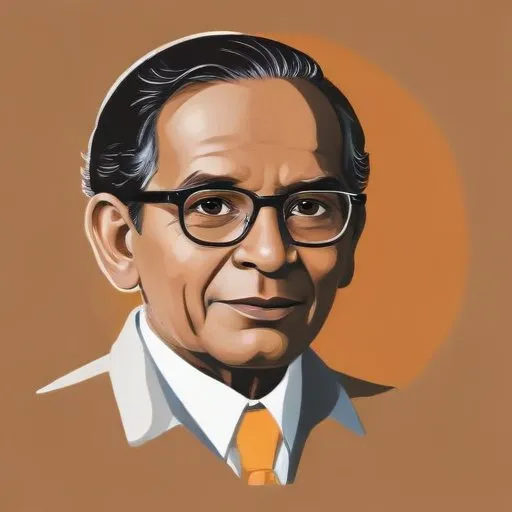
S. Arasaratnam: The Prolific Historian and Academic
A Legacy of Scholarly Contributions
S. Arasaratnam, fondly known as Arasa, was a renowned Sri Lankan academic, historian, and author, born on 20 March 1930, during British colonial rule. He is best known for his extensive research and writings on the history of Sri Lanka, India, and Southeast Asia, earning him a reputation as a leading authority in his field.
Early Life and Education
Arasaratnam was born in Navaly, northern British Ceylon, and was educated at Jaffna College, Vaddukoddai. He joined the University of Ceylon in 1947, graduating with a First-Class Honors BA degree in 1951. He then pursued his doctoral research at the University of London, earning a Ph.D. in history in 1956.
Career Highlights
After completing his Ph.D., Arasaratnam returned to Ceylon and rejoined the University of Ceylon as a lecturer. He subsequently held positions at the University of Malaya (1961-1972) and the University of New England, Australia (1972-1995), where he was appointed as a professor of history. During his tenure, he was a prolific writer, authoring 15 books and 93 articles/chapters.
Notable Works
Some of Arasaratnam's most notable works include:
- "Dutch Power in Ceylon, 1658-1687" (1958), which showcased his expertise in Sri Lankan history
- "Indian Ocean and the Rise of the Modern World" (1985), which explored the significance of the Indian Ocean in global trade and politics
- "Maritime Sri Lanka" (1994), which highlighted the importance of Sri Lanka's maritime history
Awards and Honors
Arasaratnam received several awards and honors for his contributions to the field of history, including the Smuts Fellowship in Commonwealth Studies at Cambridge University in 1977. He was also elected a Fellow of the Australian Academy of the Humanities in 1996.
Personal Life
Arasaratnam was a practising Christian and attended the Uniting Church in Armidale, New South Wales. He married Thanalakshmi Padma, daughter of Selvathurai, and had two daughters, Sulochana and Ranjana, and a son, Niranjan.
Legacy
S. Arasaratnam's legacy extends beyond his academic achievements. He was a dedicated teacher, mentor, and scholar who inspired generations of students and researchers. His work continues to influence the field of history, and his contributions to our understanding of Sri Lanka, India, and Southeast Asia remain unparalleled.
Remembering Arasaratnam
Arasaratnam passed away suddenly on 4 October 1998, at the age of 68, in Sydney, Australia. His passing was deeply mourned by the academic community, but his contributions to the field of history continue to be celebrated and recognized to this day.
FAQ
What is S. Arasaratnams background in history?
S. Arasaratnam was a Sri Lankan historian, author, and academic, who specialized in the history of Sri Lanka and the Indian Ocean region. He was known for his expertise in historical research and his ability to interpret complex historical events.
What are S. Arasaratnams notable historical works?
S. Arasaratnams most notable historical works include his books on the history of Sri Lanka, particularly his study of the Portuguese period. He also wrote extensively on the history of Indian Ocean trade and cultural exchange.
What awards has S. Arasaratnam received?
S. Arasaratnam has received several awards for his contributions to historical research, including the Sri Lanka Sahitya Academy Award and the National Academy of Sciences Award.
What is S. Arasaratnams significance in Sri Lankan historiography?
S. Arasaratnam is considered one of the most important historians of Sri Lanka. He played a key role in shaping the field of Sri Lankan historiography, and his work continues to influence historians and scholars today.
What is S. Arasaratnams legacy?
S. Arasaratnams legacy is that of a dedicated, meticulous, and groundbreaking historian who made a lasting impact on our understanding of Sri Lankan and Indian Ocean history. He is remembered for his contributions to historical research, his passion for knowledge, and his commitment to scholarship.