


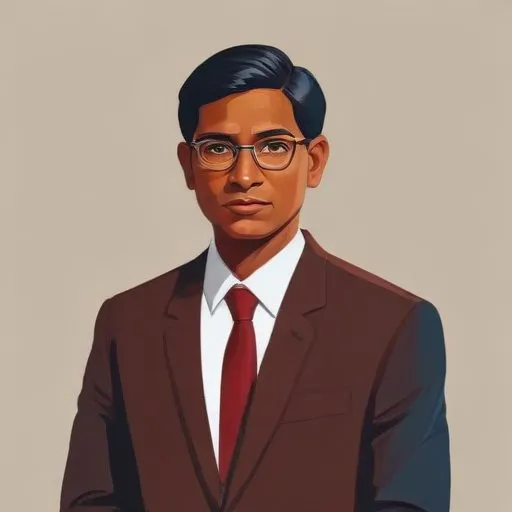
A prominent Indian lawyer and jurist who played a key role in shaping the country's judicial system and was a strong advocate for social reform. He served as a judge in the Madras High Court and was known for his progressive views on women's rights and education.
Sir Subbier Subramania Iyer, a titan of Indian independence, is renowned for co-founding the Home Rule Movement alongside Annie Besant, a pivotal step towards India's freedom from British rule. As a prominent lawyer, jurist, and freedom fighter, Iyer's contributions to the country's struggle for autonomy are still celebrated today.
Born on October 1, 1842, in Madurai, Madras Presidency, British India, Subramania Iyer's life was marked by determination and perseverance. After his father's untimely death when he was just two years old, his mother raised him with great care. He received his early education at the English Mission School, Madurai, and later joined the Zilla School, Madurai, in 1856.
Despite his mother's reluctance to send him to Madras for higher education, Iyer decided to join the administrative service. He worked as a clerk in various offices, including the Deputy Collector's Office, Madurai, and the Collector's Office, Madurai. During this time, he studied privately for the Pleaders Examination and stood first among the successful candidates in 1862.
After becoming the Public Prosecutor in 1862, Iyer's desire to practice law led him to study privately for the Matriculation Examination, which he passed in 1865. He then cleared the First Arts F.A. examination in 1866 and eventually passed the B.L. examination from Presidency College, Madras, in 1868, standing first in the Second Class among all successful candidates.
Subramania Iyer's exceptional legal acumen earned him recognition, and he was appointed a Judge of the Madras High Court in 1891. Seven years later, he became the first Indian Chief Justice of the Madras High Court, a position he held until his retirement in 1907.
In 1916, Subramania Iyer, along with Annie Besant, founded the Home Rule Movement, which sought to establish self-government in India. This movement played a crucial role in shaping India's struggle for independence, inspiring many to join the freedom movement.
Sir Subbier Subramania Iyer's contributions to India's independence struggle are undeniable. He was a pioneer in the fight against British rule, and his work paved the way for future generations to continue the struggle. His legacy is a testament to his unwavering commitment to the cause of Indian freedom.
As the "Grand Old Man of South India," Iyer's life serves as a beacon of inspiration, illuminating the path for those who dare to challenge the status quo and fight for a noble cause.
Sir Subbier Subramania Iyer's life is a shining example of dedication, perseverance, and unwavering commitment to a noble cause. His legacy continues to inspire generations, reminding us of the importance of fighting for freedom and self-governance.
Born in 1869
Indian freedom fighter, activist, and philosopher who led India to independence from British rule through non-violent civil disobedience, inspiring civil rights movements worldwide.
Born in 1861
A leading figure in India's struggle for independence from British rule, known for his strong advocacy for civil rights and his role in shaping the country's future.
Born in 1889
India's first Prime Minister, a key figure in the country's struggle for independence from British rule, and a champion of democracy and secularism. He played a crucial role in shaping modern India's government and economy.
Born in 1897
Indian freedom fighter and politician who led the Indian National Army against British rule and was a key figure in the country's struggle for independence. He is also known for his mysterious disappearance in 1945.
Born in 1865
A leading figure in India's struggle for independence from British rule, known for his role in the Indian independence movement and his advocacy for Hindu-Muslim unity.
Born in 1875
Indian lawyer and politician who played a key role in India's struggle for independence and later became the country's first Deputy Prime Minister, known for his strong leadership and unification of the country.
Born in 1878
The first Indian Governor-General of India, serving from 1948 to 1950, and a key figure in the country's struggle for independence from British rule. He was a strong advocate for non-violent resistance and played a crucial role in shaping India's early years.
Born in 1847
A pioneering figure in women's rights and Indian independence, known for her tireless advocacy and influential writings that inspired generations of activists and thinkers.
