


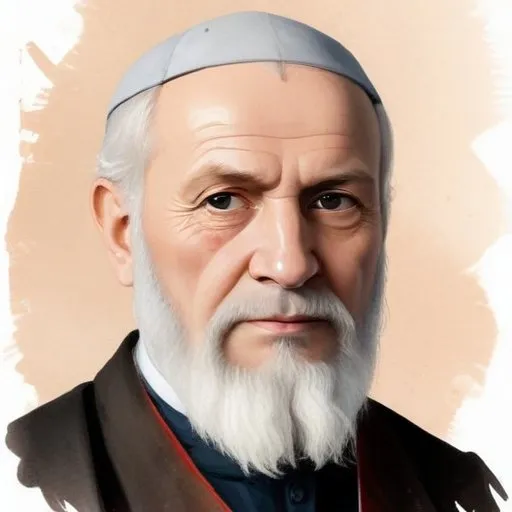
Italian missionary who dedicated his life to evangelizing and educating Africans, particularly in Sudan, and is revered for his tireless efforts to combat slavery and promote social justice.
Saint Daniele Comboni is revered as the "Apostle of Africa" for his tireless efforts to evangelize and establish Catholic missions across the African continent. Born on March 15, 1831, in Limone sul Garda, Italy, Comboni dedicated his life to spreading the Gospel and serving the African people, earning him a revered place in the annals of Catholic history.
Comboni grew up in a devout Catholic family and was drawn to the priesthood from an early age. He joined the seminary in Brescia, where he was deeply influenced by the teachings of Saint Paul the Apostle, who became his spiritual model.
In 1854, Comboni traveled to Africa as a missionary, arriving in Sudan where he was tasked with establishing Catholic missions. He faced numerous challenges, including disease, poverty, and hostility from local tribes. Undeterred, Comboni persevered, learning the local languages and cultures, and eventually establishing a network of missions that spanned across Central Africa.
In 1867, Comboni founded the Comboni Missionaries, an order dedicated to African evangelization. The order's motto, "Nigrita mea, pulchra es" ("My Black one, you are beautiful"), reflected Comboni's deep love and respect for the African people. The Comboni Missionaries continue to work in Africa today, providing education, healthcare, and spiritual guidance to marginalized communities.
Comboni's selflessness and devotion to the African people earned him sainthood in 2003, when he was canonized by Pope John Paul II. His feast day, October 10, is celebrated across the African continent and beyond, with festivities and devotions honoring his life and work.
Comboni's missionary work was guided by his profound belief in the dignity and worth of every human being. He championed the cause of African liberation from colonialism and slavery, advocating for education, economic development, and social justice.
Comboni's legacy extends far beyond his missionary work in Africa. His commitment to social justice, education, and human dignity has inspired generations of Catholics and non-Catholics alike. His life and work serve as a testament to the transformative power of faith, compassion, and selflessness.
Comboni's missionary work coincided with the Scramble for Africa, a period of intense European colonization and exploitation of the African continent. Despite the challenging environment, Comboni remained committed to his mission, earning the respect and admiration of African leaders and people.
Today, Saint Daniele Comboni is revered as a champion of African dignity and a beacon of hope for marginalized communities worldwide. His life and work continue to inspire people of all faiths and backgrounds, a powerful testament to the enduring power of compassion, love, and service.
Born in 1825
A French-Algerian cardinal and academic who founded the White Fathers and White Sisters missionary societies, and was a vocal anti-slavery advocate. He's also known for his efforts to combat slavery in Africa.
Born in 1504
Leader of the Catholic Church during the Counter-Reformation, he excommunicated Queen Elizabeth I and played a key role in the Council of Trent.
Born in 1810
The first pope to fully embrace modernity, he issued the groundbreaking encyclical Rerum Novarum, which addressed social justice and workers' rights, shaping the Catholic Church's stance on social issues.
Born in 1499
Reigned from 1559 to 1565, this Pope oversaw the final session of the Council of Trent, shaping Catholic doctrine and practice for centuries to come. He also commissioned the construction of the Sistine Chapel's dome.
Born in 1554
Established the Congregation for the Propagation of the Faith, a missionary organization that aimed to spread Catholicism globally, and standardized the papal conclave process.
