


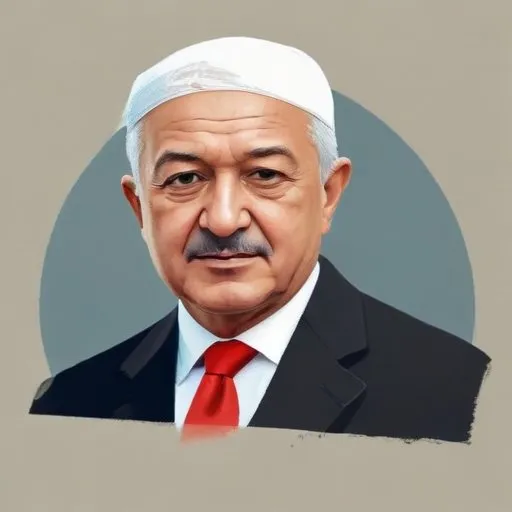
A Turkish economist and author who wrote extensively on economics, politics, and history, offering unique perspectives on Turkey's development and its place in the world.
Salih Nefti, a luminary in the realms of financial markets and engineering, left an indelible mark on the academic and professional spheres. As a leading expert, he traversed the globe, sharing his expertise with national and international financial institutions, and crafting a legacy that continues to inspire future generations.
Born on July 14, 1947, in a prominent Turkish family with ties to the oil business, Salih's early life was marked by a blend of cultural heritage and academic curiosity. Until the age of 11, he resided in Kirkuk, Iraq, before relocating to Istanbul with his family. His mother, Nermin Nefti, holds the distinction of being the first woman to become the Vice Chairman of the Turkish Parliament.
Salih's academic pursuits took him to the Middle East Technical University, where he earned his B.S. in Economics. He furthered his education at the University of Minnesota, earning his Ph.D. in Economics in 1977. His dissertation, "Three Essays in Business Cycle Research," laid the foundation for his future endeavors.
Salih Nefti's professional trajectory was characterized by a deep commitment to financial engineering and markets. He taught in the areas of numerical methods of asset pricing, the mathematics of financial derivatives, emerging market asset trading strategies, and advanced risk management. His research expertise spanned econometrics and macroeconomics, with a focus on the relationships among aggregate time series, particularly wages and employment, over the business cycle.
His seminal work in these areas led to publications in esteemed journals, including Econometrica, solidifying his reputation as a trailblazer in the field. Salih's lucid and accessible approach to mathematical finance made him an esteemed educator, revered by his students and peers alike.
Throughout his career, Salih Nefti held various advisory roles in national and international financial institutions, providing strategic guidance and insight. His global perspective and expertise made him a sought-after authority, bridging the gap between academia and industry.
Salih's influence extended beyond the academic realm, as he actively contributed to the development of financial markets and engineering worldwide. His collaborative spirit and dedication to knowledge-sharing cemented his status as a respected leader in the field.
In recognition of his outstanding contributions, the Salih Nefti Memorial Scholarship Fund was established in perpetuity at Baruch College in November 2009. This fund serves as a testament to his enduring legacy, promoting education and awareness in the field of financial engineering.
Salih Nefti's remarkable life was cut short by his battle with Gliosarcoma, a type of malignant brain cancer, which he succumbed to on April 15, 2009. Despite his untimely passing, his legacy continues to inspire and motivate future generations of scholars and professionals.
In the realm of financial markets and engineering, Salih Nefti's imprint remains indelible, a testament to his dedication, expertise, and passion. As a respected educator, researcher, and leader, he left behind a rich tapestry of knowledge, insights, and achievements, shaping the course of his field for years to come.
Born in 1912
A Nobel Prize-winning economist who championed free market capitalism and limited government intervention, known for his advocacy of laissez-faire economics and influential writings on monetary policy.
Born in 1926
A prominent figure in the Austrian School of economics, known for his libertarian and anarchist views, and his work on the history of economic thought.
Born in 1899
Austrian economist and philosopher who championed free market capitalism and limited government intervention, warning of the dangers of socialism and totalitarianism. His work influenced economic policy and shaped modern libertarian thought.
Born in 1881
A pioneer of Austrian economics, he developed the concept of praxeology, which focuses on human action and its consequences, and is known for his critiques of socialism and central planning.
Born in 1883
A pioneer of innovation theory, he's credited with coining the term "creative destruction" to describe how new technologies and businesses disrupt existing ones, driving economic growth and progress.
Born in 1883
A pioneering economist who revolutionized modern economic theory with his groundbreaking ideas on government intervention and fiscal policy, shaping global economic policies.
Born in 1915
A renowned economist and academic who made significant contributions to the field of economics, particularly in the areas of macroeconomics and international trade. He was awarded the Nobel Prize in Economics in 1970.
89 Years Old
Developed the theory of rational expectations, which revolutionized macroeconomics by showing how people's expectations of future events affect current economic decisions.
